Brno Wine Bars: Where To Taste Moravian Bottles In Town
Brno is the natural urban gateway to South Moravia's wine country, and its wine bars pour the region's bottles within walking distance of the Old Town squares.
Short answer
Brno wine bars cluster around the Cabbage Market and Náměstí Svobody in the walkable Old Town, pour Moravian wine by the glass, price everything in Czech crowns, and sit 36 to 46 km in a straight line from the Pálava, Mikulov and Lednice-Valtice vineyards the bottles come from.
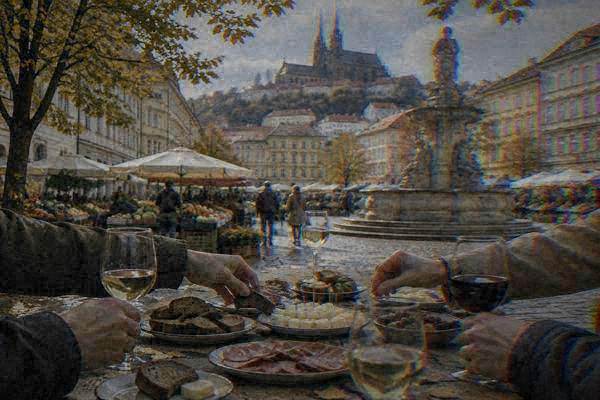
Brno, the second-largest city of Czechia with 404,296 permanent residents at the end of 2025, sits in South Moravia, the historic wine region of the country, and its wine bars are the easiest place to taste that region without leaving town. The vineyards of Pálava lie 36 km from the centre in a straight line, Mikulov 43 km and the Lednice-Valtice Cultural Landscape 46 km, and the bottles they produce are poured by the glass in the lanes around the Cabbage Market (Zelný trh) and Náměstí Svobody, the two Old Town squares that anchor the city's evening life. A Brno wine bar is a thing of its own, and knowing where to look for one, how ordering and paying works, and how to turn an evening of glasses into a full day in the vineyards themselves is all part of the pleasure.
What Makes A Brno Wine Bar Different From An Ordinary Pub?
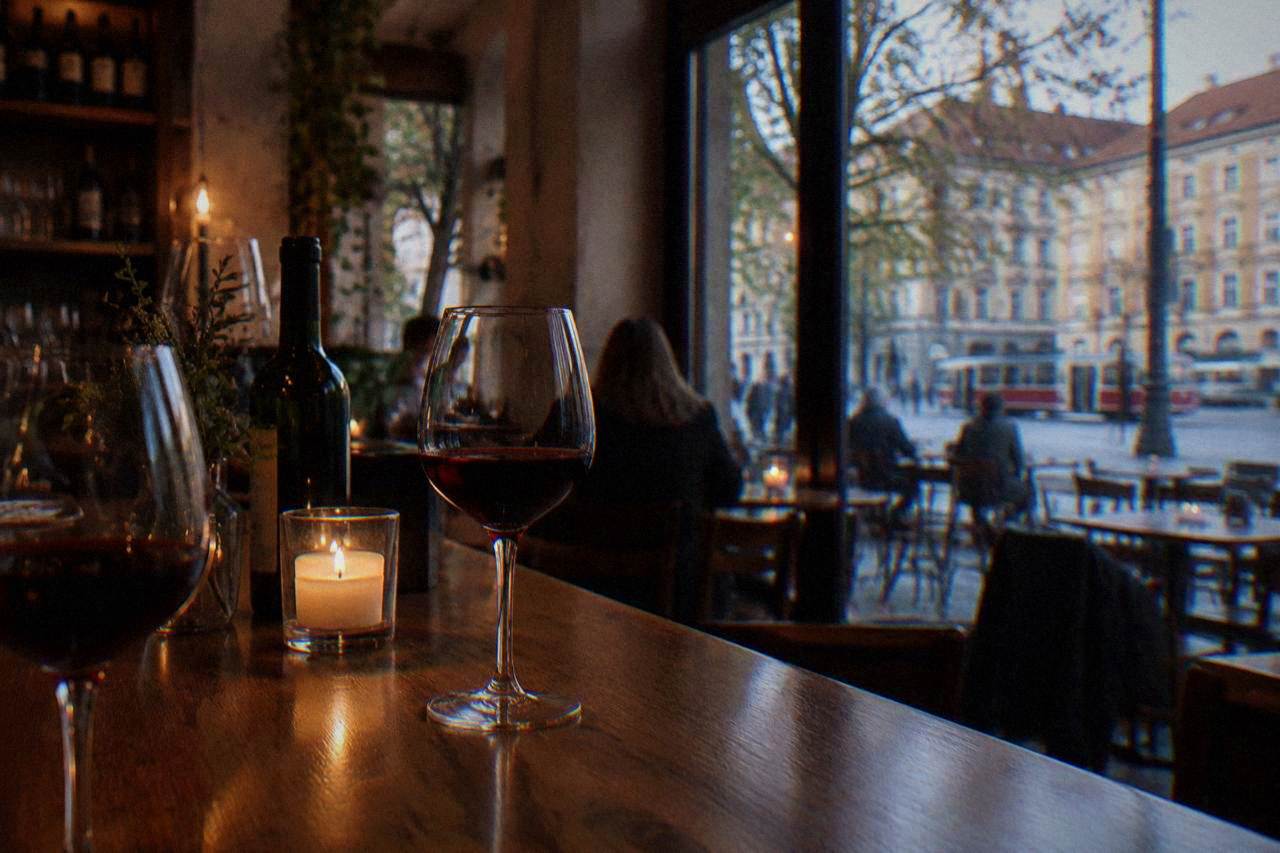
A Brno wine bar is a small, seated room built around Moravian wine by the glass, with a written list of regional bottles, table service and a quiet atmosphere, while the city's pubs are built around beer served quickly at standing height. South Moravia is Czechia's wine country, Brno is its historic capital from 1641, and the wine bar is where that regional identity is poured indoors. The distinction matters for planning: pubs cluster around beer, wine bars around lists and glasses.
The difference shows up in three practical ways. First, the pace: a wine bar in Brno is a seated, evening place, and the menu is the point, a list of Moravian producers with vintages and glass prices written in Czech crowns. Second, the currency: every price on that list is in CZK, because Czechia is in the EU and the Schengen area but outside the eurozone, and card payment is widely accepted. Third, the season: the burčák period, the young partially fermented wine whose legal selling season runs 1 August to 30 November, turns late summer and autumn wine bars into something the beer pub never becomes, a place where the year's harvest is drunk within weeks of the picking.
Ordering follows the local restaurant pattern rather than a separate bar counter ritual. You sit, you choose from the list, and you pay at the table, stating the total you want to pay when you hand over the card or cash, since tipping runs at 5 to 10 percent or a rounded-up figure for good service. It is not a matter of taste: it is what the published tipping norms for the Czech Republic state, and it is the norm a wine bar in the city works on.
Where Do You Find Wine Bars In Brno?
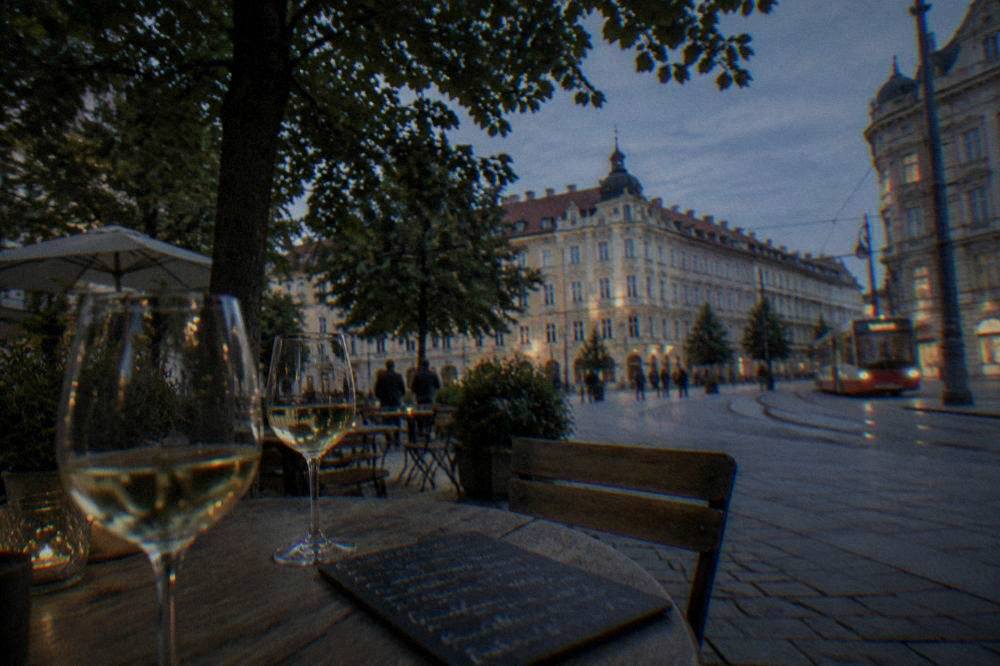
The wine bars of Brno sit in and around the two Old Town squares, the Cabbage Market (Zelný trh) and Náměstí Svobody (Freedom Square), and in the lanes connecting them, all of it walkable flat ground between the Cathedral of Sts Peter and Paul on Petrov Hill and Špilberk Castle above. The Cabbage Market has held produce stalls since the city's medieval market days, and the lanes around it carry the small rooms the wine bars occupy.
Náměstí Svobody is the city's main square and the axis the evening flows along; the Cabbage Market, a short walk away, is the older, smaller market square, and the streets between the two hold the bulk of the centre's drinking and eating places. Beyond the centre, the student weight of the city, Masaryk University counts 38,181 students, keeps demand for inexpensive wine rooms spread through the wider city, and the South Moravian Region's 1,228,779 residents give the surrounding towns their own wine culture.
Two seasonal events reshape where the drinking happens. The Vinobraní wine festival took over Náměstí Svobody from 25 September to 3 October in 2026, pouring wine outdoors in the square itself, and the Christmas markets ran 13 November to 31 December 2026 across the centre, with the Cabbage Market as a main site. During those weeks the squares themselves become the city's largest wine-serving spaces, and the indoor rooms fill around them. For more on the city's shape, see the Brno walking tour route and the guide to things to do in Brno.
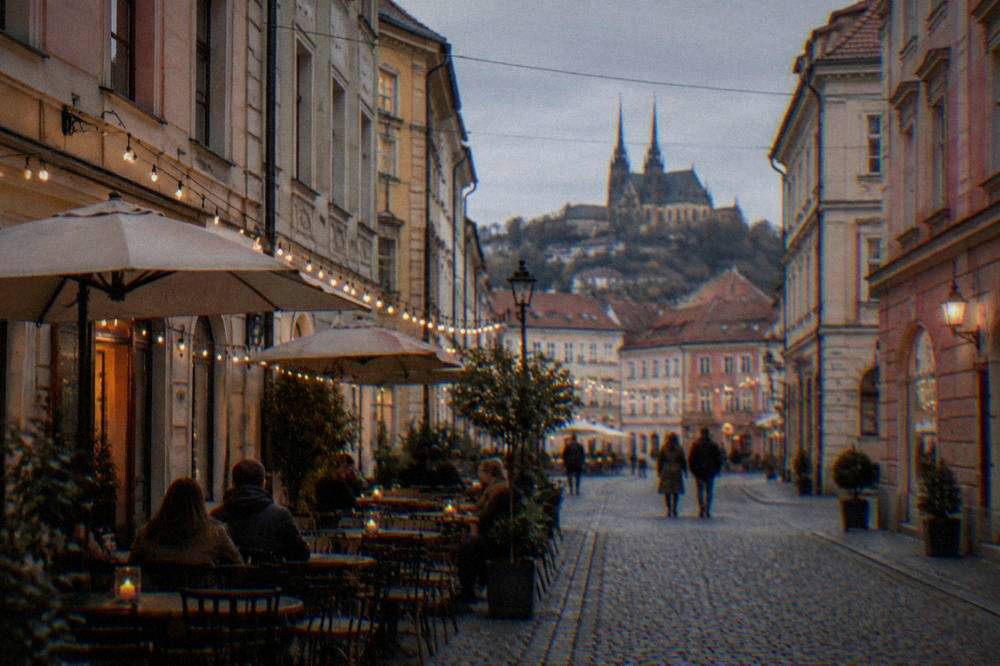
A small-group tasting walk is one way into these lanes with a guide who knows them, and this site's featured pick for this page is the small-group food tasting tour of Brno's hidden gems, which pairs Moravian wine with local dishes in the centre's smaller rooms: Check availability.
How Much Does Wine Cost In A Brno Wine Bar?
Prices in a Brno wine bar are set in Czech crowns and printed on the list, and no figure for a glass or bottle belongs on this page because none was confirmed by a primary source, so the honest answer is: check the room's own list before ordering. What can be stated is the currency (CZK, never euro), that cards are widely used, and that the city's costs are moderate by regional standards rather than eurozone prices.
That answer is deliberately concrete about what is known. The koruna is the currency, prices are not converted for visitors, and a wine bar that also serves food prices the food in the same crowns. Two neighbouring costs that are published give a sense of the city's price level without touching wine: a 60-minute public transport ticket is 25 CZK and a 24-hour Brno ticket is 90 CZK, and the Brnopas visitor card, which covers sightseeing rather than drinking, is 370 CZK for one day. Those figures cover their own subjects, not a proxy for a glass of wine, and the wine list itself is the only source for wine prices.
| Cost in Brno | Figure | What it covers |
|---|---|---|
| 15-minute tram or bus ticket | 20 CZK (10 reduced) | Single short ride, zones 100 + 101 |
| 60-minute ticket | 25 CZK (12 reduced) | Transfers across the city |
| 90-minute ticket | 33 CZK (16 reduced) | Longer cross-city journeys |
| 24-hour Brno ticket | 90 CZK (45 reduced) | A full day of trams, trolleybuses and buses |
| 5-day Brno ticket | 250 CZK | Five days within zones 100 + 101 |
| Wine by the glass | On the room's list | Confirm before ordering; the list states the price |
The planning habit that works: read the list, which states glass and bottle prices in crowns, before sitting down, and confirm at the table whether service is included, since the 5 to 10 percent tip norm assumes it is not. A wine bar attached to a tasting flight or a guided evening prices those separately, and the listing for any bookable tasting states its own price.
What Should You Order In A Brno Wine Bar?
Order Moravian wine by the glass, ask for the regional list rather than the imported page, and in season, between 1 August and 30 November, ask whether the burčák is on, because that young cloudy wine exists only in that legal selling window and nowhere else in the year. Local dishes named in the city's food culture, svíčková, beef in cream sauce, and Moravian plates, sit alongside the glasses, and Starobrno is the local brewery's beer for anyone mixing tables.
The word to use is "Moravské", Moravian, because South Moravia is the wine region and the bars in Brno pour it as their house identity. The burčák season is fixed in regulation: the legal season for this partially fermented wine runs 1 August to 30 November, so a glass ordered in September is a different drink from anything available in March. The grape varieties, vintages and producer names are a matter for each room's list, and no specific producer, vintage or tasting price is named on this page because none was confirmed from a primary source; the list in front of you is the authority on what is open.
Food and wine share the menu in the Moravian pattern. Svíčková is the local centrepiece, and Moravian plates pair the region's wine with its cured and baked things. Tipping closes the meal at 5 to 10 percent or a rounded total stated aloud when paying, a habit that holds in wine bars exactly as in restaurants.
Wine Bar, Wine Shop Or Guided Tasting: Which Suits You In Brno?
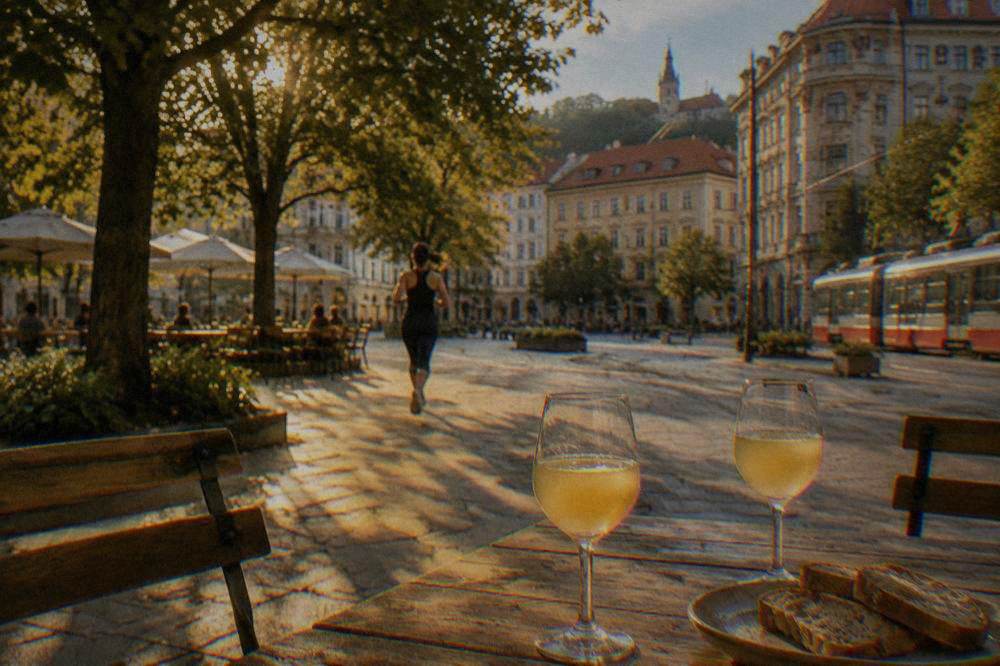
A wine bar suits an evening of seated glasses with food, a wine shop suits carrying bottles home, and a guided tasting suits a visitor who wants the region explained while drinking it; Brno offers all three, and the choice is about time, since a bar evening fills two hours, a shop visit twenty minutes, and a guided tasting or food walk the better part of an evening. The one thing all three share is Moravian wine in crowns.
The guided option deserves a closer look, because Brno's food-and-drink walks fold wine into a route through the centre's rooms, and a themed walk adds the city's legends and history between stops. The tours this site carries in these categories include a small-group food tasting of the centre's hidden gems, a tailored legends-and-history walk with pub and wine stops, and, heading out of town, a full wine-country day to the Lednice-Valtice area and Mikulov. What each covers, its price and its rating render on its own page, and the listing is the authority for both. The wider set of guides lives on Brno Travel Guide.
For a self-guided evening, the squares-and-lanes geography in the section above is the whole method: start on Náměstí Svobody, work toward the Cabbage Market, and read lists before sitting. The city's food culture is bigger than wine, and the what to eat in Brno guide covers the plates that surround the glasses, while restaurants in Brno covers the full meals.
Which Wine Day Trips From Brno Reach The Vineyards?
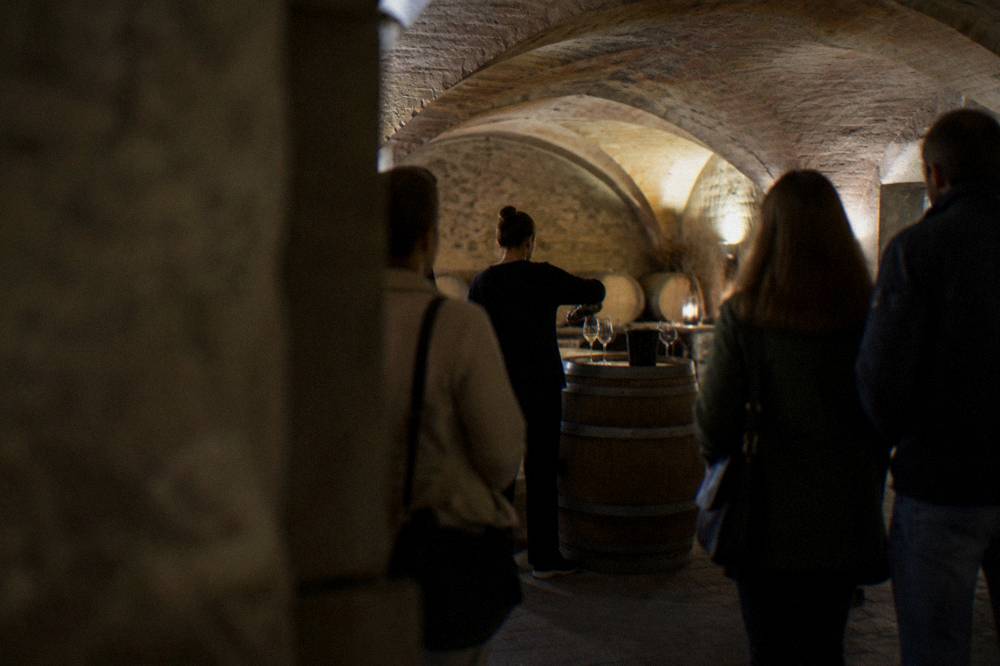
The wine country starts 36 km from Brno in a straight line at the Pálava hills, with Mikulov at 43 km and the Lednice-Valtice Cultural Landscape at 46 km, and Znojmo, a second wine town, at 56 km; all are reachable as organised day trips or by train and bus, with journeys of roughly 45 to 60 minutes each way to Mikulov and the Lednice area. The vineyards the Brno wine bars pour from are, in other words, under an hour from the city.
The distances are computed straight-line figures, not road distances, and the travel times are approximate reported figures for the Mikulov and Lednice routes. Lednice-Valtice is a UNESCO World Heritage Cultural Landscape of 143 km2, and its chateau publishes its own ticket prices, which makes it the one wine-country sight where the entry costs are known in advance:
| Lednice Chateau tour | Full | Reduced |
|---|---|---|
| Tour I, State Rooms | 280 CZK | 200 CZK |
| Tour II, Private Apartments | 220 CZK | 160 CZK |
| Combined tour | 420 CZK | 300 CZK |
| English audio guide | 50 CZK | 50 CZK |
| Park entry | Free | Free |
| Wine destination from Brno centre | Straight-line distance | Source |
|---|---|---|
| Pálava hills | 36 km | UNESCO biosphere reserve area, hiking free |
| Mikulov | 43 km | Wine town with castle; entry price on the castle's own site |
| Lednice-Valtice | 46 km | UNESCO Cultural Landscape, 143 km2 |
| Znojmo | 56 km | Wine town; details on local sites |
Organised trips cover the driving and the tasting arrangements in one booking. This site carries a wine-culture day to the Lednice-Valtice area and Mikulov, a Lednice chateau trip, and broader South Moravia tours, and each listing states exactly what is included. The standalone Moravian wine tour from Brno page gathers the wine options, and the South Moravian wine guide covers the region's background, including what kind of wine is produced in Moravia.
When Is Wine Season In Brno?
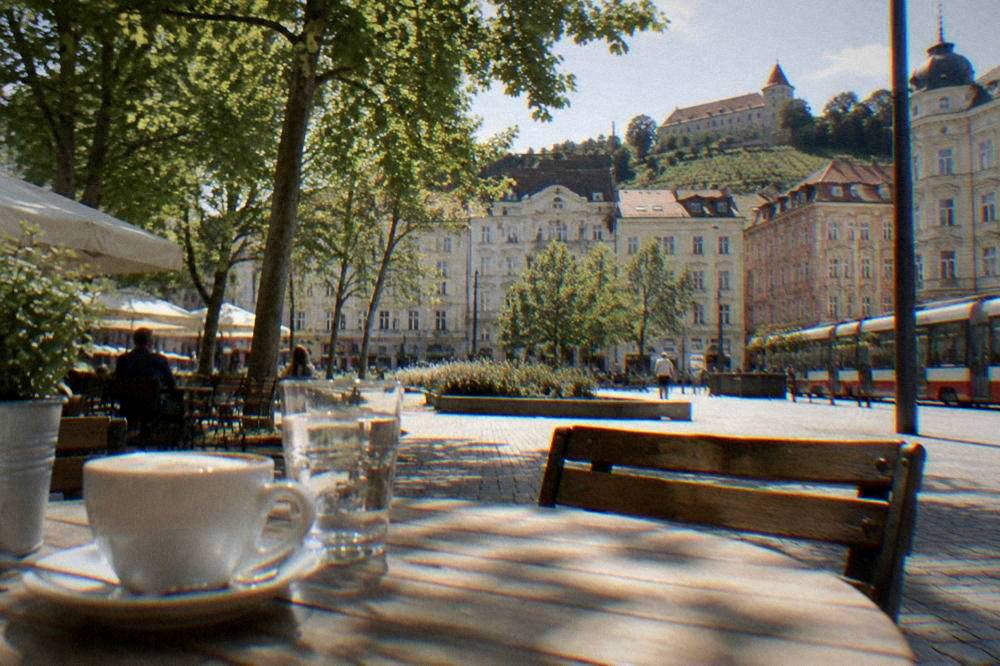
Wine season in Brno runs from the burčák window opening on 1 August through the Vinobraní festival, which filled Náměstí Svobody from 25 September to 3 October in 2026, and into the Christmas markets from 13 November to 31 December, with the burčák legal season closing on 30 November; the harvest months of September and October carry the most wine events, and the young wine exists only inside its fixed legal window.
The calendar, as published by the organisers for 2026, is the backbone of any wine-timed visit. The May festival of the Slavnosti Brno programme ran 12 to 17 May in 2026, before the grapes, and the autumn stacked the wine high points back to back:
| Wine-season event, 2026 edition | Dates |
|---|---|
| Burčák legal selling season | 1 August to 30 November |
| Vinobraní Brno, Náměstí Svobody | 25 September to 3 October |
| Brno Christmas markets, centre and Cabbage Market | 13 November to 31 December |
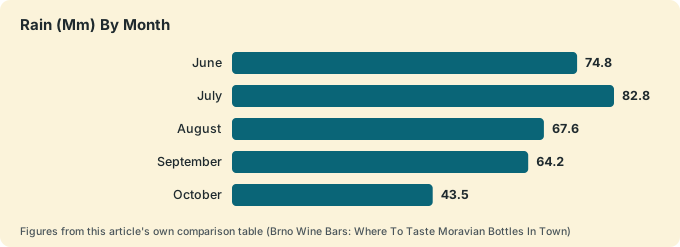
Weather shapes the season too. The ERA5 reanalysis for Brno, 1991-2020, puts July rainfall at 82.8 mm, the highest monthly total of the year, with June at 74.8 mm and August at 67.6 mm; September drops to 64.2 mm and October to 43.5 mm, with mean daily highs falling from 25.0 C in July to 19.5 C in September and 13.6 C in October. September and October are therefore the dry, warm-end-of-the-year months the festival calendar already points to, and the figures, being modelled reanalysis normals, are a planning tool rather than a forecast. The best time to visit Brno and Brno weather guides carry the full picture.
| Month | Mean high (ERA5, 1991-2020) | Rain (mm) |
|---|---|---|
| June | 22.9 C | 74.8 |
| July | 25.0 C | 82.8 |
| August | 24.9 C | 67.6 |
| September | 19.5 C | 64.2 |
| October | 13.6 C | 43.5 |
How Do You Get Home After An Evening In Brno's Wine Bars?
Brno's trams, trolleybuses and buses run on a zone system covering the whole city for 20 to 33 CZK a ride in crowns, with a 24-hour ticket at 90 CZK, and late evening travel is covered by the network's night lines, while Bolt operates in the city for app-hailed rides and Uber does not; the centre itself between the two squares is compact enough that a hotel near Náměstí Svobody needs no transport at all after the last glass.
The ticket system is flat and simple. Brno is tariff zones 100 and 101, paper tickets cost 20 CZK for 15 minutes, 25 CZK for 60 minutes and 33 CZK for 90 minutes, reduced fares run at roughly half, and tickets come from machines, kiosks or contactless payment on board. A night in the wine rooms that ends after the day service thins out falls to the night lines, and the airport's night line N89 shows the pattern the network runs on, roughly 23:00 to 05:00. For the ride-hailing question the answer is fixed: Bolt operates in Brno, Uber does not, per local reporting, and a taxi rank serves the station. The Brno public transport guide carries the detail, and where to stay in Brno covers basing yourself within walking distance of the squares.
One card rewards the wine-minded visitor who also sightsees. Brnopas, the city's visitor card, costs 370 CZK for one day, 490 CZK for two and 610 CZK for three, with child prices lower, and its free-entry list includes the Old Town Hall tower, the Ossuary, the Brno Zoo and the cathedral, sights that fill the daylight hours before the wine bars open. The Brno pass guide compares the tiers.
Can You Combine Wine Bars With Brno's Sights In One Trip?
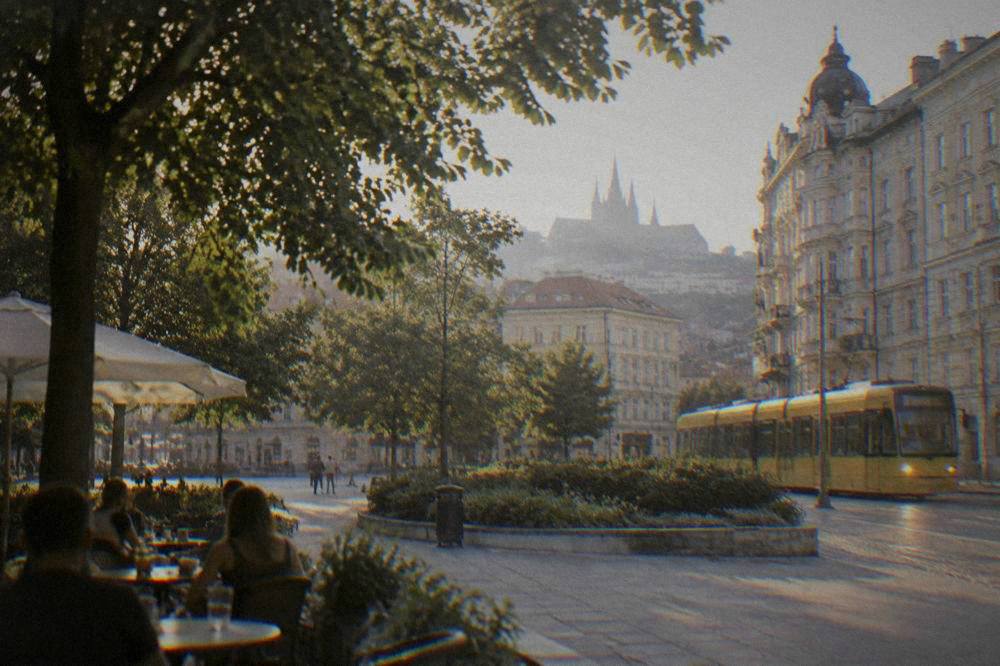
Yes, and the geography makes it easy: the wine bars of the two squares sit between Špilberk Castle and the Cathedral of Sts Peter and Paul on Petrov Hill, so a day of castle, cathedral and Villa Tugendhat, the city's UNESCO World Heritage site since 2001, leaves the evening free for Moravian glasses a short walk from any of them, and the sights' own published hours and prices let you plan the split precisely.
Špilberk's castle grounds are open daily 6:00 to 23:00, its museum exhibitions Tuesday to Sunday 10:00 to 18:00, and its self-guided Casemates daily 9:00 to 21:00, with the guided Story of the Castle tour at 180 CZK full and 110 reduced and the guided Casemates tour at 260 CZK full and 155 reduced, all per the castle's own ticket pages. Villa Tugendhat, built 1928 to 1930 and inscribed by UNESCO in 2001, is the sight that needs planning: entry to the interior is only with a previously purchased ticket booked through Brno iD, it is closed Mondays, the Extended tour is 500 CZK full until 31 December 2026 rising to 550 CZK on 1 January 2027, and the Basic tour is 450 CZK rising to 500 CZK on the same date. The Villa Tugendhat tickets guide covers booking in full.
| Sight ticket | Full (CZK) | Reduced (CZK) | Notes |
|---|---|---|---|
| Špilberk, Story of the Castle (guided) | 180 | 110 | Family 415 |
| Špilberk, Casemates (guided) | 260 | 155 | Self-guided 190 / 115 |
| Villa Tugendhat, Extended tour (to 31 Dec 2026) | 500 | 320 | 550 / 330 from 1 Jan 2027 |
| Villa Tugendhat, Basic tour (to 31 Dec 2026) | 450 | 270 | 500 / 300 from 1 Jan 2027 |
| Old Town Hall tower | 90 | 50 | Sold at the tower; free with Brnopas |
The rhythm that follows from the published hours: book Tugendhat for a morning slot, spend the afternoon between Špilberk and the Old Town, and let the evening find you on Náměstí Svobody when the wine rooms open. The cathedral's bells ring at 11:00 rather than noon, in memory of the 1645 Swedish siege, so a morning on Petrov Hill comes with the story attached. For the fuller picture of the city, start with Brno Travel Guide and its things to do in Brno overview.
Common Questions About Brno Wine Bars
Do Brno wine bars take cards?
Card payment is widely used across Brno, and prices are set in Czech crowns, the koruna, since Czechia is in the EU and Schengen but outside the eurozone. Confirm the total at the table and add the tip, 5 to 10 percent or a round-up, when you state the amount.
What is burčák and when can you get it in Brno?
Burčák is young, cloudy, partially fermented Moravian wine, and its legal selling season runs 1 August to 30 November. It exists only inside that window, so a glass in September is a drink unavailable in spring.
How far is wine country from Brno?
The Pálava hills lie 36 km from Brno centre in a straight line, Mikulov 43 km, the Lednice-Valtice UNESCO landscape 46 km and Znojmo 56 km, with reported journeys of roughly 45 to 60 minutes each way to Mikulov and the Lednice area.
Can you visit a vineyard as a day trip from Brno?
Yes. Organised day trips from Brno cover the Lednice-Valtice area and Mikulov, and Lednice Chateau publishes its own ticket prices, from 220 CZK for a single tour to 420 CZK combined, with free park entry. Train and bus also serve the region.
Is a wine bar in Brno expensive?
No reliable glass or bottle price can be stated here, so read the room's own list, which prints prices in CZK. The city's wider costs, a 25 CZK 60-minute transport ticket, a 90 CZK day ticket, are moderate regional figures.
When is the Brno wine festival?
Vinobraní Brno ran 25 September to 3 October in 2026 on Náměstí Svobody, followed by the Christmas markets from 13 November to 31 December. The burčák season brackets the festival, running 1 August to 30 November.