What To Eat In Brno: Svíčková, Bramboráky And Moravian Plates
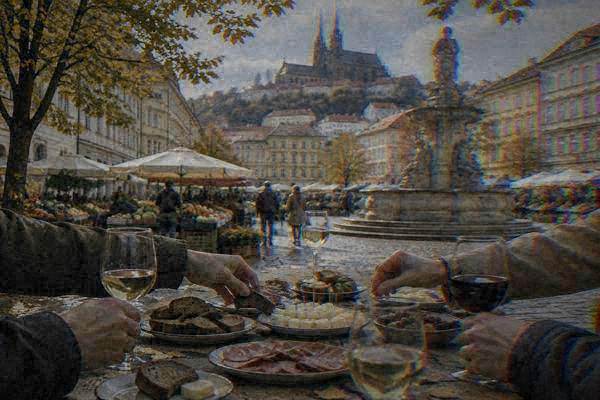
Brno, the second-largest city of Czechia and the capital of South Moravia, eats from a Moravian larder: svíčková and bramboráky in the restaurants, Moravian wine from the Pálava and Lednice hills, Starobrno beer, and market food on the Cabbage Market.
Short answer
Eat svíčková, bramboráky and Moravian plates in Brno's restaurants, drink Moravian wine and Starobrno beer, graze the Cabbage Market stalls, and time a visit around the Vinobraní wine festival (25 September to 3 October 2026) or the Christmas markets (13 November to 31 December 2026).
Brno sits in South Moravia, the wine and orchard half of Czechia, and the city of about 404,296 permanent residents (end of 2025) eats accordingly: svíčková, the beef-in-cream-sauce plate that anchors Czech Sunday cooking, bramboráky potato pancakes from market griddles, Moravian wine carried in from the Pálava hills about 36 km away in a straight line, and Starobrno beer brewed in the city. Eat your way through Brno dish by dish, see where the calendar puts the food festivals in 2026, and choose the guided food walks that cover the kitchens and cellars of the Old Town. The practical spine is Czech koruna (CZK): Czechia is in the EU and Schengen but keeps the koruna, so local prices below stay in CZK. Currency matters more here than in the eurozone cities west of the border, because every bill, market purchase and transit fare arrives in koruna, and the card networks handle the conversion at their own rate.
What Should You Eat In Brno First?
Start with svíčková, the beef-in-cream-sauce plate named in Brno's own research as the local signature, followed by bramboráky potato pancakes from a market stall, then a glass of Moravian wine, because South Moravia is Czechia's wine country and Brno is its city. Starobrno beer, brewed in Brno, is the local pour alongside all of it.
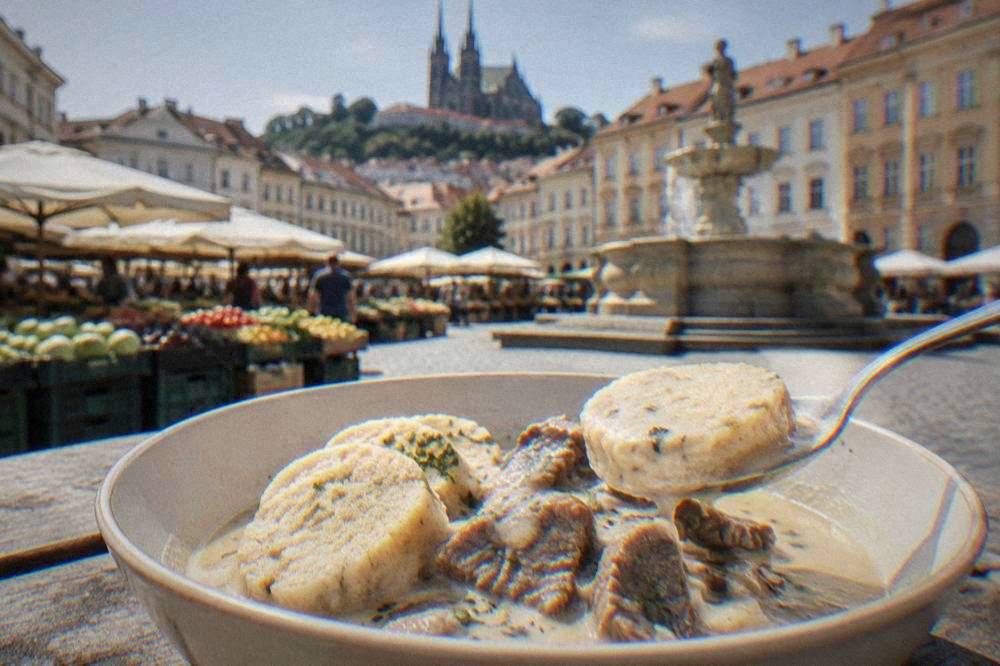
Svíčková is the dish Czech cooking organises itself around: braised beef in a cream sauce, served with bread dumplings. The research for this page names it and "Moravian plates" as the city's food identity, and Moravian plates typically means pork or poultry with dumplings or potatoes and sauerkraut, the hearty register of a continental, landlocked region. None of that is coastal: Brno is an inland city on the Svratka and Svitava rivers, and its larder is Central European, not maritime. That geography shapes the plate. A region that grows grain, potatoes, root vegetables and pigs, and that ferments both beer and cabbage through cold winters, builds its cooking around exactly those stores, and the menus in Brno reflect it.
The drinking half of the answer matters as much as the food. Moravian wine comes up from the vineyards around Mikulov, about 43 km south in a straight line, and the Lednice-Valtice Cultural Landscape, 46 km away, both reachable as day trips described on the Moravian wine tour page. Starobrno beer is the city's own brewery name and appears throughout the research. For the wider sightseeing around the meals, start with the site's things to do in Brno overview.
| Order of eating | What it is | Where it fits |
|---|---|---|
| Svíčková | Braised beef in cream sauce with bread dumplings | The signature restaurant plate |
| Moravian plates | Pork or poultry with dumplings or potatoes and sauerkraut | The hearty main-course register |
| Bramboráky | Potato pancakes, fried | Market and street food |
| Moravian wine | White-led regional wine from Pálava and Lednice hills | The glass with dinner |
| Starobrno beer | Beer brewed in Brno | The default local pour |
What Is Svíčková And Why Is It The Plate To Order In Brno?
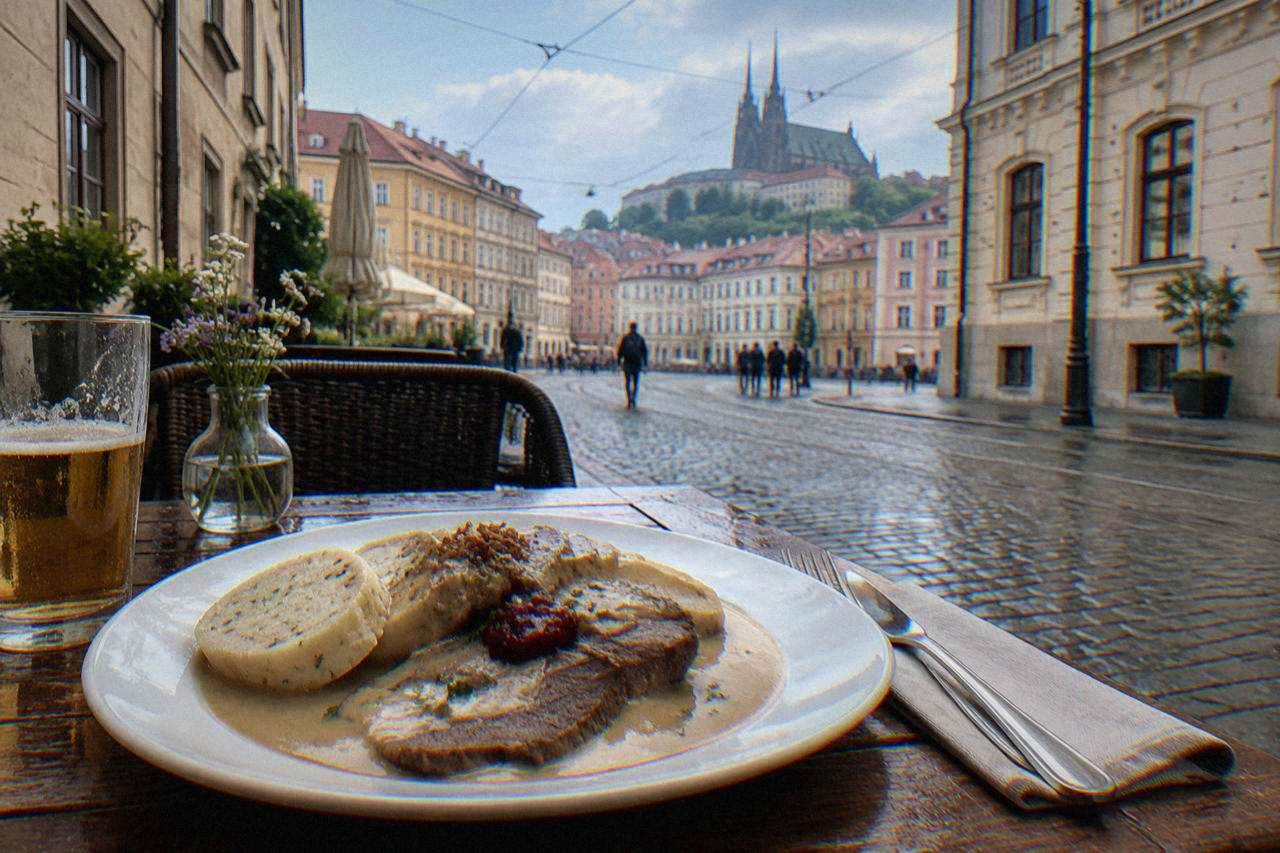
Svíčková is beef braised in a vegetable-and-cream sauce, served with bread dumplings and a tart berry garnish, and it is the one Czech plate the Brno research singles out by name, which makes it the safest first order in the city. It is restaurant food rather than street food, so plan it as a sit-down lunch or dinner.
The sauce is the point: root vegetables cook down with the meat, then blend into cream. Ordering it in Brno follows Czech restaurant convention rather than any local variant the research records, so the honest instruction is simple: order svíčková, expect beef, cream sauce and dumplings, and expect it to be filling in the way Central European cooking is. The bread dumplings, sliced from a rolled loaf and steamed, exist to carry the sauce, and a plate done properly leaves nothing to waste. The city's restaurants are covered separately on the best restaurants in Brno page, which pairs the dish list with the wider dining picture.
One convention from the research is worth knowing before the bill arrives: tipping runs 5 to 10 percent, or simply rounding up, and it is common to state the total, bill plus tip, when paying by card. That is reported practice for Czechia generally rather than a Brno ordinance, so follow what the table does around you. Two other practical notes travel with the territory. Tap water in Brno is reported safe to drink, meeting Czech and EU standards. And large shops, which matters for self-catering, close on listed public holidays including 1 January, Easter Monday, 8 May, 28 September, 28 October, 25 and 26 December, with Christmas Eve closing at noon.
Where Do Moravian Wine And Starobrno Beer Fit Into Eating In Brno?
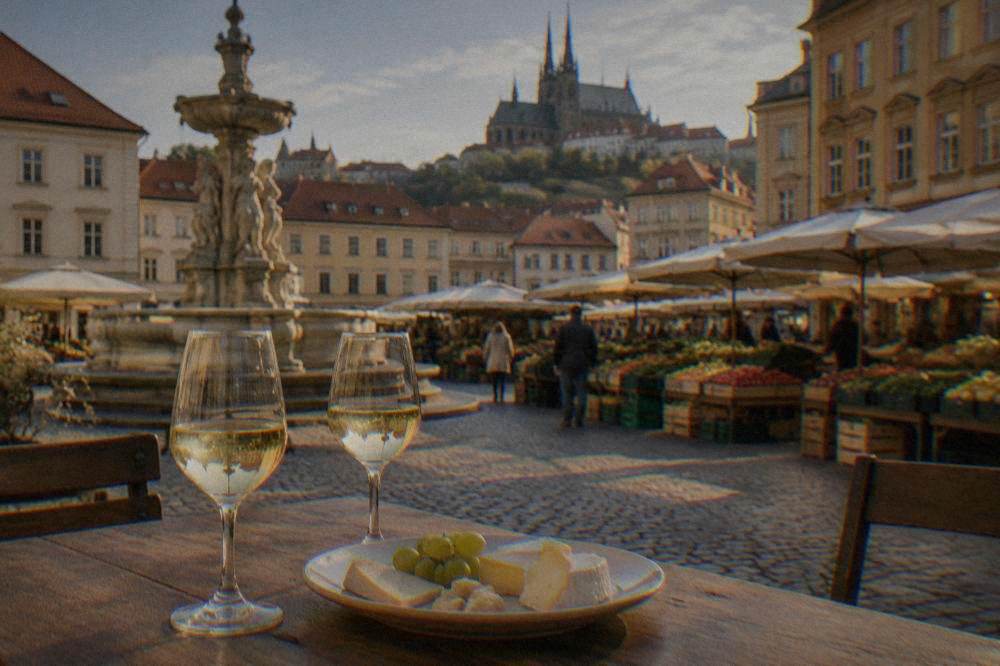
Moravian wine is the regional drink of South Moravia and reaches Brno from the Pálava hills (about 36 km in a straight line) and the Mikulov and Lednice-Valtice vineyards (43 and 46 km), while Starobrno beer is the city's own brewery, so the pairing decision in Brno is wine country versus local lager rather than imported anything. Both belong on the table.
South Moravia is the wine half of Czechia, and the numbers in the site's distance file make the point: the Pálava hills, Mikulov and the Lednice-Valtice UNESCO landscape, 143 km2 of it, are all within about an hour's straight line of the city. Moravian wine production, grape varieties and cellar culture are covered in detail on the Moravian wine guide, and the beer side, including the city's pubs, on the beer and pubs in Brno page. The two drinks do not compete so much as split the day: beer with the market lunch, wine with the evening table, and both poured closer to their source than in nearly any other Central European city of this size.
For travellers who want the beer side of the culture taken to its logical end, Brno also offers a private beer spa where the soak comes with unlimited Pilsner Urquell on tap; it is listed here, and you can Check availability if a soak-and-pour afternoon sounds like the right rest day between sightseeing. The experience reframes beer as an ingredient rather than just a drink, which is a distinctly Czech reading of the word spa.
The three picks above split neatly by appetite: the beer spa for the pour, the legends-and-history walk for the streets between meals, and the Moravian Karst trip for the day the city kitchens wait. Whichever way a visit leans, the small-group food walk below is the one built around the plate itself.
What Food Can You Find At The Cabbage Market In Brno?
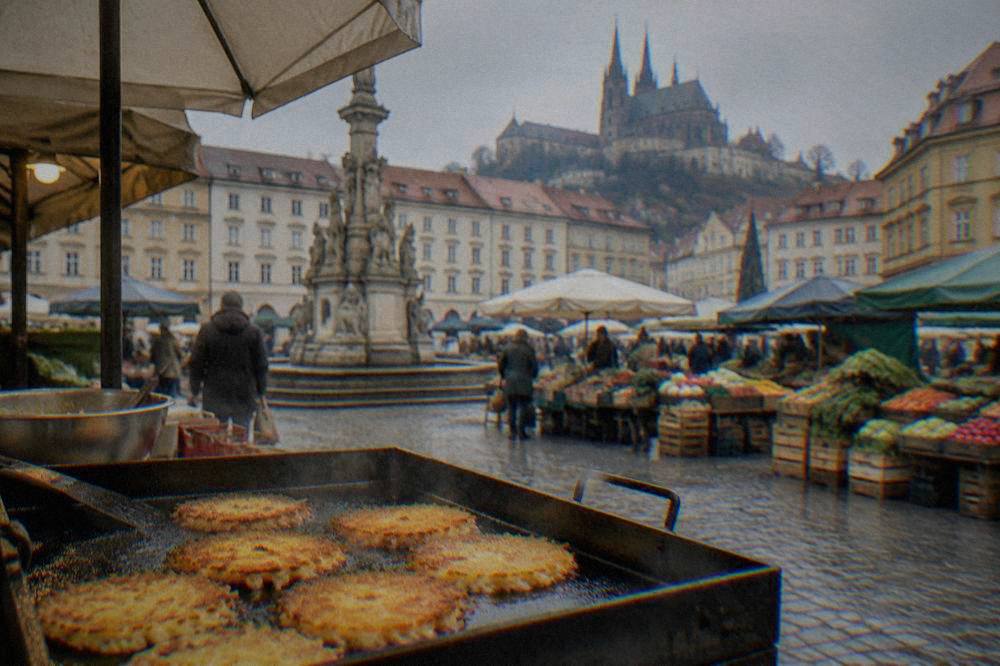
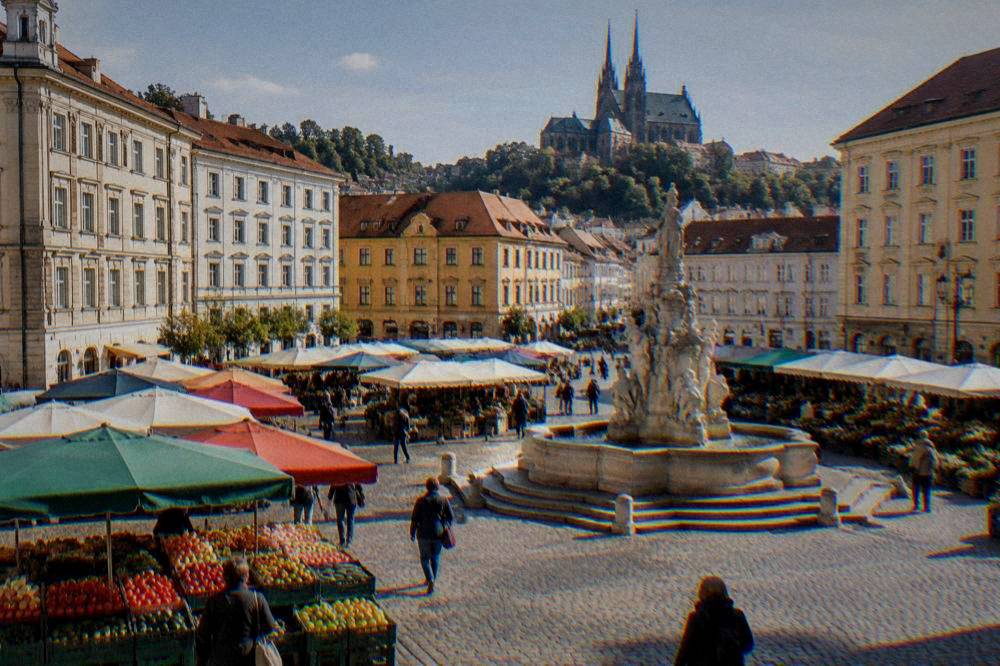
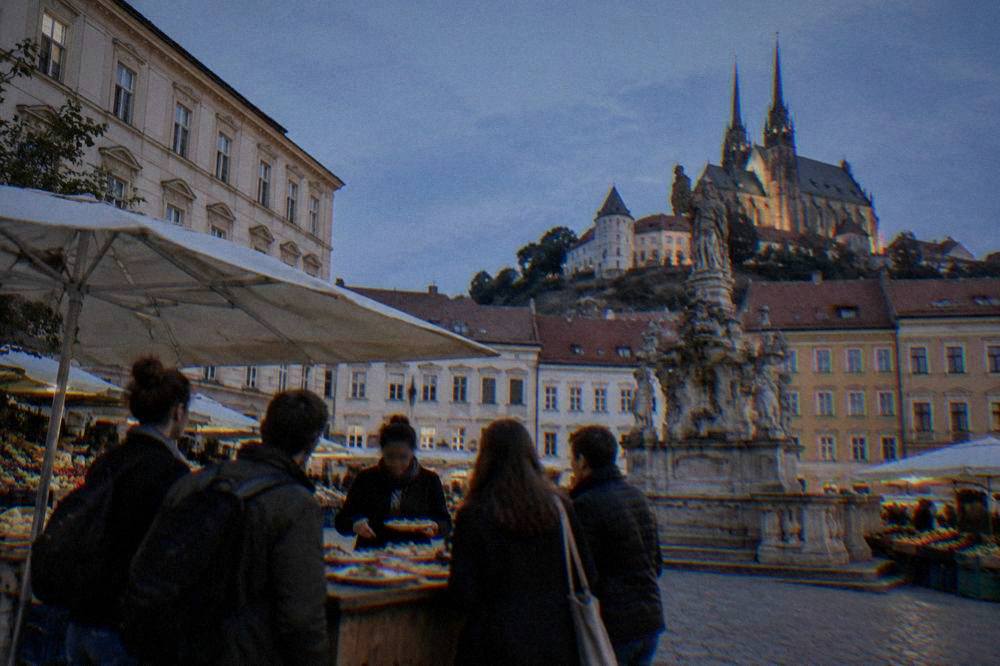
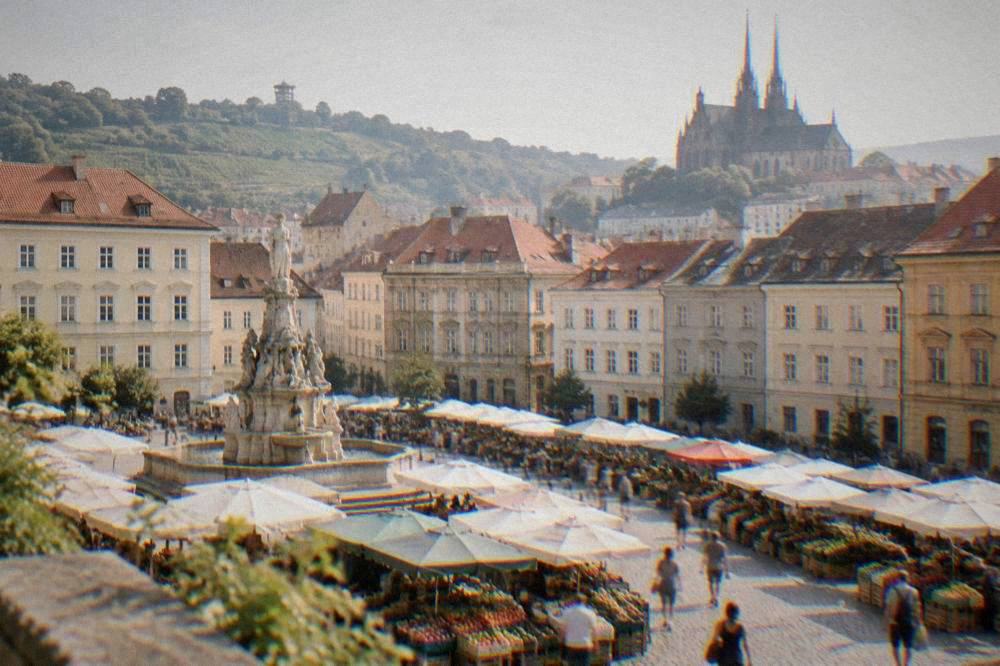
The Cabbage Market, Zelný trh, is Brno's historic market square and the place to eat market food in the open air: bramboráky potato pancakes from the fryers, seasonal fruit and vegetables, and, in the run-up to Christmas, the stalls of the Christmas market, which in 2026 run 13 November to 31 December.
Zelný trh is one of the city's two Old Town squares, and it doubles as the food stage. The market's underground, the Labyrinth beneath the square, is a separate ticketed attraction described on the Labyrinth guide; the surface is where you eat. Seasonal produce follows the continental calendar: the ERA5 reanalysis, 1991-2020, puts July's mean daily high at 25.0 C with 82.8 mm of rain and January's mean daily low at -3.8 C, so the stalls shift from summer soft fruit to autumn roots to winter grill smoke over the year. The square's name itself records the trade: cabbage, stored and fermented, carried Moravian households through winters that the same reanalysis shows averaging below freezing at night for three months of the year.
The Christmas version is the calendar's biggest food event on the square: the main organiser's dates for 2026 are 13 November to 31 December, with Zelný trh among the sites, and the fuller picture of stalls, mulled wine and the surrounding squares is on the Brno Christmas market page. A second organiser runs stalls on Náměstí Svodoxy, spelled Náměstí Svobody, from 27 November to 23 December 2026, so the two squares together keep the centre fed through the dark weeks.
What Sweet And Street Food Is Brno Known For?
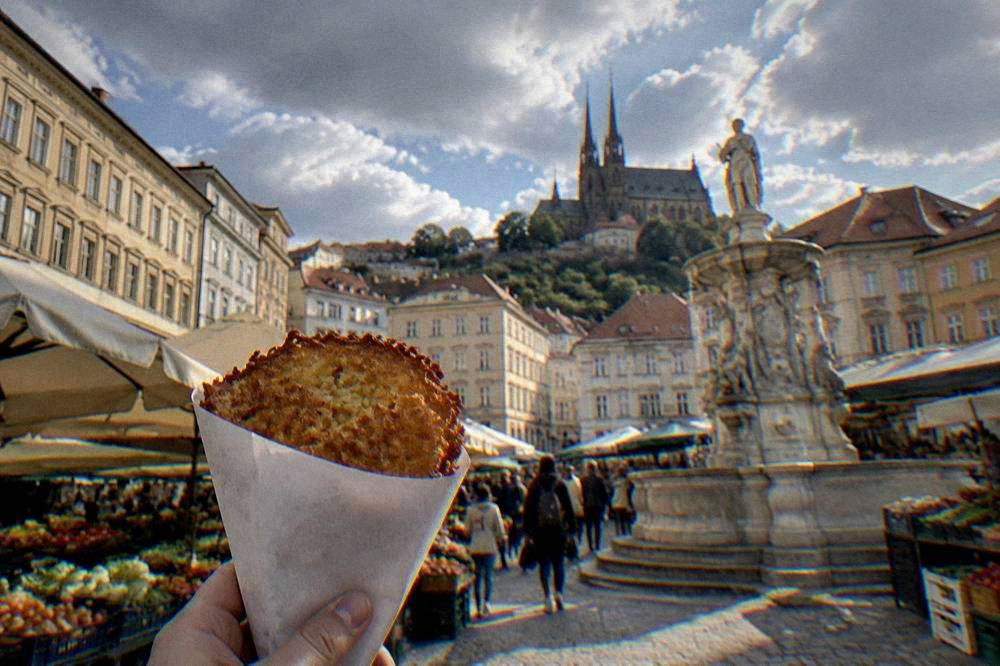
Bramboráky, fried potato pancakes, are the street food the city's approved food identity names alongside svíčková, and they come off griddles at markets and stalls rather than restaurant kitchens. Around them sits the standard Czech street repertoire, including grilled sausages and chimney cake, though it is the potato pancake that carries the local name on this page.
Bramboráky are grated potato, garlic and marjoram fried flat, eaten hot and by hand, and they are at their most visible wherever a griddle appears: the Cabbage Market on ordinary days, the Christmas market stalls from mid-November, and the festival stands that take over Náměstí Svobody during the wine festival. The research names them in the page's approved title and food identity, which is the reason they appear here rather than any invented ranking of street snacks. They also travel well across the calendar in a way restaurant plates do not, which is why a winter visit and a summer visit can both be built around them.
Sweet-toothed travellers should calibrate expectations honestly: chimney cake and fried dough are Central European fairground standards, and Brno's stalls sell them, with no distinctly Brno dessert to single out. The safe framing is bramboráky for savoury street food, svíčková for the restaurant plate, and the Christmas market for the concentrated winter version of all of it.
Which Food Tours In Brno Cover The City's Kitchens?
Two small-group food walks cover Brno's kitchens directly, one built around hidden culinary gems across the Old Town and one around hidden-gem tasting stops in small groups, and both walk between stops so the food arrives with the streets around it. Beyond them, a beer spa session covers the drinking half of the culture without a walk at all.
A guided food walk solves the one problem a short visit cannot: restaurants and cellars do not advertise from the street, and a guide who books the stops removes the guesswork. The small-group tasting walk above is the broad option; the hidden gems tasting tour runs the same idea with a small-group cap, and the city's wider sightseeing context, including the free walks that cover history rather than food, is on the free walking tour page. The walks are free and you pay what you want at the end, which makes them a sensible prefix to a paid tasting route rather than a substitute for one.
To let a guide line up the stops, book a small group food tasting tour here.
Between the two tasting formats the differences are structural rather than qualitative: one sells itself on the hidden-gem kitchen angle, the other on the small-group cap. Both move on foot through the same compact centre, the same two squares and the lanes between them, so the choice comes down to group size and departure fit rather than geography.
Wine-led eating reaches further out: the wine and UNESCO day trip pairs the Lednice-Valtice landscape with Mikulov's cellars, and the straight-line distances below show why the wine country reads as a day trip rather than an evening stroll.
Which Food Events Mark The Brno Year?
The food calendar in Brno peaks three times: the Vinobraní wine festival on Náměstí Svobody from 25 September to 3 October 2026, the Christmas markets from 13 November to 31 December 2026, and the burčák season, legally 1 August to 30 November, when young fermenting wine is sold across South Moravia. Ignis Brunensis brings fireworks and fairground food to the Brno Reservoir from 30 May to 4 July.
Vinobraní is the one to build an autumn trip around: a wine festival placed on the city's main square, Freedom Square, in the middle of the harvest window. The Slavnosti Brno programme also ran an Easter edition from 27 March to 5 April and a May festival from 12 to 17 May in 2026, so the square hosts food-linked events beyond the two headline seasons. Dates beyond 2026 had not been announced, so check the organisers' pages for the next editions before locking a trip. The MotoGP Czech Grand Prix on 19 to 21 June 2026, covered on the Brno circuit page, is not a food event, but a race weekend puts a temporary festival economy of sausage grills and beer stands around the circuit and the camps beside it.
| Event | 2026 dates | Where it eats |
|---|---|---|
| Slavnosti Brno Easter edition | 27 March to 5 April | Festival stalls on the city squares |
| Slavnosti Brno May festival | 12 to 17 May | Festival stalls on the city squares |
| Ignis Brunensis | 30 May to 4 July | Fairground food at the Brno Reservoir |
| MotoGP Czech GP | 19 to 21 June | Race-weekend stalls at the circuit |
| Burčák season | 1 August to 30 November | Young wine sold across South Moravia |
| Vinobraní Brno | 25 September to 3 October | Wine festival on Náměstí Svobody |
| Christmas markets | 13 November to 31 December | Stalls at Zelný trh and other sites |
How Far Is The Wine Country From Brno?
The wine destinations of South Moravia sit between about 36 and 56 km from Brno centre in a straight line: the Pálava hills at 36 km, Mikulov at 43 km, the Lednice-Valtice UNESCO landscape at 46 km and Znojmo at 56 km, all close enough for a day trip and all producing the Moravian wine that appears on Brno tables.
These are straight-line distances from the city centre, computed from the site's place data, and they explain the city's food identity: the vineyards are effectively suburbs of the larder. The Lednice-Valtice Cultural Landscape is a UNESCO site of 143 km2, and the Lednice chateau itself sells Tour I of the state rooms at 280 CZK full and 200 CZK reduced, Tour II of the private apartments at 220 and 160, a combined ticket at 420 and 300, and a 50 CZK English audio guide, per the chateau's own castle page. Its park is free to enter, so a wine-country day out can carry a sightseeing half without a second ticket.
| Wine destination | Straight-line km from Brno centre | What it adds |
|---|---|---|
| Pálava hills | 36 | UNESCO biosphere vineyard landscape |
| Mikulov | 43 | Castle town in the vineyards |
| Lednice-Valtice | 46 | UNESCO landscape, 143 km2, chateau park |
| Znojmo | 56 | Historic wine town |
What Practical Numbers Help When Eating Your Way Around Brno?
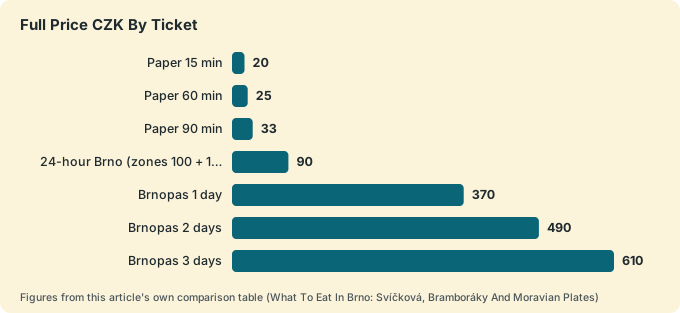
Paper tram and bus tickets in Brno cost 20 CZK for 15 minutes, 25 CZK for 60 minutes and 33 CZK for 90 minutes from 1 October 2026, with a 24-hour Brno ticket at 90 CZK, and the Brnopas city card, at 370, 490 and 610 CZK for one, two and three days, folds in free entry at sights including the Old Town Hall tower, the Ossuary and the Brno Zoo.
Getting between the squares, the market and the dinner tables means a few tram rides, and the fares above come from the transport operator's own tariff page. The card details come from the official Brnopas page, where the plus versions with Villa Tugendhat entry run 870, 990 and 1110 CZK for one, two and three days; note the villa's interior is entered only with a ticket booked in advance through Brno iD, as the Villa Tugendhat tickets guide explains. The Brnopas 3-day version also includes a seasonal boat on the Brno Reservoir route between the Bystrc wharf and Veverská Bítýška, per the reservoir's official page, which turns a rest day into a water-and-forest half of a food-heavy visit.
| Ticket | Full price CZK | Reduced CZK |
|---|---|---|
| Paper 15 min | 20 | 10 |
| Paper 60 min | 25 | 12 |
| Paper 90 min | 33 | 16 |
| 24-hour Brno (zones 100 + 101) | 90 | 45 |
| Brnopas 1 day | 370 | 250 |
| Brnopas 2 days | 490 | 330 |
| Brnopas 3 days | 610 | 400 |
For travellers watching the budget overall, the Brno on a budget page widens the picture beyond food, and the free things to do in Brno list pairs well with a market-lunch day. Timing a visit around the plates and the festivals together is easier with the best time to visit Brno and Brno weather pages. If a full visit is coming together, the site's Brno Travel Guide home page is the index, and the picks below close the food question one last time.
Common Questions About Eating In Brno
What to eat in Brno?
Svíčková, beef in cream sauce with bread dumplings, is the signature restaurant plate; bramboráky potato pancakes are the street and market food; Moravian wine from the Pálava and Lednice hills and Starobrno beer brewed in the city are the drinks.
What is svíčková?
Braised beef in a vegetable-and-cream sauce, served with bread dumplings. It is the dish the Brno research singles out by name, and it is a sit-down restaurant plate rather than street food.
When is wine festival season in Brno?
Vinobraní Brno ran 25 September to 3 October 2026 on Náměstí Svobody, inside the burčák sales window of 1 August to 30 November. The Christmas markets follow from 13 November to 31 December 2026.
Do you tip in Brno restaurants?
Reported practice for Czechia is 5 to 10 percent or rounding up, with customers commonly stating the total, bill plus tip, when paying. Match what the table around you does.
Can you drink Moravian wine in Brno without leaving the city?
Yes. Moravian wine reaches Brno from vineyards 36 to 56 km away in a straight line, appears on restaurant lists and festival stalls, and the small-group food walks in the city include local drink stops.
What food is at the Brno Christmas market?
The 2026 markets run 13 November to 31 December with Zelný trh among the sites, carrying the grilled, fried and mulled repertoire of a Central European Christmas market, including bramboráky from the griddles.