Brno Weather By Month: Frost, Heat And Rain
Brno has a continental central-European climate: warm summers, cold winters and rain spread across the year. Here is the month-by-month picture, from the ERA5 reanalysis 1991-2020, and what it means for a visit.
Short answer
Brno's climate is continental: July has the highest mean daily high at 25.0 C, January the lowest mean daily low at -3.8 C, and July also carries the highest monthly rainfall at 82.8 mm, per the ERA5 reanalysis 1991-2020.
Brno sits inland in South Moravia, Czechia, and its weather follows the continental rhythm of central Europe: genuinely warm summers, properly cold winters, and rain in every month of the year. The figures below all come from the ERA5 reanalysis, 1991-2020, a modelled grid cell at the city centre rather than a weather-station record. They describe the averages a visitor can plan around, not a forecast for any single week. For a broader trip-planning view, the companion page on the best time to visit Brno adds events and prices to the climate picture.
What Is Brno Weather Really Like?
Brno has a continental climate with a wide annual swing: mean daily highs run from 1.9 C in January to 25.0 C in July, mean daily lows from -3.8 C in January to 15.3 C in July, and every month carries measurable rain, per the ERA5 reanalysis 1991-2020. July also brings 82.8 mm of rain, while February brings 27.9 mm. Snow belongs to winter, warmth to June through August, and no month is dry.
That spread is what makes Brno feel different from maritime cities at similar latitudes. Summer days that reach a mean high near 25 C can follow January nights averaging almost four degrees below freezing. The shoulder months, April, May, September and October, sit between the extremes: April's mean high is 14.9 C, May's 19.2 C, September's 19.5 C and October's 13.6 C.
Rainfall is not concentrated in one season. May, June, July, August and September each carry between 64.2 and 82.8 mm, while the winter months carry less volume but deliver it as rain, sleet or snow depending on the temperature. The total across the year, per the same ERA5 reanalysis 1991-2020 table, is 617.6 mm.
Brno Weather By Month: Every High, Low And Rainfall Figure
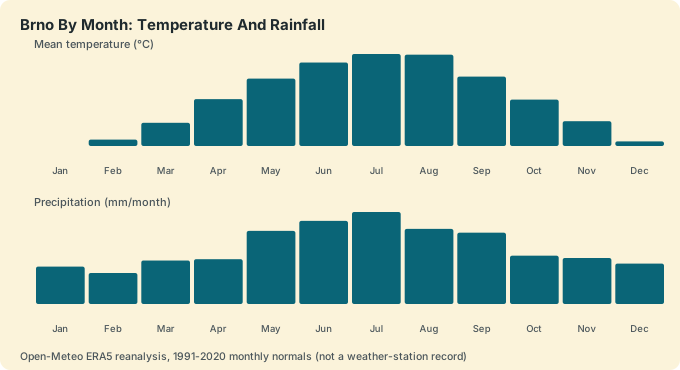
The table below is the complete month-by-month record from the ERA5 reanalysis, 1991-2020, for the grid cell at Brno's centre: mean daily high, mean daily low and total monthly rainfall for all twelve months, plus the annual rainfall sum of 617.6 mm. Read the high and low together, because the difference between them in a single day can exceed ten degrees.
| Month | Mean daily high | Mean daily low | Rainfall |
|---|---|---|---|
| January | 1.9 C | -3.8 C | 33.6 mm |
| February | 4.3 C | -3.0 C | 27.9 mm |
| March | 8.9 C | 0.1 C | 39.1 mm |
| April | 14.9 C | 4.5 C | 40.4 mm |
| May | 19.2 C | 9.6 C | 65.8 mm |
| June | 22.9 C | 13.3 C | 74.8 mm |
| July | 25.0 C | 15.3 C | 82.8 mm |
| August | 24.9 C | 15.2 C | 67.6 mm |
| September | 19.5 C | 10.8 C | 64.2 mm |
| October | 13.6 C | 6.3 C | 43.5 mm |
| November | 7.5 C | 2.1 C | 41.5 mm |
| December | 2.6 C | -2.4 C | 36.4 mm |
Two things stand out when the months are laid side by side. July and August are nearly identical in temperature, 25.0 C and 24.9 C mean highs, but July carries noticeably more rain, 82.8 mm against 67.6 mm. And the transition months move fast: March to April jumps almost six degrees in mean high, and October to November falls more than six.
If this table is steering you toward or away from certain weeks, pair it with the month-by-month practicalities on the Brnopas city card page, where indoor and outdoor sights are listed with what the card covers.
When Is The Best Time To Visit Brno?
The ERA5 reanalysis 1991-2020 points to May, June and September as the months where warmth and rainfall balance best: mean highs of 19.2 C, 22.9 C and 19.5 C respectively, with June at 74.8 mm and September at 64.2 mm. May offers 19.2 C days on 65.8 mm of rain, and April is cooler at 14.9 C on only 40.4 mm.
The trade-off is straightforward. The June-to-August window brings the highest temperatures. The April-to-May and September-to-October windows bring cooler days and roughly a third less rain. Winter brings the least rain of all, but on mean lows between -3.8 C and -2.4 C.
Events can outweigh climate. Ignis Brunensis, the fireworks festival at the Brno Reservoir, ran 30 May to 4 July in 2026, squarely inside the warm-and-wet window. The MotoGP Czech GP was on the 2026 calendar for 19 to 21 June at the Automotodrom, a midsummer event with midsummer weather attached; the Brno MotoGP guide covers the circuit side. The Christmas markets ran 13 November to 31 December in 2026, and the Brno Christmas market page pairs those dates with what winter actually feels like on the squares.
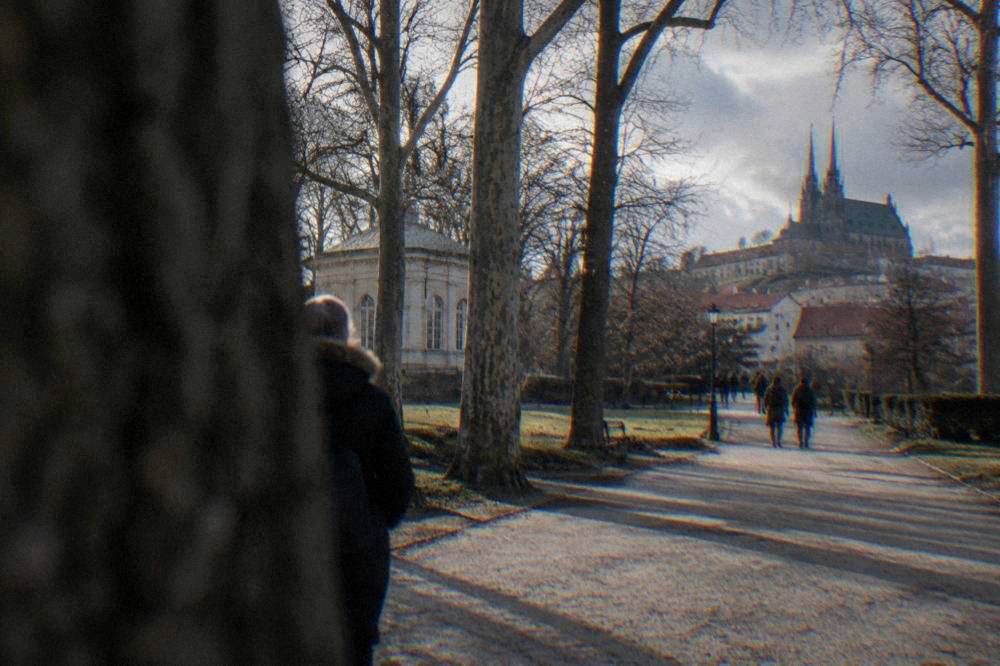
The related pick for this page is a Petrov Hill walking tour, a walk built around the cathedral that crowns the hill above the old town. The cathedral's own story is tied to weather-adjacent legend: its bells ring at 11:00 rather than noon, in memory of the 1645 Swedish siege. The tour's own page carries the live details, and you can also Check availability for your dates.
Does It Snow In Brno?
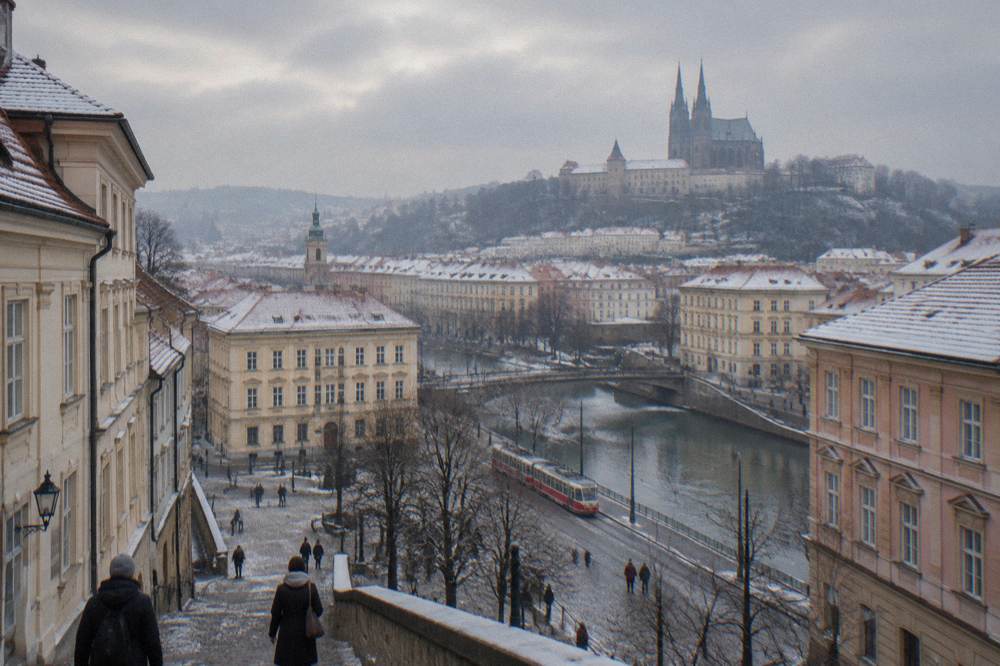
Yes, snow is part of a Brno winter. The ERA5 reanalysis 1991-2020 gives January a mean daily low of -3.8 C, February -3.0 C and December -2.4 C, with monthly rainfall of 33.6 mm, 27.9 mm and 36.4 mm respectively, and precipitation that falls in those months falls often enough as snow when temperatures sit below freezing. The reanalysis table gives temperatures and rainfall only, so no snow-day count can be quoted.
What the numbers support is this: winter in Brno is a freezing-night season, not a mild one. January nights average well below zero even as daytime highs hover just above it at 1.9 C, the kind of pattern that produces thaw-and-refreeze cycles on pavements rather than a permanent snowpack.
November and March sit on the margins, with mean lows of 2.1 C and 0.1 C, cold enough for occasional snow but not sustained frost. Anyone planning around snow should watch the forecast close to travel, and the does it snow in Brno companion pages cover winter city planning in more depth, alongside where to stay in Brno for a base with short walks to indoor sights.
How Much Does It Rain In Brno?
Brno receives 617.6 mm of rain per year, per the ERA5 reanalysis 1991-2020, and it is not evenly spread: July brings 82.8 mm, followed by June at 74.8 mm, August at 67.6 mm, May at 65.8 mm and September at 64.2 mm, while February records 27.9 mm and the other winter months all sit in the thirties.
| Rank by rainfall | Month | Rainfall | Mean high |
|---|---|---|---|
| 1 | July | 82.8 mm | 25.0 C |
| 2 | June | 74.8 mm | 22.9 C |
| 3 | August | 67.6 mm | 24.9 C |
| 4 | May | 65.8 mm | 19.2 C |
| 5 | September | 64.2 mm | 19.5 C |
| 6 | October | 43.5 mm | 13.6 C |
| 7 | April | 40.4 mm | 14.9 C |
| 8 | November | 41.5 mm | 7.5 C |
The summer half-year carries the volume, but central-European summer rain often arrives in heavier short spells rather than steady drizzle, so a wet July figure does not mean a washed-out month. The practical read: carry a compact rain layer from April through October, and expect the December-to-March rain total of roughly 100 mm combined to fall as a mix of rain, sleet and snow.
A rain plan already exists on this site: the Brno in the rain itinerary sequences indoor sights for wet days, and things to do in Brno lists the full range across weather.
What Is Spring Weather In Brno?
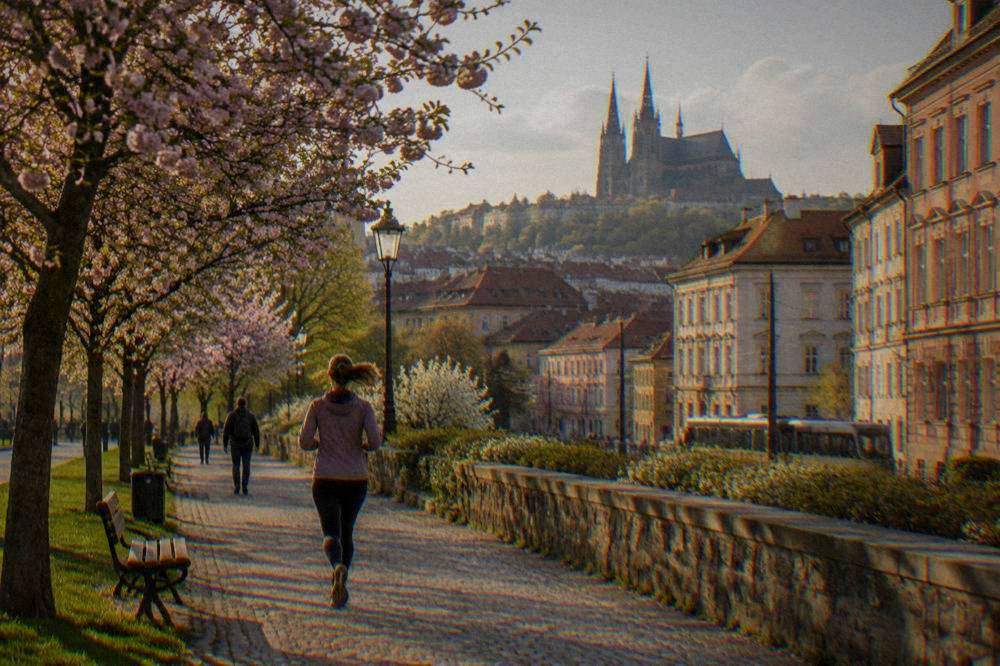
Spring in Brno warms quickly: mean daily highs climb from 8.9 C in March to 14.9 C in April and 19.2 C in May, with mean lows moving from 0.1 C to 4.5 C to 9.6 C, per the ERA5 reanalysis 1991-2020. Rainfall rises too, from 39.1 mm in March and 40.4 mm in April to 65.8 mm in May, so the season pairs its mildest walking temperatures with a rising chance of showers.
March is the month of mud and melt rather than greenery: nights still touch freezing on average, and 39.1 mm of rain falls on cold ground. By April the mean high is close to 15 C. May is the first month whose mean low stays in single digits above freezing at 9.6 C.
Spring also carries two dated events from the 2026 calendar: Slavnosti Brno ran an Easter programme from 27 March to 5 April, and a May festival from 12 to 17 May. Both sit in the shoulder season where a warm layer and a rain layer both earn their place in the bag.
| Spring month | Mean high | Mean low | Rainfall | Planning note |
|---|---|---|---|---|
| March | 8.9 C | 0.1 C | 39.1 mm | Freezing nights possible, layered clothing |
| April | 14.9 C | 4.5 C | 40.4 mm | Mild days, cold evenings |
| May | 19.2 C | 9.6 C | 65.8 mm | Warm but the spring month with the most rain |
What Is Summer Weather In Brno?
Summer is Brno's warmest season: mean daily highs of 22.9 C in June, 25.0 C in July and 24.9 C in August, with mean lows of 13.3 C, 15.3 C and 15.2 C, and monthly rainfall of 74.8 mm, 82.8 mm and 67.6 mm respectively, per the ERA5 reanalysis 1991-2020. Nights stay mild throughout, and July carries the year's highest figures for both temperature and rain.
These are means, not ceilings: a July day can run well past the 25.0 C mean high, and the same month delivers the year's heaviest rainfall total. The summer visitor's kit is light clothing for afternoons, something warm for evenings that average 15 C, and rain protection that can live in a daypack.
Summer is also Brno's festival core. Ignis Brunensis ran 30 May to 4 July in 2026 with fireworks over the Brno Reservoir, and the Vinobraní wine festival followed late in the season's shoulder, 25 September to 3 October 2026 on Náměstí Svobody. The South Moravian wine page covers what that festival celebrates.
For a summer grounding in the city's core story, the Petrov Hill history tour walks the cathedral hill that defines Brno's skyline, and the Brno walking tour guide maps a route that works in the long summer evenings.
What Is Autumn Weather In Brno?
Autumn cools steadily and dries slightly: mean daily highs fall from 19.5 C in September to 13.6 C in October and 7.5 C in November, with mean lows of 10.8 C, 6.3 C and 2.1 C, and rainfall of 64.2 mm, 43.5 mm and 41.5 mm respectively, per the ERA5 reanalysis 1991-2020. September still feels like summer's edge, while November nights sit close to freezing.
September is arguably the season's prize: a 19.5 C mean high on 64.2 mm of rain, with the Vinobraní wine festival on Náměstí Svobody from 25 September to 3 October in 2026 bridging the warm and cool halves. October halves the rainfall total of summer and keeps afternoons near 14 C. November is the month where the coat stops being optional, with nights averaging just above 2 C.
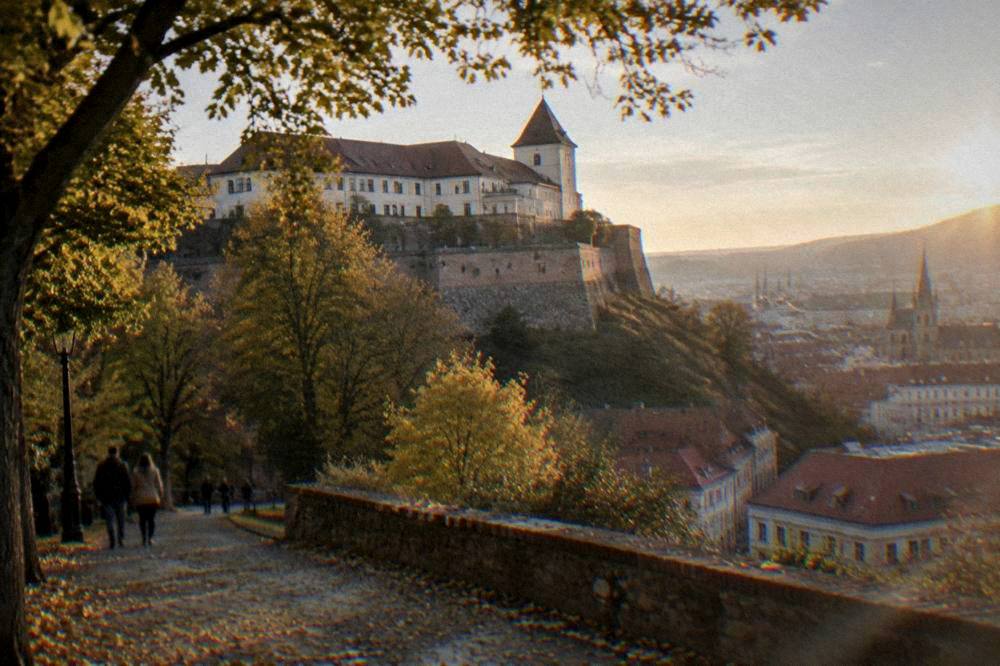
Autumn light suits Brno's hilltop pair, Špilberk Castle and Petrov. The castle grounds stay open daily 6:00 to 23:00 and the self-guided Casemates daily 9:00 to 21:00, per the castle's own opening page, so shorter days still leave full visiting hours. The Špilberk Castle guide carries the ticket detail.
| Autumn month | Mean high | Mean low | Rainfall | Planning note |
|---|---|---|---|---|
| September | 19.5 C | 10.8 C | 64.2 mm | Wine festival season, mild days |
| October | 13.6 C | 6.3 C | 43.5 mm | Cooling fast, less rain |
| November | 7.5 C | 2.1 C | 41.5 mm | Near-freezing nights, markets open 13 Nov 2026 |
What Is Winter Weather In Brno?
Winter is cold and comparatively dry: mean daily highs of 2.6 C in December, 1.9 C in January and 4.3 C in February, with mean lows of -2.4 C, -3.8 C and -3.0 C, and monthly rainfall of 36.4 mm, 33.6 mm and 27.9 mm respectively, per the ERA5 reanalysis 1991-2020. January is the month with the year's lowest mean high and lowest mean low.
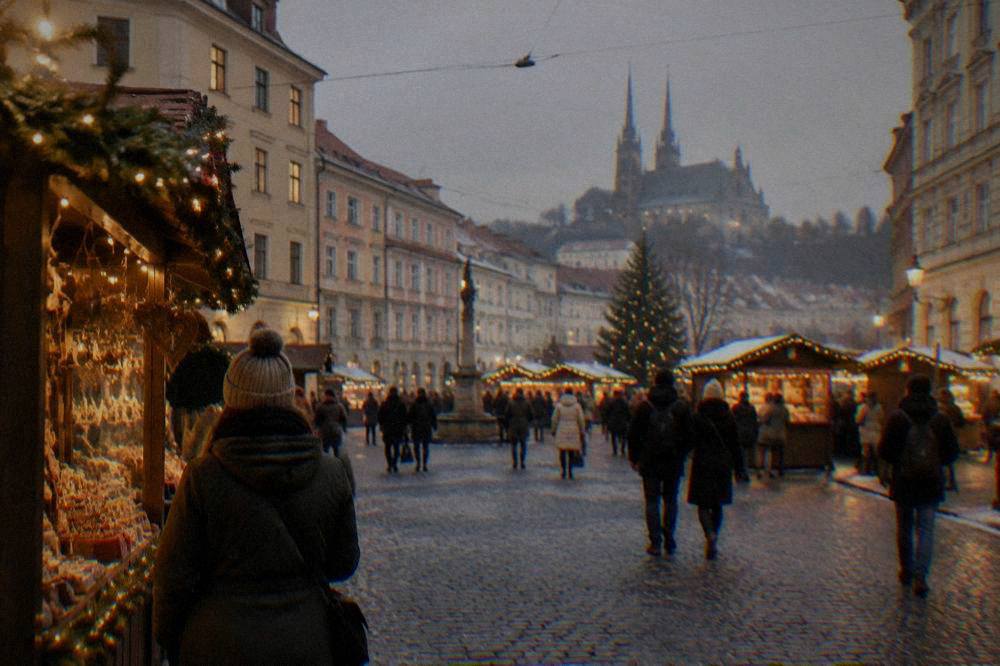
The cold is continental rather than maritime: days that barely clear freezing and nights a few degrees below it. That is market weather, and Brno's Christmas markets ran 13 November to 31 December in 2026 across the central squares, with Zelný trh and Náměstí Svobody as anchors. Mulled wine and roasted chestnuts exist precisely for a 2.6 C December mean high.
Winter sightseeing tilts indoors. The Villa Tugendhat tickets page explains the booking-through-Brno-iD requirement for the city's UNESCO villa, closed Mondays, with prices rising on 1 January 2027, a detail that matters for anyone booking a winter 2027 visit. The Brno museums and Brno in the rain pages cover the indoor roster.
What Should You Pack For Brno Weather?
Pack for a continental swing: for June to August, light clothing plus a warm evening layer for mean lows of 13.3 to 15.3 C and rain protection for the summer months' 67.6 to 82.8 mm of rainfall; for December to February, a proper winter coat, hat and gripped footwear for mean lows of -3.8 to -2.4 C; and for the shoulder months, layered clothing that spans roughly 8 C to 20 C mean highs with a rain layer.
| Season | Mean high range | Mean low range | Rain per month | Core packing |
|---|---|---|---|---|
| Spring (Mar to May) | 8.9 to 19.2 C | 0.1 to 9.6 C | 39.1 to 65.8 mm | Layers, light rain jacket, warm evenings |
| Summer (Jun to Aug) | 22.9 to 25.0 C | 13.3 to 15.3 C | 67.6 to 82.8 mm | Light clothing, evening layer, rain shell |
| Autumn (Sep to Nov) | 7.5 to 19.5 C | 2.1 to 10.8 C | 41.5 to 64.2 mm | Layers, waterproof, warm coat by November |
| Winter (Dec to Feb) | 1.9 to 4.3 C | -3.8 to -2.4 C | 27.9 to 36.4 mm | Winter coat, hat, gloves, gripped shoes |
Footwear deserves a line of its own. Winter's freeze-thaw cycle and old-town cobblestones argue for shoes with real tread, and rain in every month argues for something that survives a puddle. Comfort matters more than style on the hills of Petrov and Špilberk.
Getting around in bad weather is cheap either way: a 60-minute public transport ticket is 25 CZK and a 24-hour Brno ticket is 90 CZK, per the operator's tariff from 1 October 2026, and the Brno public transport page explains tickets, zones and the airport bus.
What Can You Do In Brno When The Weather Turns?
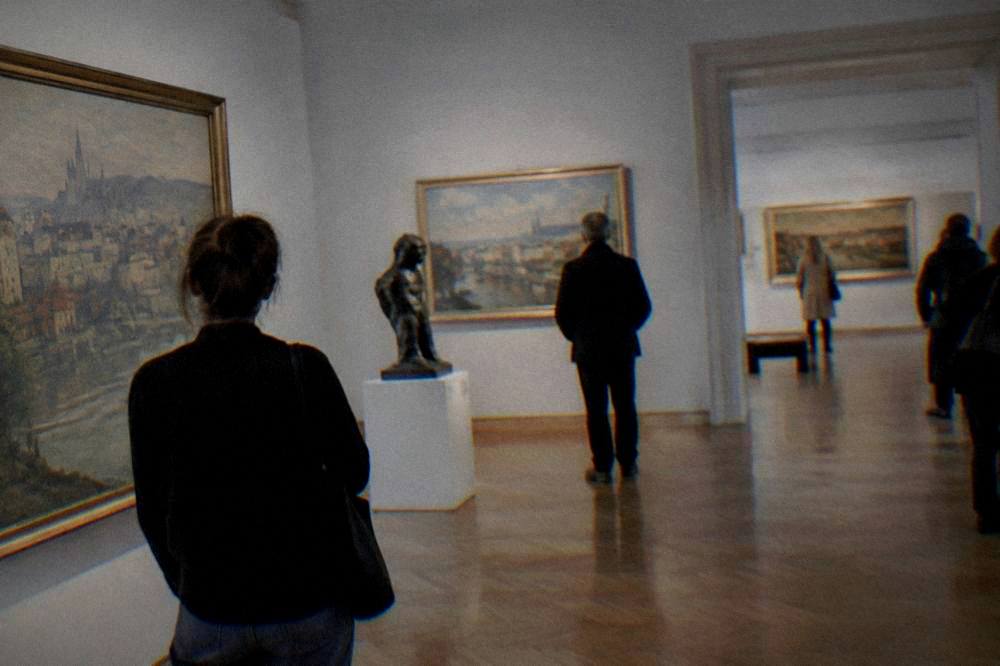
Brno has enough indoor sightseeing to fill several wet days: Villa Tugendhat (booked through Brno iD, closed Mondays), the Špilberk Castle museum exhibitions and self-guided Casemates (daily 9:00 to 21:00), the Mendel Museum (Tue to Sun 10:00 to 17:00 from 1 October 2026), the Technical Museum, the Moravian Gallery and the operator-run underground sites beneath the city, whose hours and prices are listed on the operator's own page.
The castle deserves the first slot in any rain plan. Its grounds open 6:00 to 23:00 daily, the ticket office 9:00 to 18:00, and the self-guided Casemates and Bastion run to 21:00, per the castle's opening-hours page, so a wet afternoon still fits a full visit. Guided tours, including the Story of the Castle at 180 CZK full and the Casemates tour at 260 CZK, run Tuesday to Sunday with tickets via Brno iD.
The underground options, the Ossuary at St James, the Labyrinth under the Cabbage Market and the 10-Z Bunker, are run by a single operator; check the current price and hours on the operator's own ticket page before booking, and note that the Ossuary is free with a Brnopas card. The Brno underground tour page lays out how the sites compare.
Food rounds out the shelter list. The what to eat in Brno page covers the city's table, and the Brno cafes guide maps the coffee stops between museums. On a cold evening, the beer and pubs in Brno page is the natural next read, and Brno on a budget keeps the whole plan affordable. For anyone weighing arrival logistics against the season, how to get to Brno covers flights, trains and buses.
This page is part of Brno Travel Guide, the site's full coverage of the city and its region.
Common Questions About Brno Weather
What is the weather like in Brno in summer?
Summer mean daily highs are 22.9 C in June, 25.0 C in July and 24.9 C in August, with mean lows of 13.3 to 15.3 C, per the ERA5 reanalysis 1991-2020. Summer also brings 67.6 to 82.8 mm of rain per month.
What is the weather like in Brno in winter?
Winter mean daily highs range from 1.9 C in January to 4.3 C in February, and mean lows sit between -3.8 C and -2.4 C, per the ERA5 reanalysis 1991-2020. Monthly rainfall is modest, 27.9 to 36.4 mm, falling as rain, sleet or snow.
Does it snow in Brno?
Brno's winter months average below-freezing nights, with January's mean low at -3.8 C, so snow occurs. The ERA5 reanalysis table gives temperatures and rainfall only, so no snow-day count can be quoted; check the forecast close to your travel dates.
What is the rainiest month in Brno?
July, at 82.8 mm, followed by June at 74.8 mm and August at 67.6 mm, per the ERA5 reanalysis 1991-2020. February brings 27.9 mm of precipitation.
When is the best time to visit Brno?
By climate alone, May, June and September balance warmth and rain best, with mean highs of 19.2 C, 22.9 C and 19.5 C. Events may shift the answer: the 2026 fireworks festival ran 30 May to 4 July and the Christmas markets 13 November to 31 December.
Is Brno weather similar to Prague weather?
Both cities share a continental central-European climate with warm summers and freezing winter nights. This page prints figures only for Brno, from the ERA5 reanalysis 1991-2020, and the Brno vs Prague comparison covers the broader differences.