Moravian Wine Tours From Brno
Brno sits at the northern edge of South Moravia's wine country, with Mikulov, Pálava and the UNESCO landscape of Lednice-Valtice all within about 50 straight-line kilometres. This guide sets out what a guided wine tour from Brno covers, what the region's entry prices and seasons actually are, and how to plan the day.
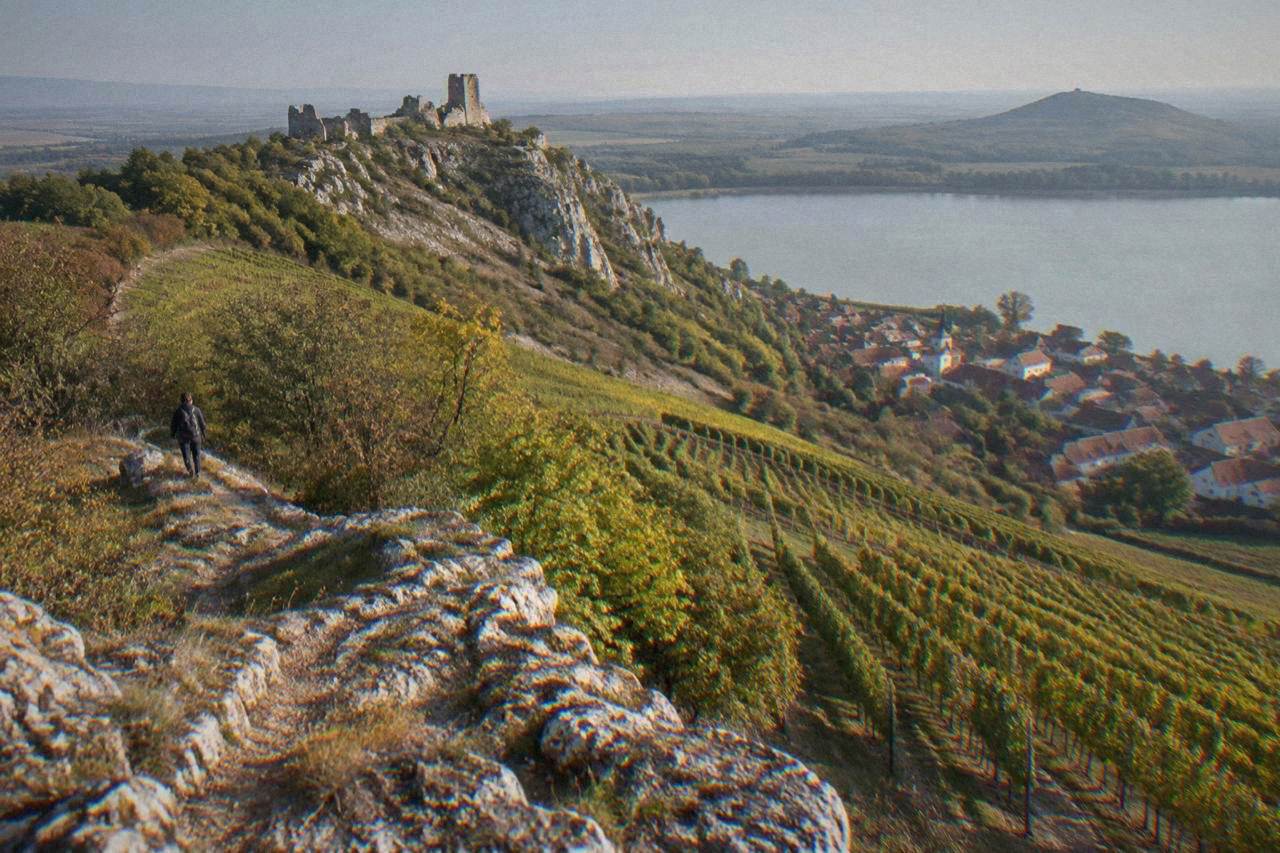
Short answer
Moravian wine tours from Brno run to the Lednice-Valtice area and Mikulov, about 43 to 46 km south of the city in a straight line. Guided tours handle transport and tastings; independent travellers can reach the region by train or bus and buy Lednice Chateau tickets on site from 220 CZK.
Brno, in South Moravia, Czechia, is one of the few European cities where a working wine region begins almost at the tram stops. The vineyards of the Lednice-Valtice Cultural Landscape, the Pálava hills and the wine town of Mikulov all lie between roughly 43 and 46 kilometres from the city centre in a straight line, close enough that a tasting day can start after breakfast and end back at Náměstí Svobody for dinner. The catch is detail: the region mixes UNESCO-listed chateaus, small cellar villages and seasonal festivals, and getting the plan right matters more here than in a single-attraction destination. This guide from the Brno Travel Guide desk sets out the geography, the prices and dates, and the guided options, so the day can be built on figures rather than guesswork.
What Is A Moravian Wine Tour From Brno?
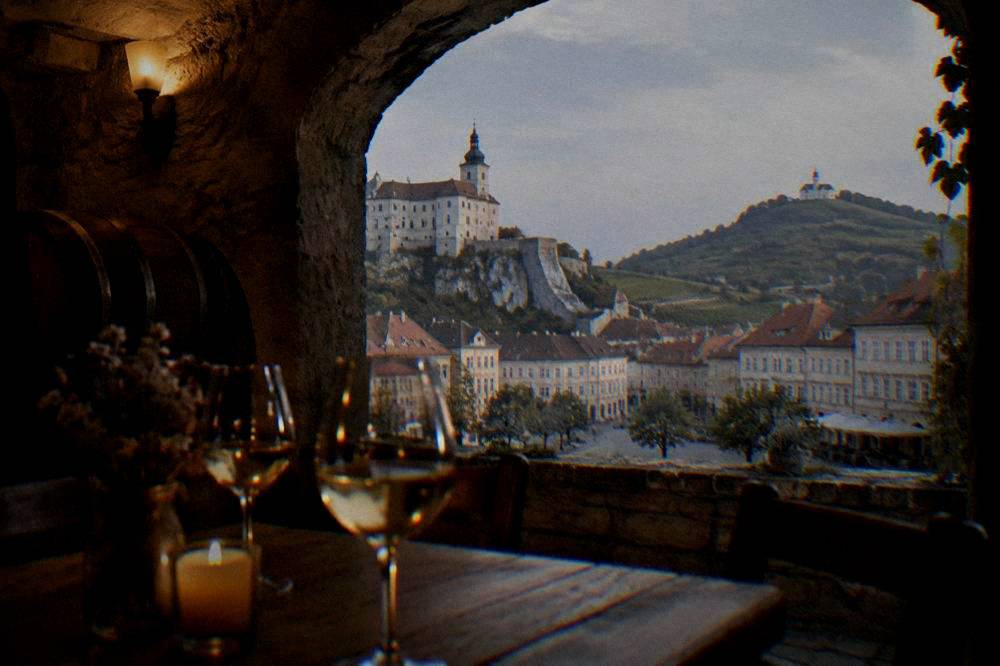
A Moravian wine tour from Brno is a guided day trip out of the city into South Moravia's wine country, typically combining the Lednice-Valtice UNESCO landscape with Mikulov and the Pálava hills, with transport, a guide and wine tastings arranged as one booked product. The wine villages sit about 43 to 46 km from Brno in a straight line, so the tour replaces the work of stitching together trains, buses, chateau tickets and cellar visits.
The logic of the product is simple: the region's pleasures are scattered. Lednice has a chateau with timed tours, Mikulov has a castle above a wine town, and the tasting rooms sit in villages between them. A guided tour collapses that into one itinerary, and the operators on this site's roster cover the pattern in different depths. Some travellers plan the same ground independently, and the sections below give the numbers for that route too: the Lednice Chateau prices, the train and bus times, and the festival dates that fix the calendar.
What no tour can change is the season. Wine country runs on the viticultural year, from the burčák season, legally 1 August to 30 November (R), to the autumn harvest festivals. Brno's own Vinobraní ran 25 September to 3 October in 2026 (V), and that window is when the region's towns hold their own wine celebrations. The grape varieties themselves, the vintages and the tasting prices are details this site's sources do not carry, so the pages below stick to what is confirmed and point to the operators for the rest.
Where Is Moravian Wine Country And How Far From Brno?
The wine country begins about 43 km south of Brno in a straight line at Mikulov, with the Pálava hills at about 36 km and the Lednice-Valtice landscape at about 46 km, all inside South Moravia, the region of Czechia whose capital is Brno itself. Vienna lies about 111 km further on, which is why the same wine area appears on Austrian itineraries too.
These are straight-line distances, computed from the site's own places data, and they explain the region's shape: a band of vineyards and floodplain forest running south from Brno towards the Austrian border. Brno is an inland city on the Svratka and Svitava rivers; the nearest large water body is the Brno Reservoir about 7 km away, and the wine region's character comes from limestone hills rather than any coast.
| Destination from Brno centre | Straight-line distance |
|---|---|
| Pálava hills | about 36 km |
| Mikulov | about 43 km |
| Lednice-Valtice landscape | about 46 km |
| Znojmo | about 56 km |
| Brno Reservoir | about 7 km |
| Vienna | about 111 km |
The table matters for planning because the distances are short but the connections are not all equal. Trains and buses reach Mikulov in about 45 to 60 minutes (R), and the same band of track serves the Lednice and Valtice area with a change or a short local hop. Train times to Slavkov, about 20 to 30 minutes, and Olomouc, about 1 hour (R), show how the wider region brackets the wine country on either side. Fares on those routes are not carried in this site's sources, so check the operator pages before budgeting.
For orientation inside Brno before departure, the Brno city centre guide covers the squares and lanes around Freedom Square and the Cabbage Market, and the question of what kind of wine is produced in Moravia answers the grape-side basics.
What Does A Guided Wine Tour From Brno Actually Include?
Guided wine tours from Brno bundle three things a self-planned day leaves you to arrange separately: return transport from the city, a guide who moves the group between chateau, cellar and viewpoint, and pre-arranged tastings in the wine villages. The specific stops vary by product: the standard pattern pairs the Lednice-Valtice UNESCO landscape with Mikulov, while some tours widen into Pálava's hillside paths.
The featured product on this site, a Wine Culture and UNESCO Gems tour of the Lednice-Valtice area and Mikulov, follows the classic route: the chateau park at Lednice, the Valtice side of the UNESCO landscape, and Mikulov's castle and cellars, with tasting woven through the day. Its price, rating and current availability render on its live listing rather than on this page. For a decision at the planning stage, the operator's page shows what the from-price covers and what is extra.
A second pattern skips the wine villages entirely and stays in Brno: small-group food tasting walks that include Moravian wine among the stops. These suit travellers with only one day in the city or an afternoon gap before a train. The differences are practical rather than qualitative: a city tasting walk fits a half day, a Lednice-Valtice tour fills a full one.
What a tour cannot arrange is the weather window, and South Moravia's summer is warm: the ERA5 reanalysis, 1991-2020, gives July a mean daily high of 25.0 C and June 22.9 C, with July also recording 82.8 mm of rain. A tour day with an outdoor component is a summer-and-autumn proposition, which the season section below covers in detail.
Can You Combine Wine Tasting With The UNESCO Sites At Lednice-Valtice?
Yes, and the combination is the region's signature day: the Lednice-Valtice Cultural Landscape is a UNESCO World Heritage site of 143 km2 containing Lednice Chateau, Valtice Chateau and the parkland between them, so a wine tour and a heritage visit share the same ground. Lednice Chateau's own ticket page lists Tour I State Rooms at 280 CZK full and 200 CZK reduced, Tour II Private Apartments at 220 / 160 CZK, and a combined ticket at 420 / 300 CZK, with free park entry.
The chateau prices are the one set of figures in the region this site's checks confirmed directly, and they reward planning. The combined ticket at 420 CZK full price covers both interior tours, and the park, which is the landscape's connective tissue, costs nothing to walk. An English audio guide costs 50 CZK, and children under 6 enter free. Valtice Chateau has its own official visitor site with tours and online tickets, but this site's checks did not confirm its prices, so check its page before the visit.
| Lednice Chateau ticket | Full (CZK) | Reduced (CZK) |
|---|---|---|
| Tour I, State Rooms | 280 | 200 |
| Tour II, Private Apartments | 220 | 160 |
| Combined ticket | 420 | 300 |
| English audio guide | 50 | 50 |
| Park entry | free | free |
The landscape's scale is the reason a guided tour earns its keep here. The UNESCO inscription covers 143 km2, and the distances between chateau, minaret viewpoints and cellar villages add up over a day. A tour with a vehicle moves between them on a schedule; an independent visitor pieces together trains, buses and footpaths. Both work, but the second needs the region's opening calendar, which is seasonal at the chateaus under the National Heritage Institute.
What About Mikulov And The Pálava Hills?
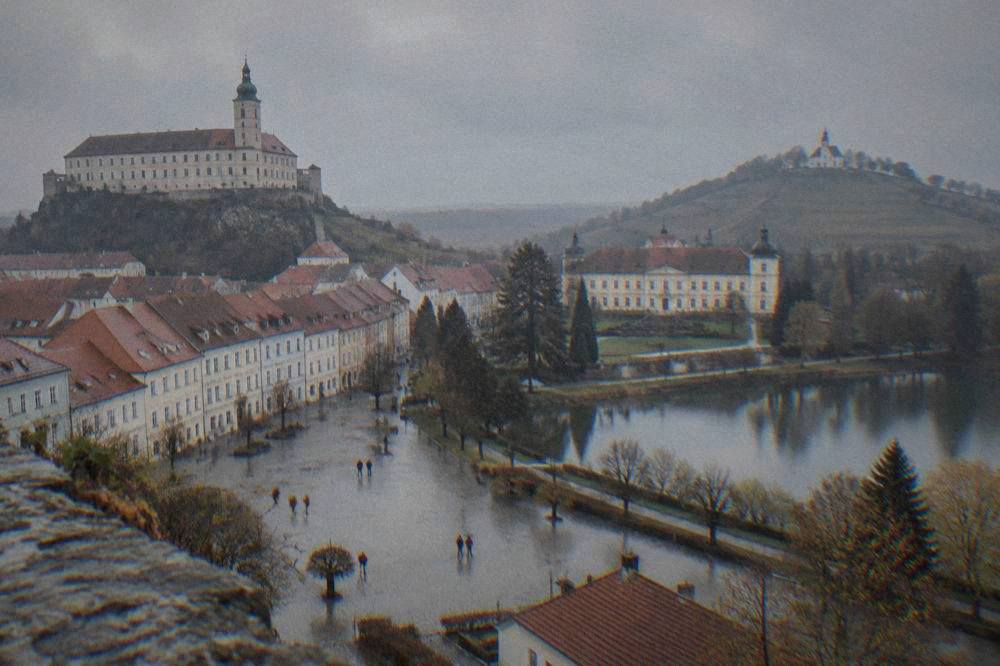
Mikulov is the wine capital of the region's southern end, about 43 km from Brno in a straight line and about 45 to 60 minutes away by train or bus (R), sitting under the Pálava hills, a UNESCO-recognised limestone landscape about 36 km from the city that walkers cross free of charge. Mikulov Castle's entry prices are not carried in this site's sources, so check its official page before visiting.
The town's role on a wine itinerary is different from Lednice's. Where Lednice is a chateau with vineyards attached, Mikulov is a working wine town with a castle above it, and the cellars sit inside the town rather than around it. The featured tour on this site includes Mikulov as the second half of its day, and the pairing is deliberate: morning in the designed landscape of Lednice-Valtice, afternoon among Pálava's hills and Mikulov's lanes. Other pages covering the same trip are gathered on Brno Travel Guide.
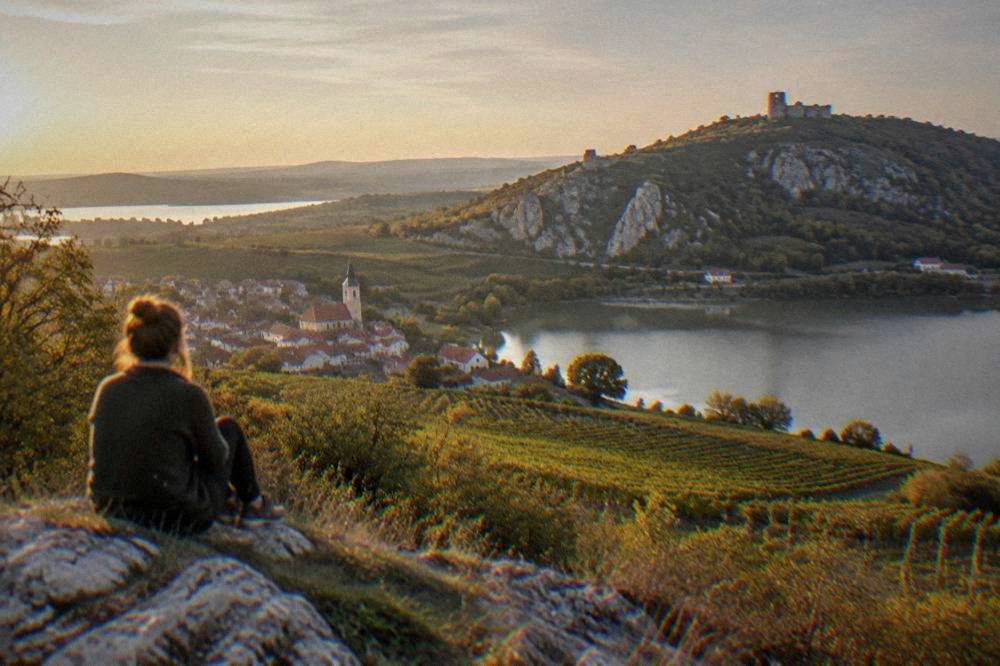
Pálava itself is a walking landscape. Its limestone ridges rise over the vineyards and the Dyje river floodplain, and access is open, so a day built around the hills needs nothing beyond shoes and water. The hills' summits and the ruins on them are described in the region's own materials; this site's checks confirmed the distance and the free access, and the castle's ticket details remain a check-on-arrival item.
When Is The Best Time Of Year For A Moravian Wine Tour?
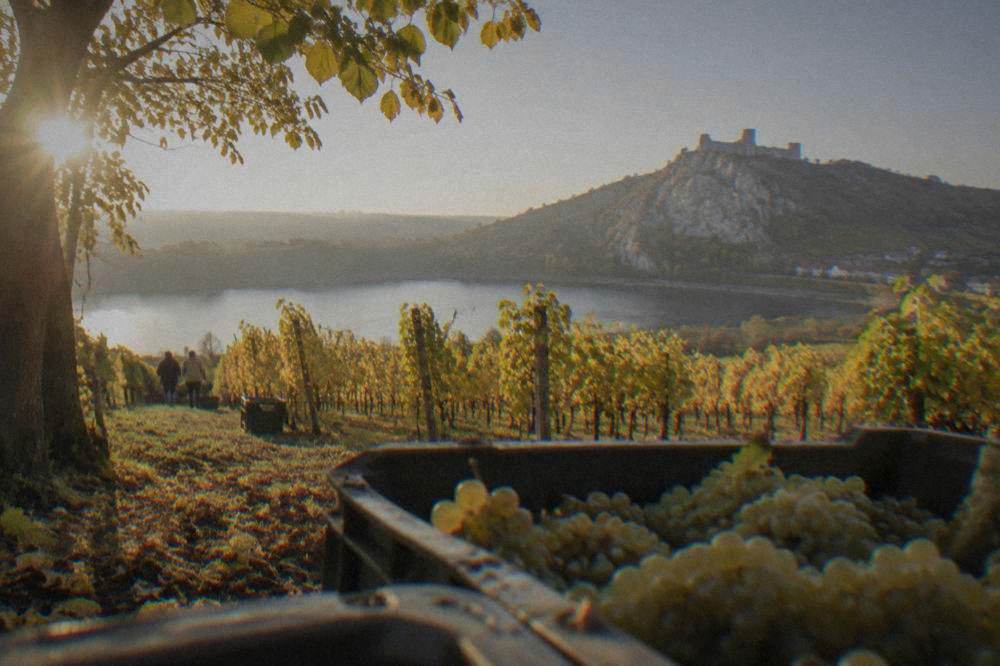
The harvest window anchors the calendar: Brno's Vinobraní wine festival ran 25 September to 3 October 2026 on Náměstí Svobody (V), the burčák season for young wine runs legally from 1 August to 30 November (R), and the climate table gives September a mean high of 19.5 C with 64.2 mm of rain, ERA5 reanalysis, 1991-2020. Summer is warmer, 25.0 C in July, but carries the year's highest rainfall at 82.8 mm.
The festival calendar matters because it changes what a wine day looks like. During Vinobraní, the city centre itself becomes the tasting room, and the wine villages hold their own harvest events in the same weeks. Earlier in the season, from August, burčák, the cloudy partly fermented young wine, appears for its legal window, and late autumn shifts the region to cellar tastings as the outdoor season closes.
| Month | Mean high (C) | Mean low (C) | Rain (mm) |
|---|---|---|---|
| May | 19.2 | 9.6 | 65.8 |
| June | 22.9 | 13.3 | 74.8 |
| July | 25.0 | 15.3 | 82.8 |
| August | 24.9 | 15.2 | 67.6 |
| September | 19.5 | 10.8 | 64.2 |
| October | 13.6 | 6.3 | 43.5 |
The figures are modelled normals from the ERA5 reanalysis, 1991-2020, a grid-cell dataset rather than a station record, and they describe the pattern rather than any given day. The practical reading is that May through October covers the visiting season, with the balance shifting from warmth in midsummer to festivity and lower rainfall totals in September and October. The wider events calendar, including the Ignis Brunensis fireworks at the reservoir that ran 30 May to 4 July in 2026, is covered in the Brno events round-up planning page.
Can You Taste Moravian Wine Without Leaving Brno?
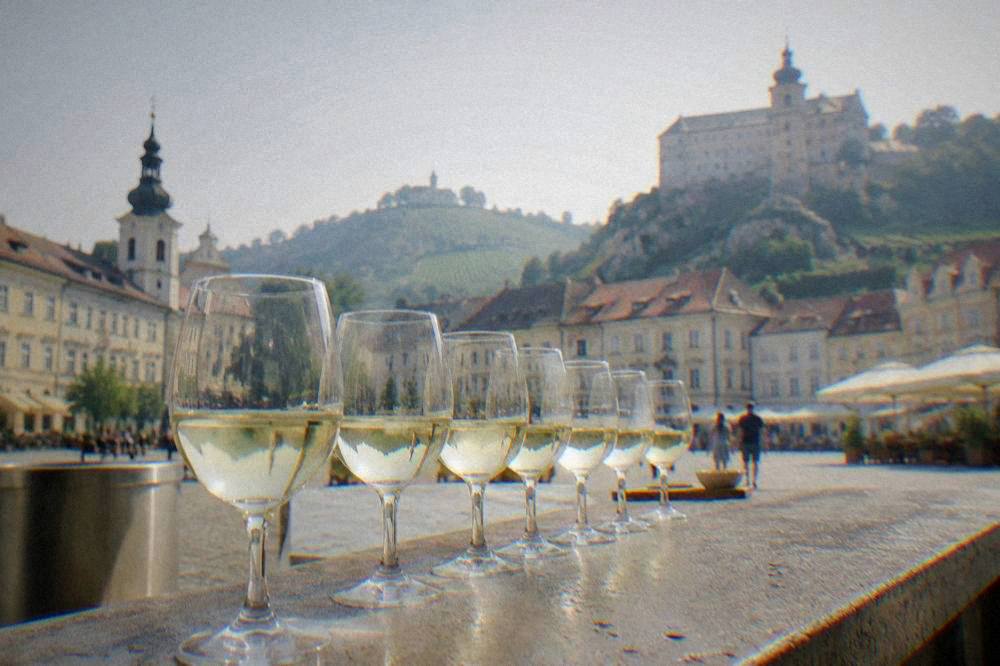
Yes: Brno has its own tasting layer, from small-group food tasting walks that pour Moravian wine among their stops to the city's wine bars, and the Vinobraní festival brings the wine region to Náměstí Svobody for nine days each late September. A guided tasting walk adds a local lead to the same ground, and the city's standing options are covered on this site's dedicated wine-bars page.
The city's tasting walks are the compact alternative to a full day in the vines. A small-group food tour in hidden gems runs tastings across several stops, and the operator's listing carries its price, rating and availability; this page prints none of those figures. The other product in this bracket pairs a beer spa with unlimited Pilsner Urquell, which is the barley answer to the same question. For a wider view of the region's bottles, the South Moravian wine overview and the Brno wine bars guide are the site's dedicated pages.
Vinobraní deserves its own mention even for wine-first travellers, because it inverts the usual journey. Instead of travelling to the vines, the festival sets up on the city's main square, 25 September to 3 October in 2026 (V), and the wine comes to the visitor. The dates shift annually, so treat the 2026 edition as the pattern, not a fixture.
How Do You Reach The Wine Region Without A Tour?
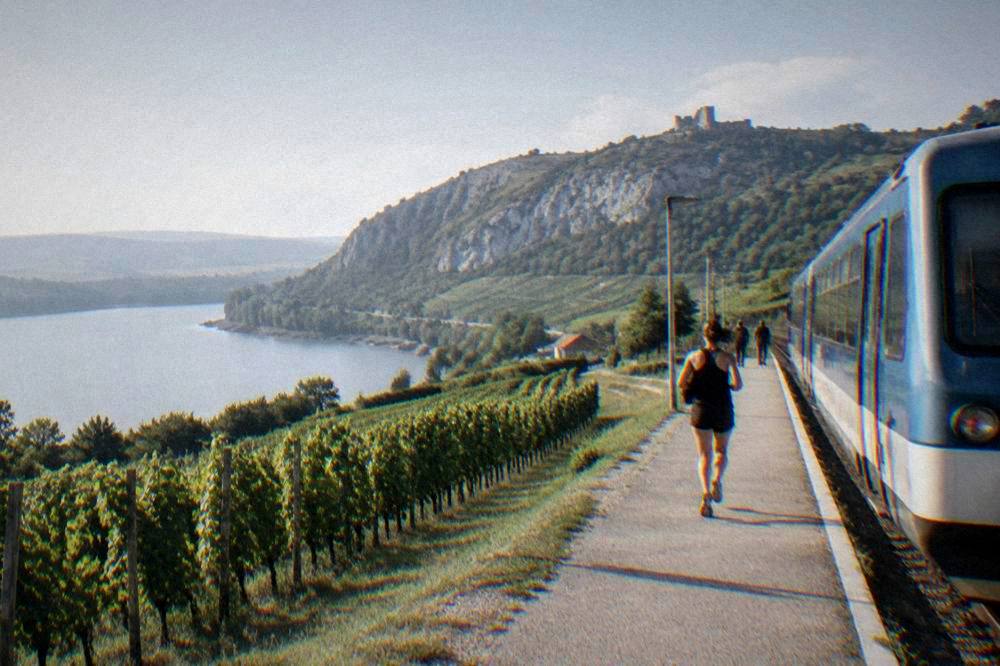
Independent travel from Brno to the wine country runs on regional trains and buses: Mikulov is about 45 to 60 minutes away (R), trains to Blansko on the Karst line take 18 to 24 minutes, and inside Brno itself a 24-hour public transport ticket for zones 100 and 101 costs 90 CZK (V), with single paper tickets at 20, 25 and 33 CZK for 15, 60 and 90 minutes from 1 October 2026.
The city's own transport is the cheap half of the journey. The 24-hour Brno ticket at 90 CZK covers zones 100 and 101, which is the whole city, and paper singles suit shorter hops to the station or reservoir. The regional legs to Lednice, Valtice and Mikulov are operated by Czech Railways and the South Moravian integrated system, with times and fares on their own pages; this site's checks confirmed the Mikulov journey time as reported, and fares for that leg are not carried here.
| Brno public transport ticket | Price (CZK) | Validity |
|---|---|---|
| Single, 2 zones | 20 | 15 minutes |
| Single, 2 zones | 25 | 60 minutes |
| Single, 3 zones | 33 | 90 minutes |
| 24-hour Brno ticket | 90 | zones 100 + 101, 24 hours |
| 24-hour all zones | 250 | full IDS JMK network |
For a trip that mixes city sights with the wine day, the Brnopas visitor card is worth a calculation. The standard card runs 370, 490 and 610 CZK for one, two and three days (V), and its free-entry list includes the Old Town Hall tower, the Ossuary, the Cathedral tower and the Brno Zoo, none of which sit in the wine region. The three-day card adds a seasonal boat on the Brno Reservoir (V for the route inclusion). It does not cover the chateaus, so its value depends on how much of Brno itself the itinerary includes.
| Brnopas card | Adult (CZK) | Child (CZK) |
|---|---|---|
| 1 day | 370 | 250 |
| 2 days | 490 | 330 |
| 3 days | 610 | 400 |
| Brnopas+ 1 day with Villa Tugendhat | 870 | 570 |
| Brnopas+ 3 days with Villa Tugendhat | 1110 | 720 |
One pairing to book early if the itinerary includes it: Villa Tugendhat, the city's own UNESCO site, sells interior access only through Brno iD, is closed Mondays, and raises prices on 1 January 2027, with the Extended tour at 500 CZK full price until 31 December 2026 and 550 CZK after. A wine-region day and a Tugendhat day use different planning clocks, and the villa's is the stricter of the two.
What Else Can You Pair With A Wine Day From Brno?
The wine region sits inside a band of day trips that share the same southern and eastern tracks: the Moravian Karst with the Punkva Caves and Macocha Abyss lies about 20 to 22 km from Brno in the opposite direction, Slavkov and the Austerlitz battlefield about 20 km, and the UNESCO towns Telč, Třebíč and Kroměříž at about 84, 53 and 58 km respectively, so a two- or three-day stay can alternate wine, karst and heritage without long journeys.
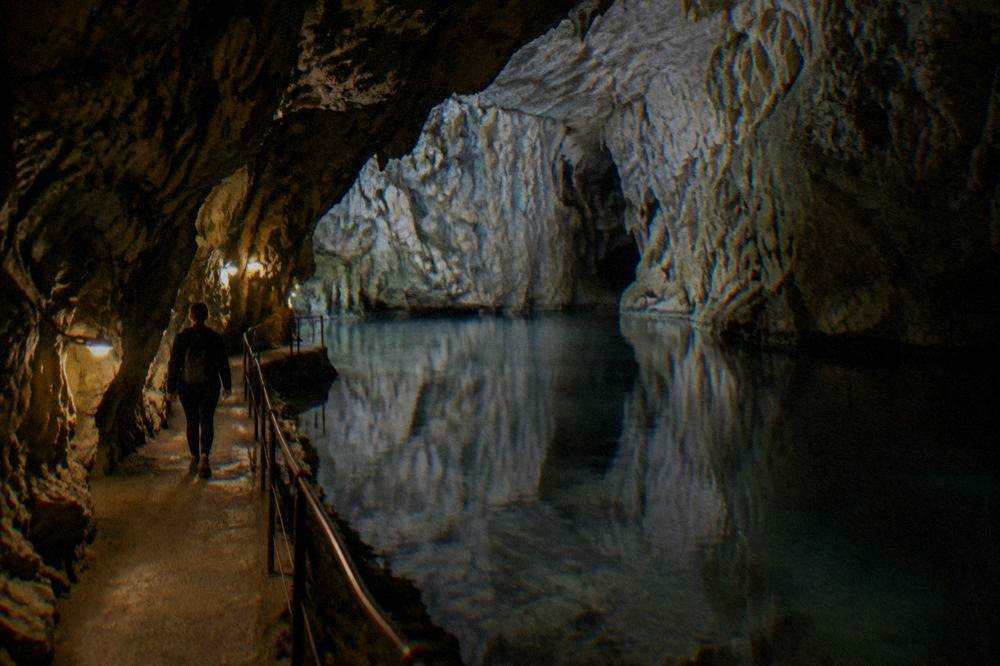
The Karst is the natural companion. The Punkva Caves tour runs about 60 minutes with an underground boat to the base of Macocha Abyss (R), and the train to Blansko takes 18 to 24 minutes, which makes the caves a half-day proposition from Brno hlavní nádraží. The site's Moravian Karst tour page covers the guided options, and the caves' own ticket price should be checked on their official page before travelling, since this site's sources do not carry it. Further afield, Pernštejn Castle, about 35 km away, charges 260 CZK adult for its basic tour (V) and runs weekend-only hours in autumn, so check its calendar before slotting it in.
| Day trip from Brno | Straight-line distance | Confirmed detail |
|---|---|---|
| Moravian Karst / Punkva Caves | about 20 to 22 km | tour about 60 min with boat (R) |
| Slavkov (Austerlitz) | about 20 km | battle 2 December 1805 (R) |
| Pernštejn Castle | about 35 km | basic tour 260 CZK (V) |
| Třebíč | about 53 km | UNESCO Jewish Quarter (V) |
| Kroměříž | about 58 km | UNESCO Gardens and Castle (V) |
| Telč | about 84 km | UNESCO, inscribed 1992 (V) |
Sequencing is the practical question. The two-day Brno itinerary and the one-day plan show how the city's own sights, Špilberk Castle, the Cathedral of Sts Peter and Paul on Petrov, the underground at the Cabbage Market, divide across a short stay, and a wine day slots in as the out-of-town block. Travellers coming from the capital can also read the site's page on whether Brno is worth a day trip from Prague before committing to the 186 km straight-line distance.
How Do You Choose Between The Guided Wine Tours From Brno?
Choose by scope and pace: the Lednice-Valtice and Mikulov tour is the full-region option covering the UNESCO landscape and the wine town in one day, the small-group food tasting walk keeps the tasting inside Brno at street level, and the Lednice Chateau product focuses on the chateau and its wine trails for a heritage-led day. Prices, ratings and review counts for all three render on their live listings, and this page prints none of them.
The featured tour is the broadest of the three, and its route, chateau park, Valtice, Mikulov, is the itinerary an independent plan converges on anyway. The chateau-focused product suits travellers whose interest in wine is secondary to the architecture, and the city tasting walk suits a schedule that cannot spare a full day. For those who prefer to wander before tasting, the Brno walking tour options cover the city's own lanes and legends, and the free walking tours, which run on a pay-what-you-want basis, cover an orientation hour at no fixed price.
To book the featured wine day, the operator's live listing carries the current price and availability: Check availability. The listing also states the cancellation terms, which matter for a day that depends on weather.
Common Questions About Moravian Wine Tours From Brno
How far is Moravian wine country from Brno?
The core wine destinations lie about 36 to 46 km south of the city in a straight line: the Pálava hills about 36 km, Mikulov about 43 km and the Lednice-Valtice landscape about 46 km. Mikulov is about 45 to 60 minutes away by train or bus (R).
Can you do a wine tour from Brno in one day?
Yes. A guided tour covers Lednice, Valtice and Mikulov in a single booked day with transport and tastings included. Independent travellers can do the same ground with trains and buses but need to fit the chateaus' seasonal opening hours around travel time.
How much does Lednice Chateau cost?
The chateau's own ticket page lists Tour I State Rooms at 280 CZK full and 200 CZK reduced, Tour II Private Apartments at 220 / 160 CZK, and a combined ticket at 420 / 300 CZK, with an English audio guide at 50 CZK. The park is free to enter.
When is wine season in South Moravia?
The burčák season for young wine runs legally from 1 August to 30 November (R), and the harvest festivals cluster in late September and early October: Brno's Vinobraní ran 25 September to 3 October in 2026.
Do you need a car for the Moravian wine region?
No. Regional trains and buses connect Brno with Mikulov in about 45 to 60 minutes (R) and serve the Lednice-Valtice area, and guided tours include transport. A car adds flexibility between villages but is not required for the main route.
Can you taste Moravian wine in Brno itself?
Yes. Small-group food tasting walks pour Moravian wine among their stops, the city's wine bars stock the region's bottles, and the Vinobraní festival brings producers to Náměstí Svobody for nine days each autumn.