Brno As A Student City: Masaryk University And The Bar Scene
Brno, in South Moravia, Czechia, is a city of 404,296 permanent residents whose universities give the centre its rhythm, its term-time energy and its evening economy.
Short answer
Brno is one of Central Europe's liveliest student cities: Masaryk University alone enrolls 38,181 students, and the city combines Czech koruna prices, cheap trams, Moravian wine and a dense bar quarter around the Old Town squares.
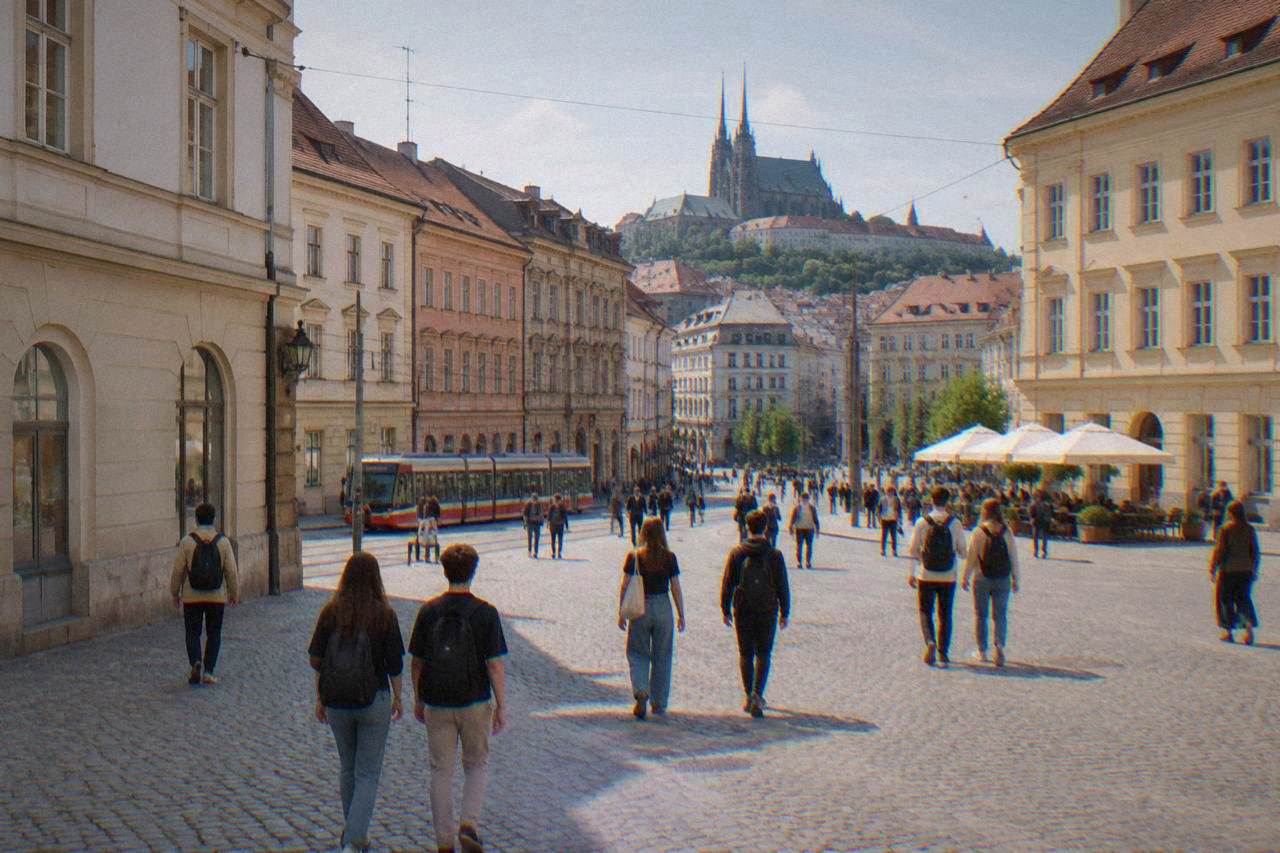
Brno, in South Moravia, Czechia, is an inland city of 404,296 permanent residents at the end of 2025, and a large share of its daily life belongs to its students. Masaryk University alone counted 38,181 students on its official statistics page, a number that shapes everything from the tram queues of term time to the terraces of the Cabbage Market on a warm evening. The city's founding charter dates to 1243, its castle to a hilltop that has watched over the Svratka valley since the Middle Ages, but the Brno a visitor meets today is a university town first: young, Czech-speaking, priced in koruna and closed for business nowhere important on a Friday night.
How Big Is Student Life In Brno?
Masaryk University enrolled 38,181 students according to its own statistics page, which makes Brno one of the largest university cities in Czechia relative to its population of 404,296 permanent residents at the end of 2025. The university's founding year is reported as 1919, per the Czech UNESCO site, and its students are spread across faculties that sit in and around the city centre. That ratio is the single fact that explains the city's character. A visitor arriving by train at Brno hlavní nádraží steps into a place where roughly one resident in ten is connected to one institution, before the city's other universities are even counted.
The university's most famous connection predates it by decades. Gregor Mendel, born in 1822, presented his pea research in Brno in 1865, per the Czech UNESCO site, and the Mendel Museum now stands at the Augustinian abbey in Old Brno where that work was done. The museum's own page lists opening from 1 October 2026 as Tuesday to Sunday, 10:00 to 17:00, closed Monday, with entrance reported in a 40 to 100 CZK range on the city tourism site. It is the clearest single stop for anyone interested in how this city became a place of laboratories and lecture halls.
| Figure | Value | As reported by |
|---|---|---|
| Masaryk University students | 38,181 | University statistics page |
| Brno permanent residents | 404,296 (end of 2025) | City data portal |
| South Moravian Region population | 1,228,779 (30 June 2026) | Czech Statistical Office |
| University founding year | 1919 | Czech UNESCO site (reported) |
| Mendel's pea research presented | 1865 | Czech UNESCO site (reported) |
For orientation before the evenings begin, the practical pages on getting around by tram and bus and the broader round-up of things to do in Brno cover the essential ground. The student angle adds something different: where the city's young population actually spends its days and its nights.
Where Do Brno Students Spend Their Days?
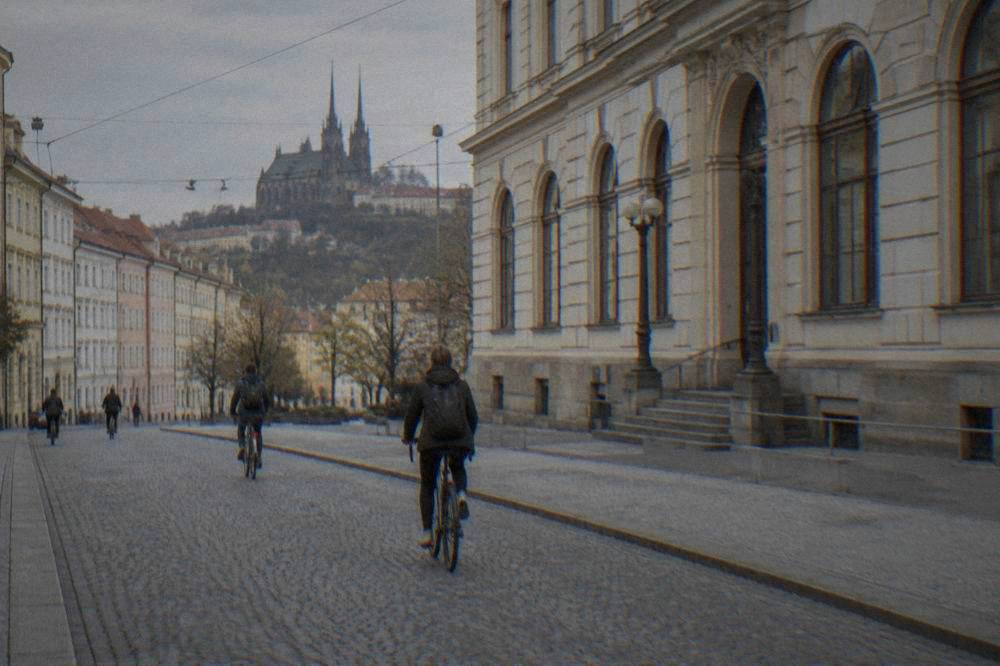
Brno's student day is anchored on three places: the Old Town squares of Náměstí Svobody and the Cabbage Market, the Mendel Museum and the riverside districts towards the Brno Reservoir, all inside a public transport network that costs 25 CZK for a 60-minute ticket. The city's two great squares sit a few minutes' walk apart and function as the default meeting points of term time. Špilberk Castle's grounds are open daily from 6:00 to 23:00 per the castle's own site, which makes the hill a standing lunch-break destination for anyone studying below it.
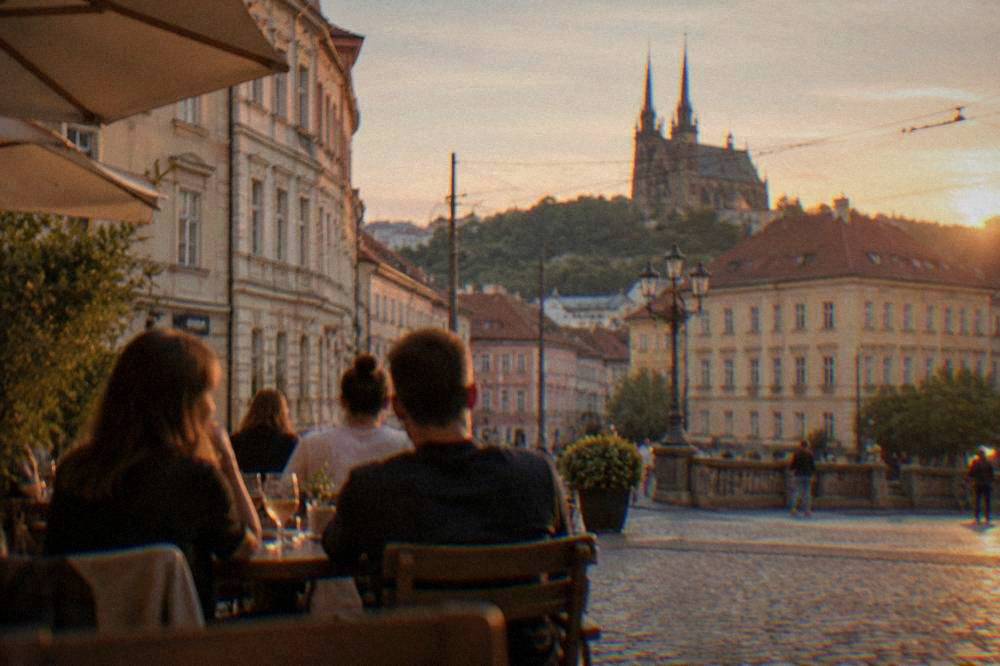
The residential geography matters less to a visitor than the social one. Brno's population is compact enough that the centre holds the student city together, and the transport tariffs reflect that: the city occupies zones 100 and 101 of the regional IDS JMK system, and a 24-hour Brno ticket costs 90 CZK, per the operator's fare page. A student budget and a visitor budget run on almost exactly the same infrastructure.
| Ticket | Price (CZK) | Validity |
|---|---|---|
| Paper single | 20 | 15 minutes, 2 zones |
| Paper single | 25 | 60 minutes, 2 zones |
| Paper single | 33 | 90 minutes, 3 zones |
| 24-hour Brno | 90 | Zones 100 + 101 |
| 5-day Brno | 250 | Zones 100 + 101 |
| 8-trip ticket | 156 | 2 zones per trip |
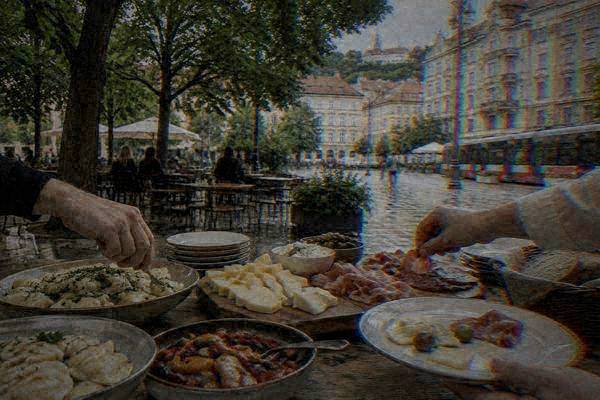
A private guide walk is one way to read the city quickly, but the student city also reveals itself through its food. The food culture of Brno runs on svíčková, beef in cream sauce, Moravian plates and Moravian wine, with Starobrno as the local beer name that the research attaches to the city. A small-group tasting walk such as the Hidden Gems food tour follows that same thread through kitchens a first-time visitor would not find alone; Check availability if the format fits your dates.
What Does A Student Budget Get In Brno?
A visitor in Brno can run on the same numbers a student does: 25 CZK tram tickets, museum entrance reported in a 40 to 100 CZK range at the Mendel Museum, Špilberk's guided Story of the Castle tour at 180 CZK full price, and a city card, the Brnopas, from 370 CZK a day. The currency is the Czech koruna: Czechia is in the EU and the Schengen area but not the eurozone, so card machines and ticket offices all work in CZK. Nothing about the pricing structure is aimed at tourists alone, which is the point.
| Item | Price (CZK) | Notes |
|---|---|---|
| Špilberk Story of the Castle (guided) | 180 full / 110 reduced / 415 family | Per the castle's ticket page |
| Špilberk Casemates (guided) | 260 full / 155 reduced / 600 family | Per the castle's ticket page |
| Mendel Museum entrance | 40 to 100 (reported range) | City tourism site |
| Old Town Hall tower | 90 adult / 50 reduced / 200 family | Sold only at the tower |
| Brnopas city card | 370 / 490 / 610 for 1 / 2 / 3 days | Free entry to listed sights |
| Brnopas+ with Villa Tugendhat | 870 / 990 / 1110 for 1 / 2 / 3 days | Includes a Tugendhat tour |
Two of those rows deserve a student-city footnote. The Old Town Hall tower is free with the Brnopas, as are the Ossuary, the Brno Zoo and the cathedral tower, per the card's own listing, and the Brnopas+ tiers bundle in Villa Tugendhat, the city's UNESCO-listed modernist house. Tugendhat is the one sight in Brno that cannot be walked into: the interior is entered only with a previously purchased ticket booked through Brno iD, the villa is closed on Mondays, and prices rise on 1 January 2027, with the Extended tour at 500 CZK full price until the end of 2026 and 550 CZK after that. The full ticket guide and the Brnopas breakdown carry the details.
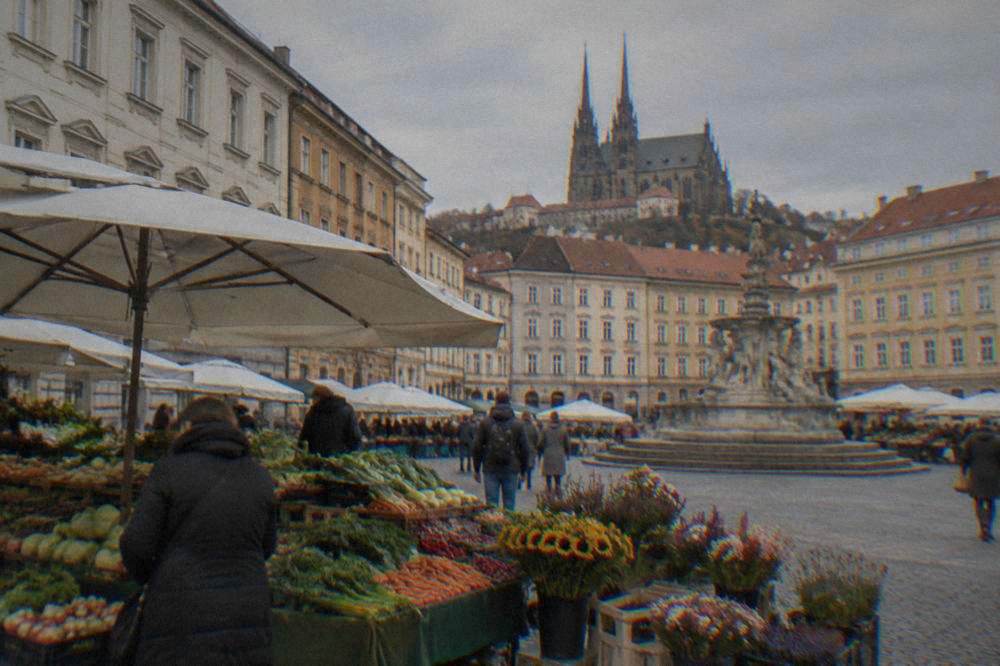
Is Brno A Good City For Student Nights Out?
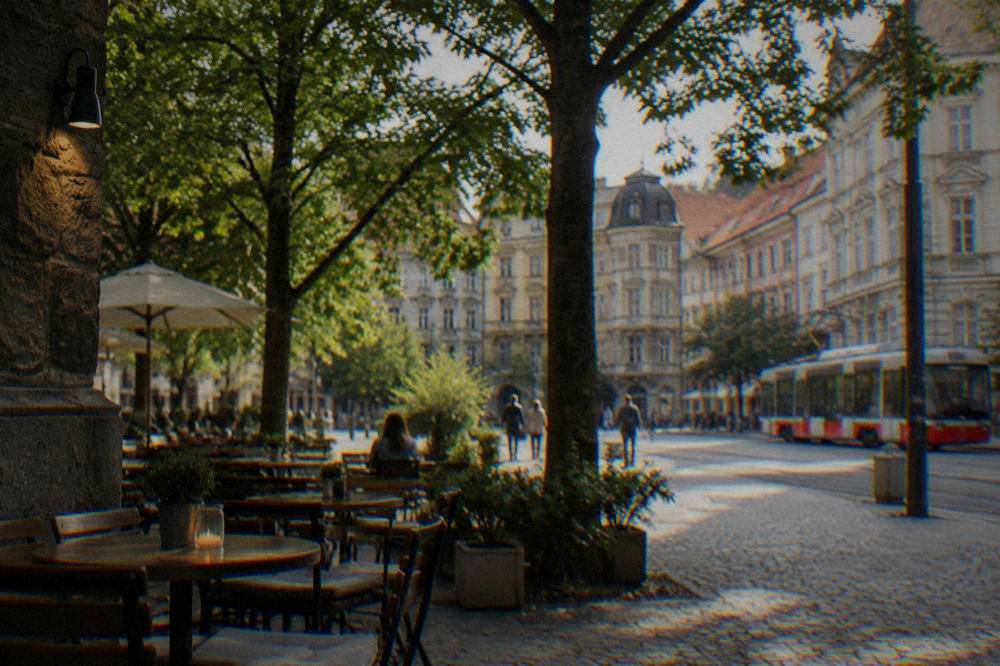
Brno's evening economy is real and central: the city's nightlife clusters on and around Náměstí Svobody and the Cabbage Market, beer gardens and wine bars pour local Starobrno beer and Moravian wine, and the trams run on a tariff that keeps late travel cheap, though specific bar and club names sit outside what this site's research supports. What can be said with a figure attached is structural. The city's brewing identity is anchored by Starobrno, the research reports, and its wine identity comes from South Moravia, the wine region that surrounds the city and fills its cellars each autumn.
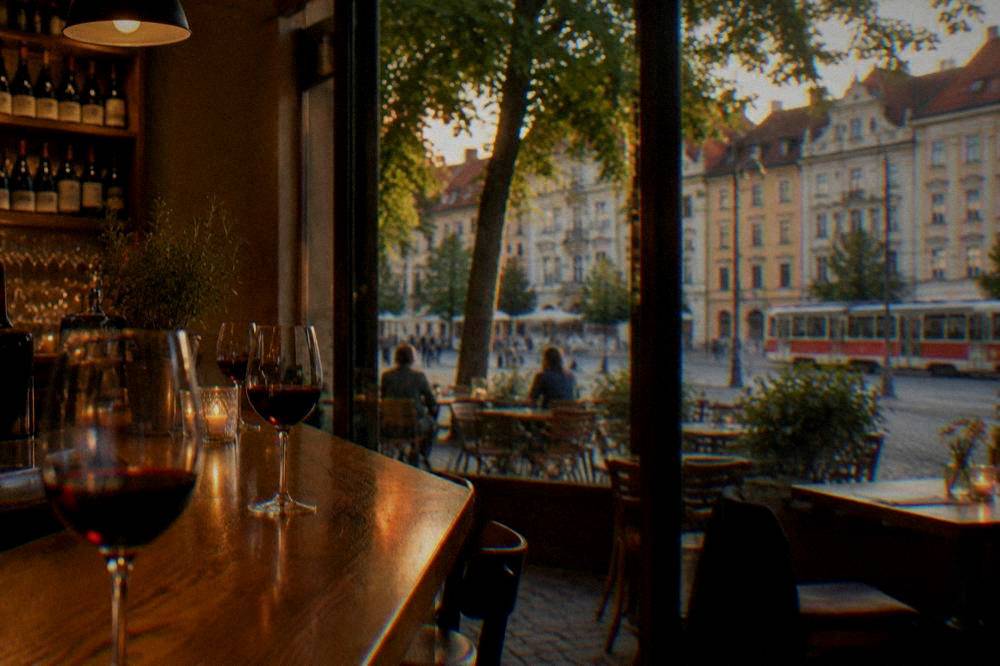
The calendar gives the student year its shape. Vinobraní, the Brno wine festival, ran 25 September to 3 October 2026 on Náměstí Svobody per the organiser's site, which lands squarely in the return-to-lectures weeks. The Christmas markets run 13 November to 31 December 2026, and Ignis Brunensis, the fireworks festival at the Brno Reservoir, ran 30 May to 4 July in 2026, spanning the exam-and-graduation stretch. The wine bars page, the pubs guide and the broader nightlife overview take the evening story from here.
| Event | 2026 dates | Source note |
|---|---|---|
| Vinobraní Brno | 25 September to 3 October | Organiser's site |
| Christmas markets | 13 November to 31 December | Organiser's site |
| Ignis Brunensis | 30 May to 4 July | Official festival site |
| MotoGP Czech GP | 19 to 21 June | Championship calendar |
| Slavnosti Brno Easter | 27 March to 5 April | Organiser's site |
Tipping follows the Czech norm the research reports: 5 to 10 percent, or rounding up, with the total often stated aloud when paying. Tap water is reported as safe to drink. Neither detail is glamorous, but both are the kind of thing a student city teaches its newcomers in week one. Everything else covered here is indexed on Brno Travel Guide.
What Does The Weather Mean For The Term Year?
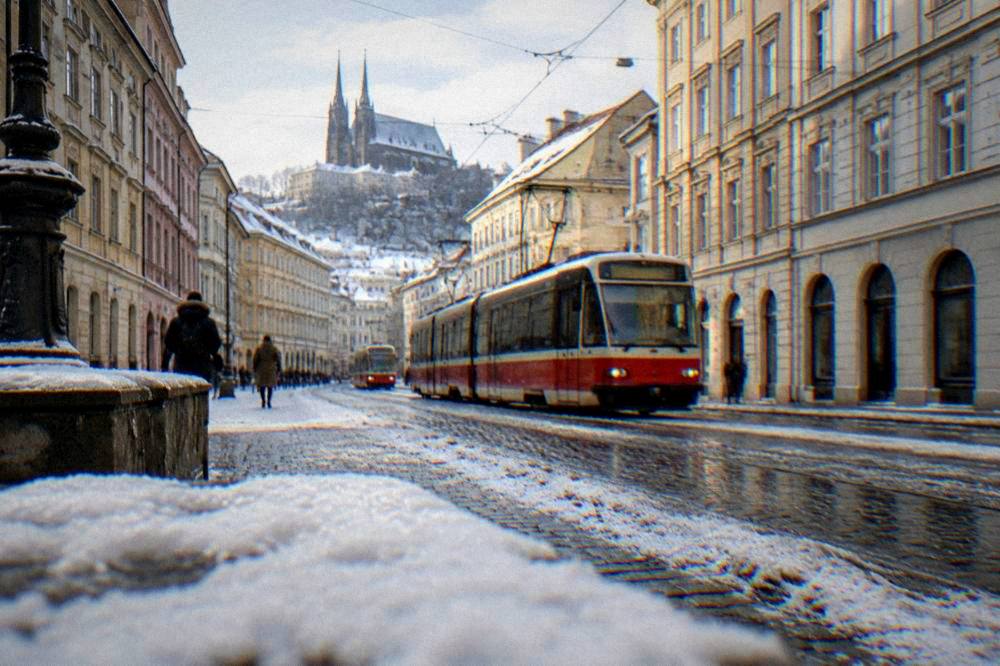
Brno's climate, in ERA5 reanalysis figures for 1991-2020, runs from a January mean daily high of 1.9 C to a July mean daily high of 25.0 C, with July also the month with the most rain at 82.8 mm of rain and February the lowest at 27.9 mm. The academic year passes through all of it: autumn term in the 19.5 C September highs and the 13.6 C of October, the deep of January at a mean nightly low of -3.8 C, and an exam season that coincides with the warmest weeks the table records.
| Month | Mean high C | Mean low C | Rain mm |
|---|---|---|---|
| Jan | 1.9 | -3.8 | 33.6 |
| Mar | 8.9 | 0.1 | 39.1 |
| May | 19.2 | 9.6 | 65.8 |
| Jul | 25.0 | 15.3 | 82.8 |
| Sep | 19.5 | 10.8 | 64.2 |
| Nov | 7.5 | 2.1 | 41.5 |
These are modelled normals for the city's grid cell, not a station record, and the weather page and best-time-to-visit guide unpack them month by month. For a student-city visit, the practical reading is simple: the outdoor square life belongs to the warmer half of the table, and the museum-and-cellar half of the year has plenty to hold it up.
What Day Trips Do Brno Students Actually Take?
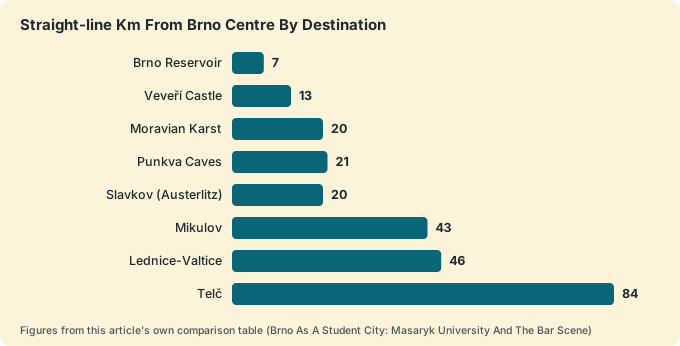
The student escape routes from Brno are short and cheap in straight-line distance: the Moravian Karst lies 20 km from the centre, the Brno Reservoir 7 km, Veveří Castle 13 km, and the Lednice-Valtice UNESCO landscape 46 km, with the Punkva Caves at 21 km and their tour running about 60 minutes including an underground boat, per the cave administration. The Karst is the default weekend answer, and the train to Blansko covers the first leg in 18 to 24 minutes, per the regional rail listings, from where local connections reach the caves.
| Destination | Straight-line km from Brno centre |
|---|---|
| Brno Reservoir | 7 |
| Veveří Castle | 13 |
| Moravian Karst | 20 |
| Punkva Caves | 21 |
| Slavkov (Austerlitz) | 20 |
| Mikulov | 43 |
| Lednice-Valtice | 46 |
| Telč | 84 |
| Vienna | 111 |
| Prague | 186 |
Wine country is the other half of the equation: Mikulov and the Pálava hills sit 43 and 36 km away respectively, and the South Moravian wine guide covers the region whose bottles reach the city's cellars. A tailored Karst day trip such as the seven-stops Moravian Karst tour packages the same countryside for visitors without a semester to spare.
How Do You Get To Brno For A Student-City Visit?
Brno's own airport, Brno-Tuřany, lies 8 km in a straight line from the centre, with an E76 bus to Hlavní nádraží taking about 20 minutes at 25 CZK, per the airport's site, while many visitors instead fly to Vienna or Prague: the Vienna to Brno Railjet takes about 1 hour 31 minutes and the Railjet to Prague 2 hours 59 minutes. RegioJet and FlixBus both serve Brno from Vienna Airport, Prague, Bratislava and Olomouc, per the operators' own network pages, and buses from Vienna Airport run about 1 hour 50 minutes to 2 hours 40 minutes with fares from about EUR 10, per aggregator listings.
The practical pages cover each route in depth: how to get to Brno, Brno Airport, Vienna Airport to Brno, Prague to Brno and the main train station guide. Once in the city, the student infrastructure takes over: the same trams, the same CZK tickets, the same 112 emergency number everyone uses.
Where Should You Stay To Feel The Student City?
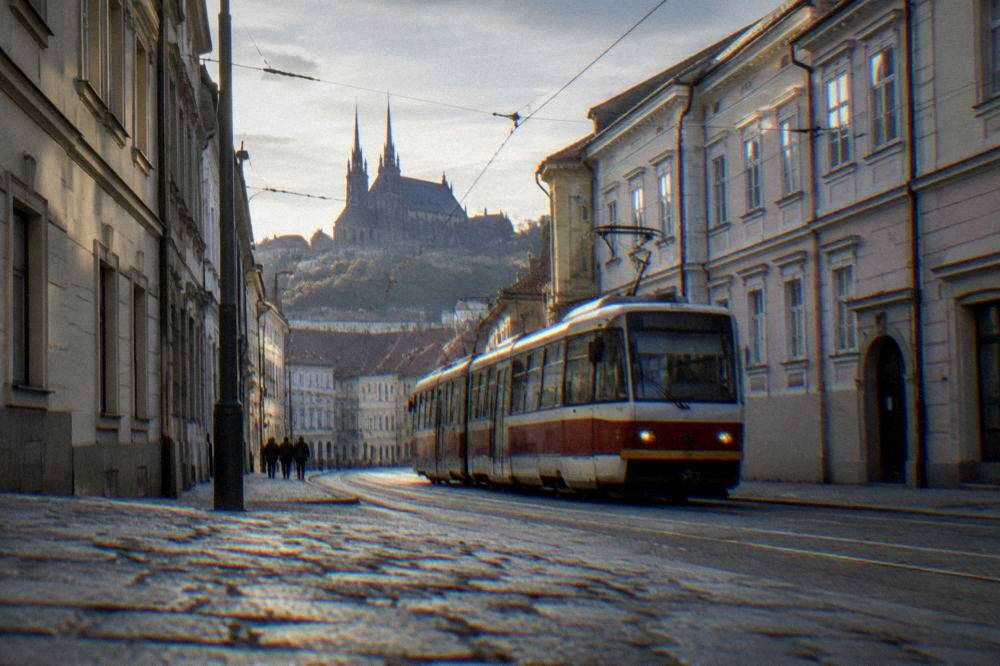
The student city is felt most directly from the centre, around Náměstí Svobody, the Cabbage Market and the streets linking them to Petrov Hill, which puts the squares, the Mendel Museum and the evening economy within the zones 100 and 101 covered by a 90 CZK 24-hour ticket. Hotel pricing sits outside what this site's research supports, so no nightly rate appears here, but the geography is safe to state: everything this page describes as the student city's daily stage lies inside that compact core, and the where-to-stay guide works through the districts properly.
To base yourself in the middle of it, book a budget hostel bed here.
The city's character does not end at the ring of student life. The same streets hold the Brno Dragon and wheel, the functionalist architecture that made Villa Tugendhat a UNESCO site in 2001, and a history that runs from a first written mention in 1091 through the Swedish sieges of 1643 and 1645. The student city is the layer a visitor meets first, but it sits on nearly a thousand years of the rest.
Common Questions About Brno Student Life
How many students does Masaryk University have?
Masaryk University counted 38,181 students on its official statistics page. The university's founding year is reported as 1919, per the Czech UNESCO site, and its students make up a large share of Brno's 404,296 permanent residents.
Is Brno a student city?
Yes, and measurably so: 38,181 students at Masaryk University alone, in a city of 404,296 permanent residents, give Brno one of the student-heavy profiles of Czechia. The squares, transport tariffs and autumn wine festival all reflect that composition.
Is Brno expensive for students?
Local prices are in Czech koruna and the shared infrastructure is cheap by Western European standards: a 60-minute tram ticket is 25 CZK, a 24-hour Brno ticket 90 CZK, the Mendel Museum entrance is reported in a 40 to 100 CZK range, and Brnopas cards start at 370 CZK for a day. Meal and drink prices sit outside this site's sourced figures, so none are quoted.
What is there to do in Brno at night as a student?
The evening city clusters around Náměstí Svobody and the Cabbage Market, with Starobrno beer and Moravian wine as the reported local anchors. Specific bar and club names sit outside this site's sourced research, so the nightlife guide carries the structural picture rather than a venue list.
When is the best time to visit Brno for student life?
Term-time events give the clearest markers: Vinobraní ran 25 September to 3 October 2026, the Christmas markets run 13 November to 31 December 2026, and Ignis Brunensis ran 30 May to 4 July 2026. July has the highest mean daily high at 25.0 C and the highest monthly rain total at 82.8 mm in the ERA5 1991-2020 normals.
Do students in Brno speak English?
Czech is the city's language, and Czechia is an EU and Schengen member. This site's research does not carry a sourced English-proficiency figure for Brno specifically, so none is quoted; the language page on this site covers the practicalities.