How To Get To Brno By Air, Rail And Road
Brno sits in the heart of Central Europe, closer to Vienna than to Prague, and every practical route into the city runs through one small airport, one main railway station and one bus hub that share the same address.
Short answer
Fly into Brno-Tuřany (BRQ), about 8 km from the centre, or arrive by Railjet train: Prague takes 2 h 59 min and Vienna about 1 h 31 min. RegioJet and FlixBus both serve Brno from Vienna Airport, Prague, Bratislava and Olomouc. All trains and buses arrive at Brno hlavní nádraží, where trams to the whole city start.
Brno is the second-largest city in Czechia, an inland city of 404,296 permanent residents at the end of 2025, and it stands at a crossing point of Central European rail lines that makes it one of the easiest cities in the region to reach without a car. Vienna lies about 111 km away in a straight line, Bratislava about 123 km and Prague about 186 km, and each is linked to Brno by direct train or bus. The city's own airport, Brno-Tuřany, is about 8 km from the centre in a straight line, and its public bus line reaches the main station in about 20 minutes. This guide lays out every route in: which flights land at Brno-Tuřany, how the Vienna and Prague airport transfers work, what the Railjet trains promise, and what a ticket costs once you step off. The practical numbers below come from the operators' own listings and the city transport tariff, so the planning part stays on your side.
Where Is Brno And Why Is It Easy To Reach?
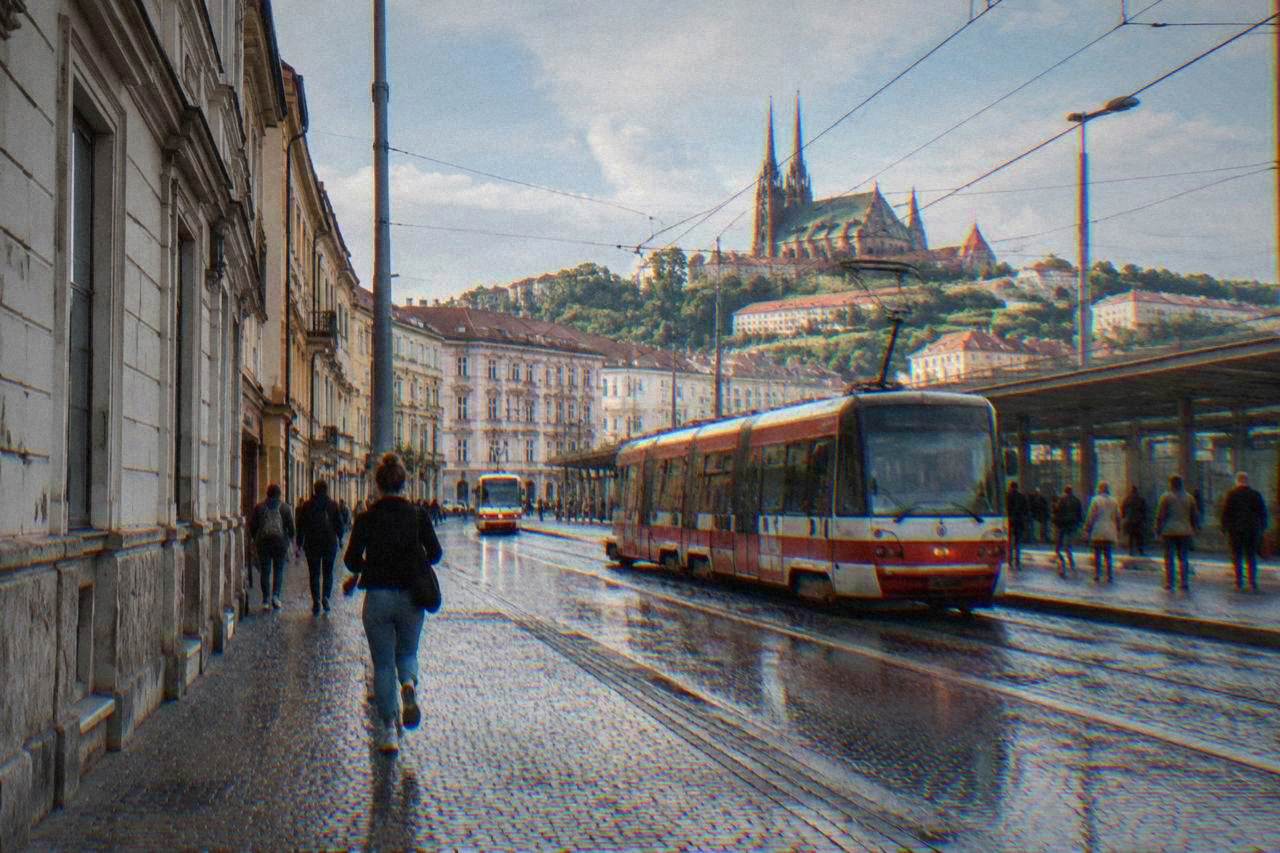
Brno lies in South Moravia, Czechia, roughly midway between Vienna (about 111 km in a straight line) and Prague (about 186 km), with Bratislava about 123 km to the south-east, and it sits on the main north-south and east-west rail corridors that cross Central Europe. The city is inland, on the Svratka and Svitava rivers, and the water body locals know is the Brno Reservoir. Its main rail hub, Brno hlavní nádraží, receives trains and long-distance buses in the same central spot.
That geography is the reason a trip to Brno rarely needs a car. The Czech rail operator's own advertising gives the Brno to Prague Railjet journey as 2 h 59 min, and the Vienna Hbf to Brno Railjet as about 1 h 31 min, per aggregator timetables. RegioJet and FlixBus both list Brno on routes from Vienna Airport, Prague, Bratislava and Olomouc, so a missed train is rarely the end of the plan. Czechia is a member of the EU and the Schengen area but not the eurozone: the currency is the Czech koruna (CZK), and every local price in this guide is printed in koruna, never converted.
Once you are in the city, the orientation is simple. The main station sits at the edge of the centre; Špilberk Castle, the Cathedral of Sts Peter and Paul on Petrov Hill, Freedom Square (Náměstí Svobody) and the Cabbage Market (Zelný trh) all lie within the compact historic core. The site's Brno in one day itinerary covers how to string those together on foot, and the Brno public transport guide explains the tram and ticket system in detail.
Which Airport Should You Fly Into For Brno?
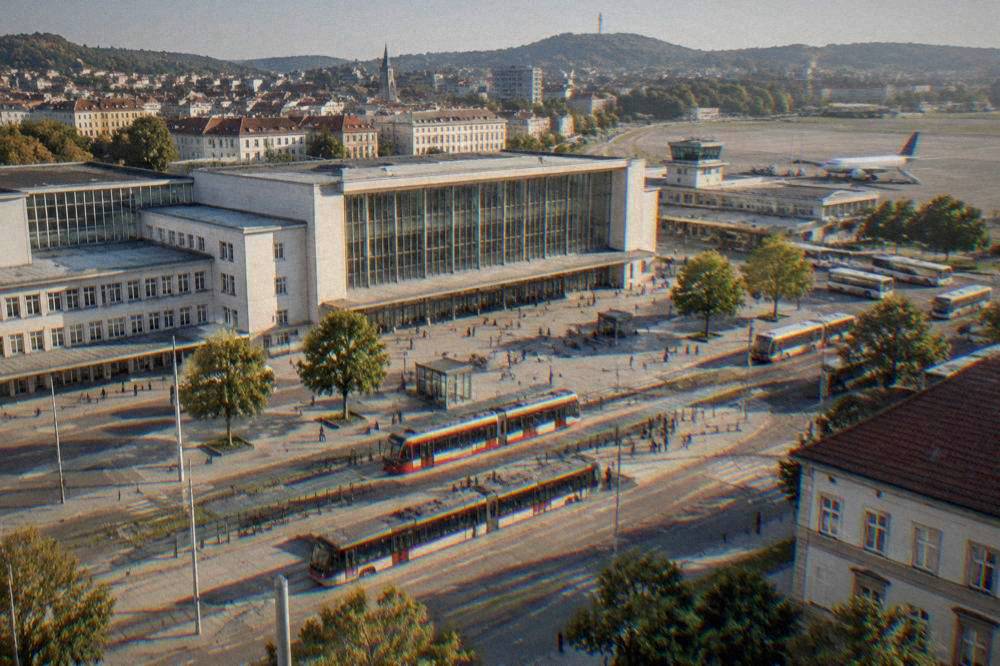
Brno's own airport, Brno-Tuřany (BRQ), is the closest, about 8 km from the centre in a straight line, with a public bus to the main station in about 20 minutes for 25 CZK. Vienna International (VIE), about 120 km away in a straight line, is the alternative with the widest route network: direct Railjet trains from Vienna Hbf take about 1 h 31 min, and direct buses from Vienna Airport about 1 h 50 to 2 h 40 with fares from about EUR 10.
The summer 2026 schedule at Brno-Tuřany, as reported by the airport, lists Ryanair flights to London Stansted, Málaga and Milan Bergamo. If one of those matches your origin, BRQ is the simplest answer: the airport's site reports bus E76 running to Hlavní nádraží in about 20 minutes at 25 CZK adult and 12 CZK reduced, line 77 taking about 26 minutes, and the night line N89 about 20 minutes, operating roughly between 23:00 and 05:00. A centre taxi transfer is listed on the airport's own site at about 500 CZK, and the ride-hailing app Bolt operates in Brno while Uber does not.
If one of those routes matches your origin, book a flight to Brno here.
For every other origin, Vienna is the practical gateway. The transfer options are summarised below; the Vienna airport to Brno guide walks through each of them step by step.
| Route | Mode | Time | Fare as listed |
|---|---|---|---|
| Brno-Tuřany to centre | Bus E76 | about 20 min | 25 CZK adult, 12 CZK reduced |
| Brno-Tuřany to centre | Bus 77 | about 26 min | 25 CZK adult, 12 CZK reduced |
| Brno-Tuřany to centre | Night bus N89 | about 20 min | night tariff applies |
| Vienna Hbf to Brno | Railjet train | about 1 h 31 min | check the operator's live listing |
| Vienna Airport to Brno | Bus | about 1 h 50 to 2 h 40 | from about EUR 10 |
How Do You Get From Vienna Airport To Brno?
The direct bus is the single-seat answer: RegioJet and FlixBus both run Vienna Airport to Brnon, taking about 1 h 50 to 2 h 40 with fares from about EUR 10, per the aggregators that list them. The rail alternative means a short transfer first: the Railjet from Vienna Hbf reaches Brno in about 1 h 31 min, and the airport's own rail link connects the terminal to Hbf before that.
Both operators publish the route on their own booking pages, and the Vienna to Brno guide compares the train and bus in full. The bus has the advantage of leaving from the terminal; the train has the advantage of speed once you are at Hbf and a city-centre arrival at Brno hlavní nádraží. Book the bus in EUR as listed; once in Czechia, everything switches to koruna.
How Do You Travel To Brno By Train?
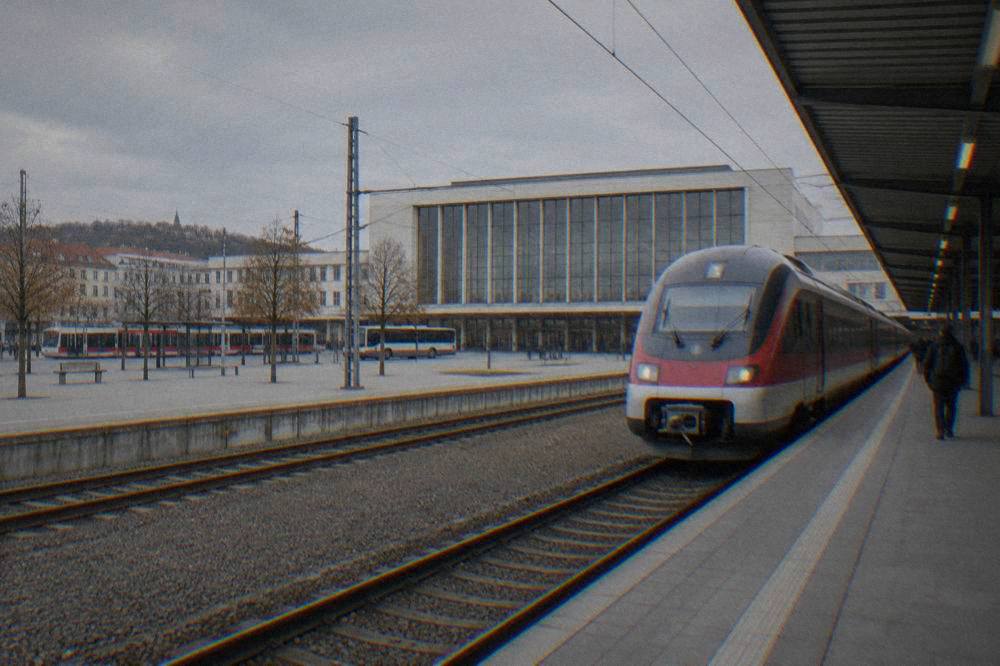
Brno hlavní nádraží is the city's only main-line station, and the flagship connection is the Railjet to Prague, given as 2 h 59 min on the Czech operator's own advertising. From Vienna Hbf the Railjet takes about 1 h 31 min. RegioJet and Leo Express compete on the Prague corridor alongside the state operator, and regional lines fan out to Olomouc, the Moravian Karst gateway town of Blansko (18 to 24 minutes) and the UNESCO day-trip towns.
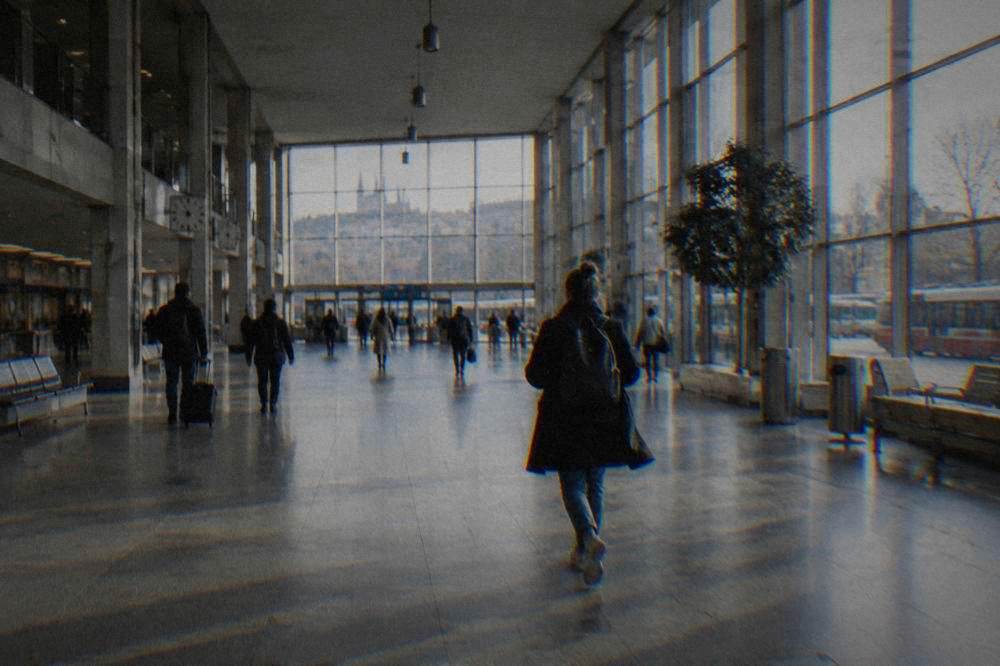
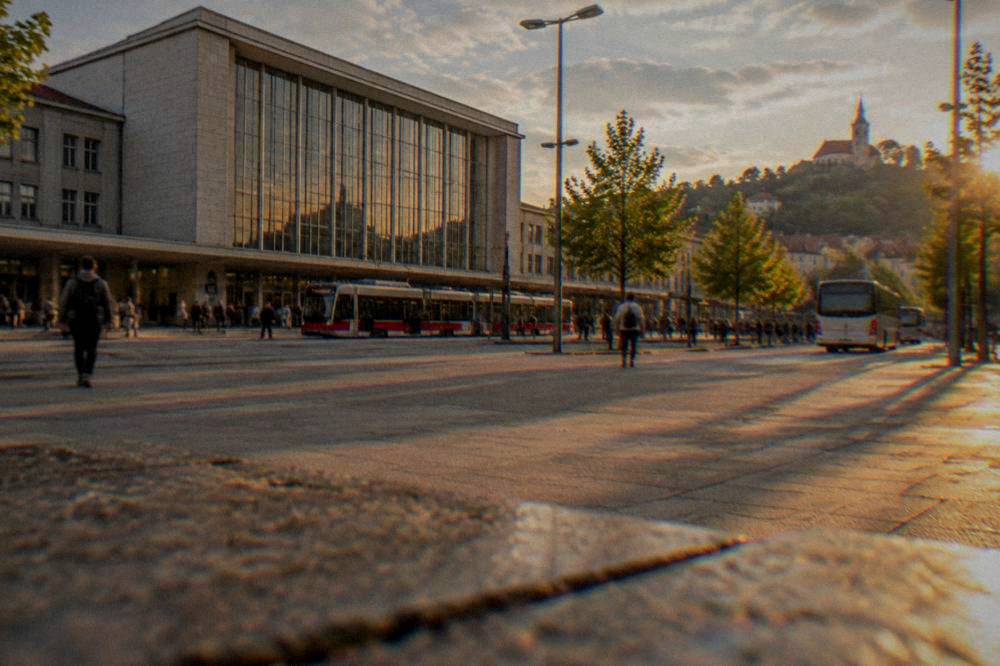
The station itself is compact: everything from the ticket halls to the tram stops sits within a two-minute walk, and self-service luggage lockers are reported to operate 24/7 on the ground floor. The station's future is also on the record: a design tender was issued in October 2026, with construction of the new station not expected to start until after 2032, so the current building is what you will use for years yet. The Brno train station guide covers the layout, the lockers and the tram transfer in detail.
| Train route to Brno | Reported or listed time | Notes |
|---|---|---|
| Prague to Brno | 2 h 59 min | Railjet, per the operator's advert |
| Vienna Hbf to Brno | about 1 h 31 min | Railjet, per aggregator timetables |
| Brno to Blansko (Moravian Karst) | 18 to 24 min | gateway line for the Punkva Caves |
| Brno to Olomouc | about 1 hour | per reported timetables |
| Brno to Prague (bus alternative) | about 2.5 hours | RegioJet and FlixBus both serve it |
Fares on the long corridors move with demand and booking window, so the operator's live listing is the price authority. What is fixed and worth knowing is the local side: once your train arrives, a 60-minute Brno tram-and-bus ticket is 25 CZK and covers the ride into the centre.
How Do You Get To Brno By Bus?
RegioJet and FlixBus both serve Brno from Vienna Airport, Prague, Bratislava and Olomouc, and their coaches arrive at the main station complex, so the bus is a genuine alternative to the train rather than a fallback. Fares from Vienna Airport start from about EUR 10, per the aggregators, and journey times run about 1 h 50 to 2 h 40 depending on the departure.
The practical appeal is the single-seat journey: no airport-to-station transfer, no rail booking split. The practical trade-off is time on the motorway, which the train partly avoids. For the Prague corridor both operators compete directly with the Railjet, and the balance of price and schedule usually decides it. Check the operator's live listing for the departure of the day, because times and stops vary by service.
How Do You Get Around Brno Once You Arrive?
A 60-minute paper ticket on Brno's trams and buses costs 25 CZK, a 15-minute ticket 20 CZK, and the 24-hour ticket covering the whole city (zones 100 and 101) is 90 CZK, per the city transport tariff in force from 1 October 2026. Public transport in Brno is not free for visitors, every tram in the centre passes the main station, and the historic core is compact enough that the centre itself is walkable.
The tariff's headline numbers, all in koruna, are worth carrying in your head. Tickets come from machines at stops, from drivers, or by contactless card in the vehicle, and the city is divided into tariff zones 100 and 101 for the standard urban area.
| DPMB ticket | Price | Validity |
|---|---|---|
| 2 zones, short | 20 CZK (10 reduced) | 15 minutes |
| 2 zones | 25 CZK (12 reduced) | 60 minutes |
| 3 zones | 33 CZK (16 reduced) | 90 minutes |
| 24-hour Brno | 90 CZK (45 reduced) | zones 100 + 101, 24 hours |
| 5-day Brno | 250 CZK | zones 100 + 101, 5 days |
If your stay is two or three days of sightseeing, the Brnopas visitor card belongs in the comparison: it costs 370 CZK for one day, 490 for two and 610 for three, and it bundles free entry to the Old Town Hall tower, the Ossuary, the Brno Zoo and the cathedral tower, per the card's own listing. The full breakdown, including the Villa Tugendhat bundles, is in the Brnopas guide.
What Day Trips Can You Reach Easily From Brno?
Brno's position makes it a base rather than a stopover: the Moravian Karst lies about 20 km away in a straight line, the Austerlitz battlefield at Slavkov about 20 km, Lednice-Valtice about 46 km, and Vienna itself about 111 km, all reachable by train, bus or a booked day trip. Four UNESCO sites sit within day-trip range: Lednice-Valtice, Telč, Třebíč and Kroměříž, with Villa Tugendhat inside Brno itself as the fifth.
The distances below are straight-line kilometres, computed from the city centre; they set expectations, not road times. Reported train or bus times are given only where the sources supply them for that exact journey.
| Day trip from Brno | Straight-line distance | Reported journey time |
|---|---|---|
| Moravian Karst (Punkva Caves area) | about 21 km | train to Blansko 18 to 24 min |
| Slavkov (Austerlitz) | about 20 km | about 20 to 30 min |
| Veveří Castle | about 13 km | bus, seasonal boat route |
| Mikulov and Pálava | about 43 km | about 45 to 60 min |
| Lednice-Valtice (UNESCO) | about 46 km | bus or train via Břeclav |
| Olomouc | about 64 km | about 1 hour |
| Vienna | about 111 km | Railjet about 1 h 31 min |
The Austerlitz battlefield is the trip that rewards a guide most, because the ground tells the story of 2 December 1805 only if you know where to stand. A guided day trip from Brno covers the battlefield near Slavkov; Check availability on the operator's live listing. The Austerlitz guide lays out the independent alternative.
For the karst, the train to Blansko is the frame: from there local buses and walking paths reach the Punkva Caves, whose tour runs about 60 minutes including the underground boat ride to the base of the Macocha Abyss, and online booking is recommended on the cave administration's own portal. Ticket prices for the caves are on that portal, so check it before you go. The Moravian Karst guide and the Punkva Caves page carry the detail.
When Should You Plan Your Arrival In Brno?
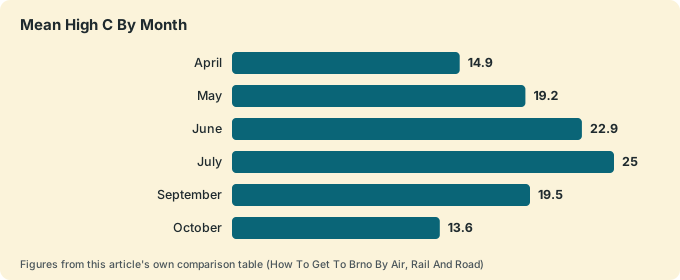
The ERA5 reanalysis, 1991-2020, gives Brno a July mean daily high of 25.0 C and a January mean daily low of -3.8 C, with July also carrying the year's largest monthly rainfall total at 82.8 mm, so the late-spring and early-autumn windows pair milder temperatures with less rain than midsummer. There is no bad rail or flight month: transport runs year-round, and the choice is about weather and events, not access.
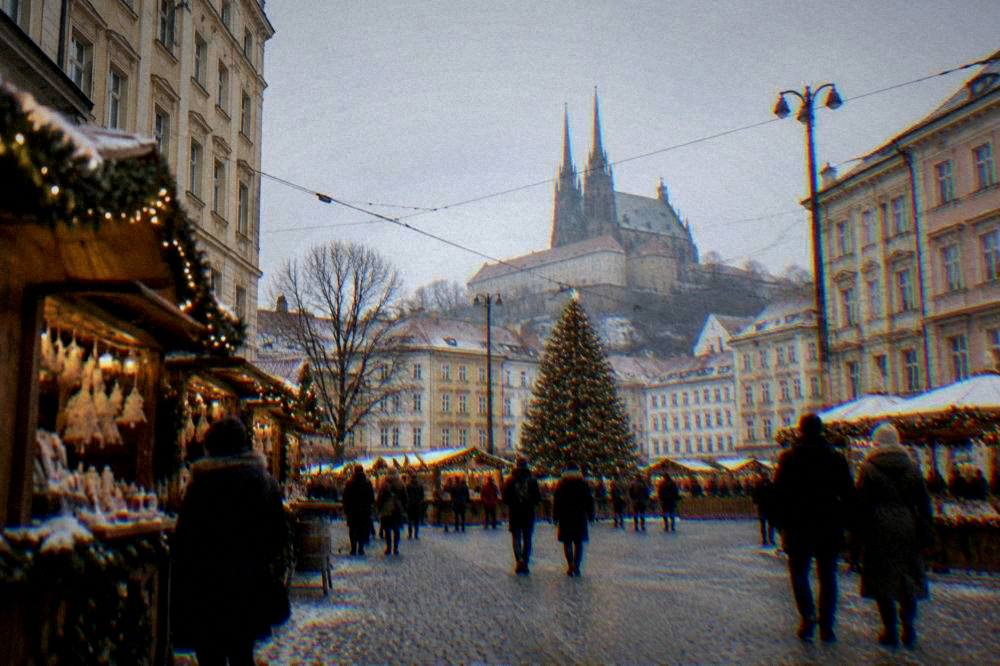
The seasonal anchor points worth planning around are all dated on the record: the Ignis Brunensis fireworks festival ran 30 May to 4 July in 2026, the MotoGP Czech GP held its race on 21 June 2026 within its 19 to 21 June weekend, the Vinobraní wine festival ran 25 September to 3 October, and the Christmas markets run 13 November to 31 December 2026. Any of those can anchor a trip; the best time to visit Brno guide and the Brno weather page carry the full monthly picture.
| Month | Mean high C | Mean low C | Rain mm |
|---|---|---|---|
| April | 14.9 | 4.5 | 40.4 |
| May | 19.2 | 9.6 | 65.8 |
| June | 22.9 | 13.3 | 74.8 |
| July | 25.0 | 15.3 | 82.8 |
| September | 19.5 | 10.8 | 64.2 |
| October | 13.6 | 6.3 | 43.5 |
The winter side has its own case: snow is possible, the Brno in winter guide and the Brno Christmas market page describe it, and the Christmas markets running to 31 December 2026 give a cold-weather trip a centre of gravity.
What Should You Sort Before You Travel To Brno?
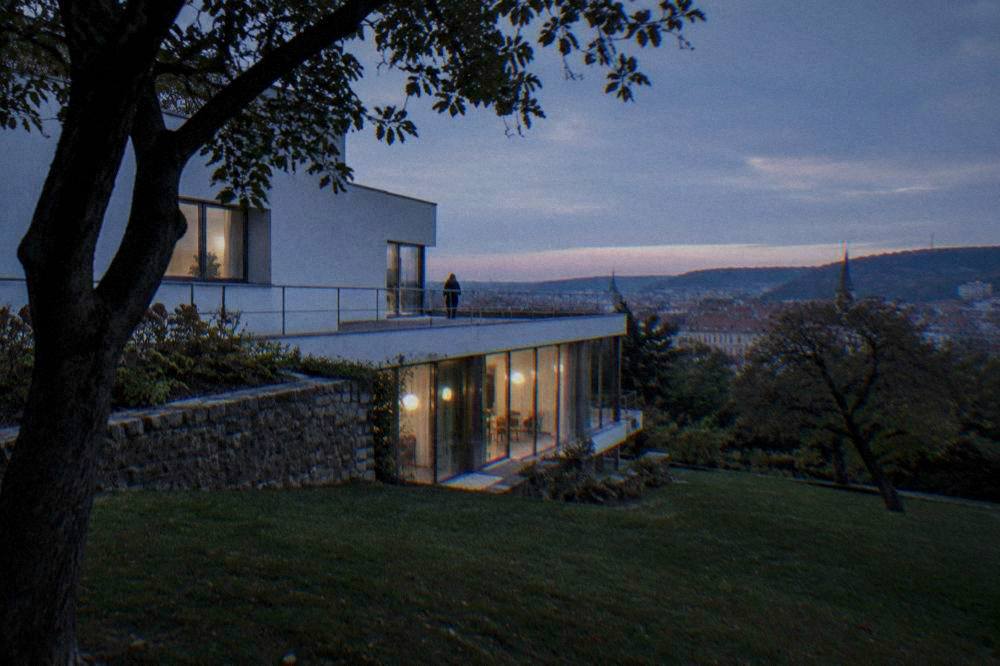
Three bookings decide the shape of the trip: the flight or rail seat, the Villa Tugendhat timeslot, and, if you want it, a Brnopas card. Villa Tugendhat's interior is entered only with a previously purchased ticket booked through Brno iD, the villa is closed on Mondays, and its prices rise on 1 January 2027, with the Extended tour at 500 CZK full and 320 reduced until 31 December 2026, then 550 and 330. The rest, trams, castle tickets, meals, can be arranged on the spot.
The Tugendhat booking is the one with a real deadline: the villa's own ticket page reports that tours sell out quickly on release day, and the basic tour costs 450 CZK full and 270 reduced until the same 1 January 2027 step-up. The Villa Tugendhat tickets guide walks through the Brno iD booking flow. For the money side, koruna, cards and cash machines, the Czech koruna guide on this site is the companion page; note the site's coverage of getting there and paying there is separate from where to sleep, which the where to stay in Brno guide handles.
One more arrival-day number: a reported city tourist tax of 21 CZK per person per night, cited from the city ordinance by a third-party page, is collected through accommodation, so confirm it at booking rather than at check-in.
Common Questions About Getting To Brno
How do I get to Brno?
Fly to Brno-Tuřany (about 8 km from the centre, bus E76 to the main station in about 20 minutes for 25 CZK), take the Railjet from Prague (2 h 59 min) or Vienna Hbf (about 1 h 31 min), or ride a RegioJet or FlixBus coach from Vienna Airport, Prague, Bratislava or Olomouc. All trains and buses arrive at Brno hlavní nádraží on the edge of the centre.
Which airport is closest to Brno?
Brno-Tuřany (BRQ) is the closest airport, about 8 km from the centre in a straight line. Its summer 2026 schedule, as reported by the airport, lists Ryanair flights to London Stansted, Málaga and Milan Bergamo. Vienna International, about 120 km away in a straight line, serves as the wide-network gateway with direct buses and Railjet trains onward.
How do I get from Vienna Airport to Brno?
Direct RegioJet and FlixBus coaches run from Vienna Airport to Brno in about 1 h 50 to 2 h 40, with fares from about EUR 10 per the aggregators. Alternatively, take the airport rail link to Vienna Hbf and the Railjet to Brno, about 1 h 31 min from Hbf.
How long is the train from Prague to Brno?
The Railjet from Prague to Brno takes 2 h 59 min, per the Czech rail operator's own advertising. RegioJet and FlixBus coaches cover the same corridor in about 2.5 hours; check each operator's live listing for fares.
Is public transport free in Brno?
No. From 1 October 2026 a 15-minute paper ticket costs 20 CZK, a 60-minute ticket 25 CZK, a 90-minute ticket 33 CZK, and the 24-hour ticket for the city's zones 100 and 101 costs 90 CZK. Tickets are sold at machines, by drivers and by contactless payment in the vehicle.
Do I need a visa or the euro for Brno?
Czechia is a member of the EU and the Schengen area, so Schengen rules govern entry for third-country nationals. The currency is the Czech koruna (CZK), not the euro; the country is not in the eurozone. Local prices are quoted and paid in koruna.
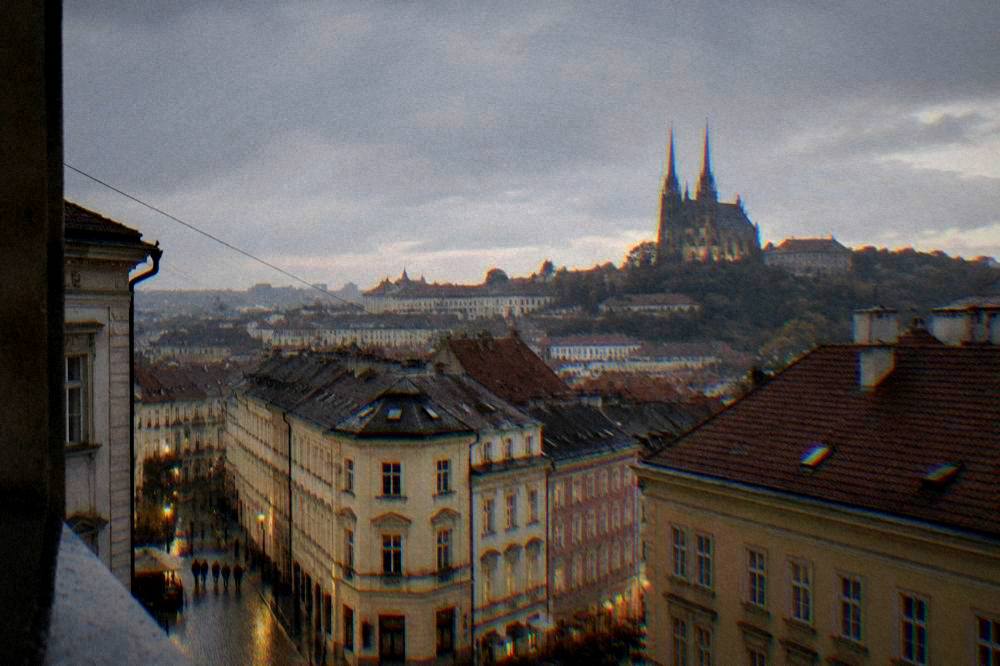
However you arrive, by air into Tuřany, by Railjet from Prague or Vienna, or by coach into the station forecourt, the city meets you in the same place: Brno hlavní nádraží, one tram ticket from Špilberk, Petrov and the Cabbage Market. For everything that comes after arrival, Brno Travel Guide carries the sight-by-sight and ticket-by-ticket detail, starting with what to do in the city and the one day in Brno itinerary.