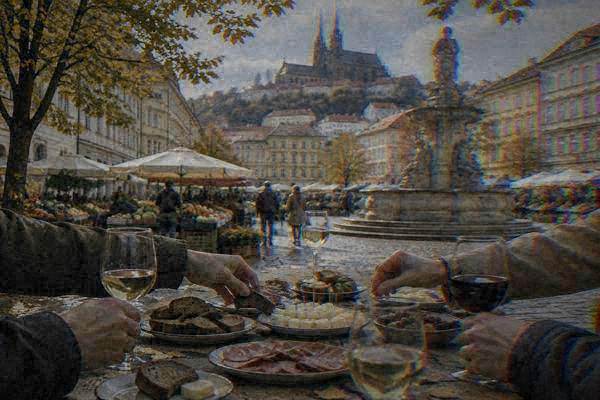
Brno Cafés: Specialty Coffee And Historic Rooms
Brno, the South Moravian capital roughly 186 km from Prague in a straight line, runs on coffee as much as on any other fuel, and its café rooms sit inside one of central Europe's densest historic centres.
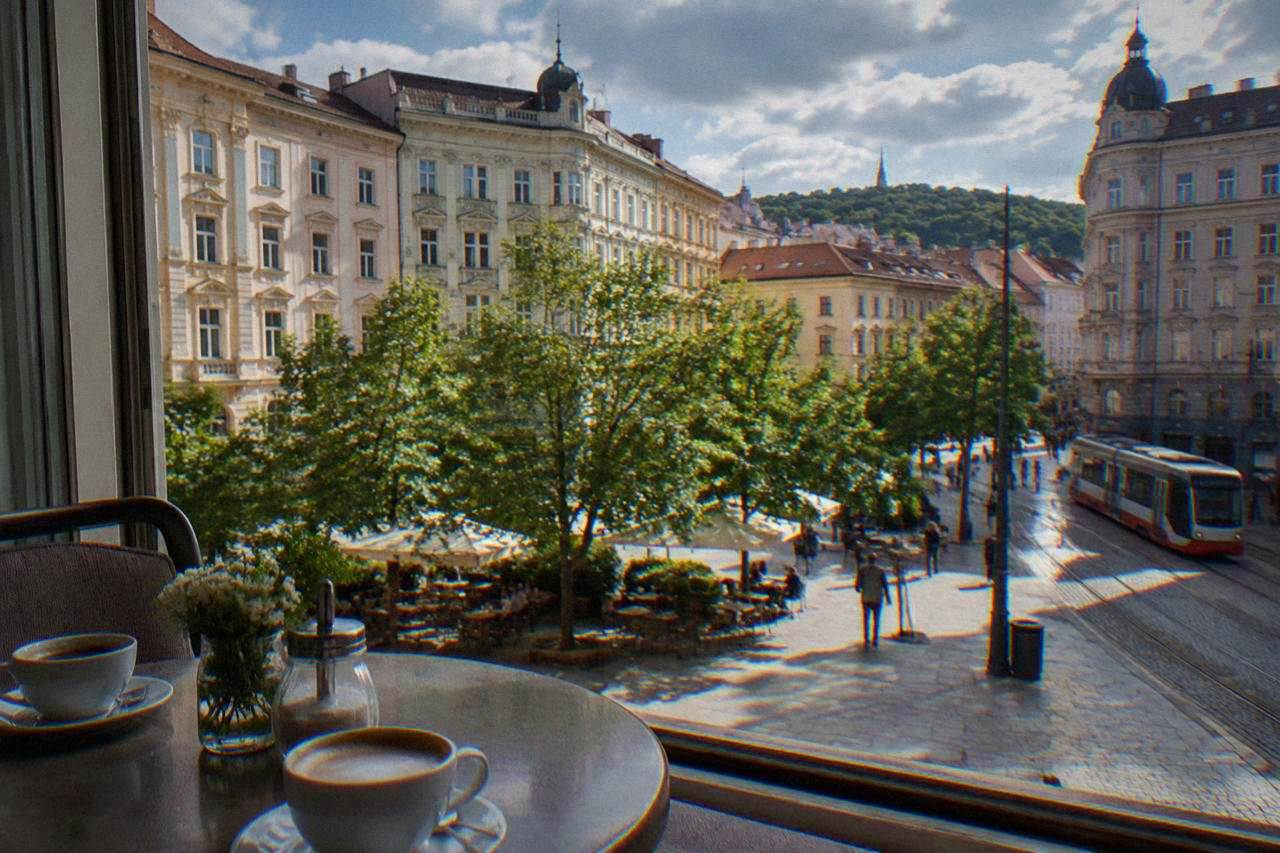
Short answer
Brno cafés range from specialty espresso bars to grand rooms near Náměstí Svobody; coffee is paid for in Czech koruna, a 5 to 10 percent tip is standard, and the café scene pairs naturally with the city's sights and its food tours.
Brno, an inland city of about 404,000 residents in South Moravia, Czechia, takes its coffee seriously, and it takes the rooms that serve it just as seriously. A city that gained its privileges in 1243, became the capital of Moravia in 1641 and grew into a functionalist architectural centre between 1928 and 1930 now fills those layers with espresso machines. The café culture here runs from quick counter shots near the Cabbage Market to long sit-down afternoons in rooms steps from Náměstí Svobody, and the whole scene is priced in Czech koruna, not euros, a detail that catches out first-time visitors who assume the eurozone reaches this far. The country is an EU and Schengen member, but the currency is the CZK, and cards are widely accepted.
In practice, café culture in Brno comes down to what the scene looks like, what to order, how to pay and tip, which season suits a coffee-centred visit, and how to fold café stops into a day of castles, cathedrals and underground passages. It also connects the coffee city to its food side, because Brno's tables and its cups belong to the same story, and that story is best planned with the wider food guide to Brno open beside the espresso menu. Nothing on this page asks you to book a table weeks ahead or learn Czech before ordering; the scene is informal, the signs are bilingual in the centre, and the barriers are lower than the baroque facades suggest.
What Is The Café Scene Like In Brno?
The Brno café scene covers two distinct strands: modern specialty coffee bars serving espresso, filter and roast-specific brews, and older, roomier café establishments built for long sittings, and the city's compact centre, anchored by Freedom Square and the Cabbage Market, puts both within a short walk of each other. Brno is Czechia's second-largest city and a university city, and the café landscape reflects that student-and-professional mix.
The first strand is the one that has grown fastest. Specialty roasting and third-wave brewing spread through Czech cities in the same wave that reached central Europe generally, and Brno's student population, Masaryk University counted 38,181 students in its official statistics, keeps demand for serious coffee steady through the academic year. The espresso bar model, a small counter, a short menu, no table service, is common in the lanes around the two main squares.
The second strand is the historic café room. Central European café culture historically meant newspapers, pastries and a table you held for hours, and Brno still has rooms built on that pattern, set in buildings that survived the Swedish sieges of 1643 and 1645 and everything since. These are places to sit with a dessert and a pot of coffee while rain works through the square outside. The pace is unhurried, the ceilings are often higher than the doorway suggests, and the bill arrives only when you ask for it.
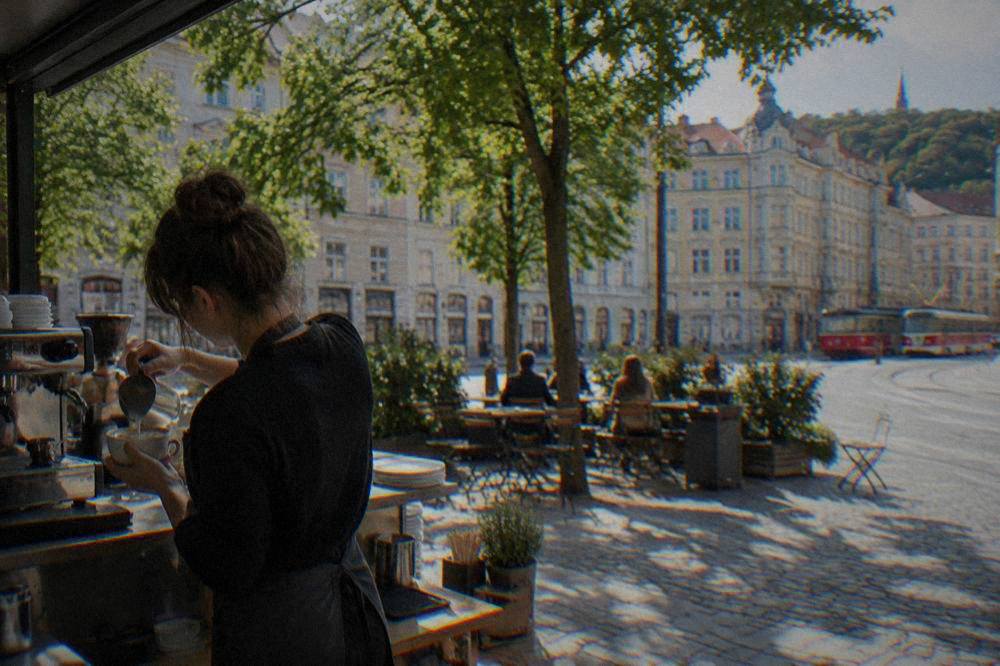
What the two strands share is the koruna. Prices are set in CZK, tipping follows the Czech restaurant pattern rather than the American one, and no café expects you to commit to a table for an afternoon unless you want to. For a fuller picture of the city's eating culture beyond the cup, the overview of things to do in Brno places the café scene in context with the castle, the cathedral and the underground.
A practical note on timing: Czech shops and institutions keep their own rhythms, and large shops close on listed public holidays including 1 January, Easter Monday, 8 May, 28 September, 28 October and 25 to 26 December, with Christmas Eve closing at noon, so holiday-week visitors should expect adjusted café hours on those days and confirm locally.
How Does Coffee Fit Brno's History And Everyday Rhythm?
Coffee arrived in Brno as a city institution rather than a trend, tied to the city's growth from a fortified Moravian seat, first written down in 1091 in the Kosmas Chronicle, into the administrative capital of Moravia from 1641, and today's café culture sits inside that accumulated city: the same squares, the same lanes, the same buildings that hold the Old Town Hall passage with the Brno dragon and wheel.
The historical record the site reports runs in years: the first written mention of Brno in 1091, city privileges granted in 1243 under Václav I, the Swedish sieges of 1643 and 1645 in which the city and Špilberk held, Špilberk converted into a Habsburg prison in 1783 under Joseph II, the Exhibition Centre opening in 1928, and Villa Tugendhat built from 1928 to 1930 by Ludwig Mies van der Rohe, inscribed by UNESCO in 2001. Gregor Mendel, born 1822, delivered his pea heredity lecture and publication in 1865 in this same city.
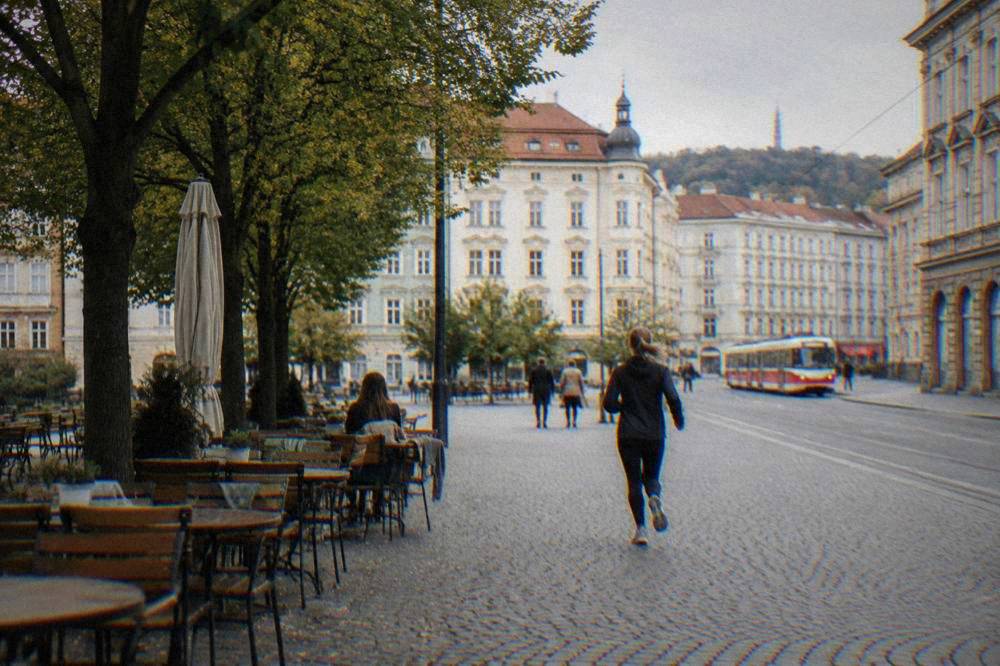
The everyday rhythm is a university rhythm. With tens of thousands of students, coffee demand follows the academic calendar, and cafés cluster where the historic centre meets the city's working life. The practical takeaway for a visitor is simple: the centre is walkable, the café density is high, and a coffee stop is never a detour from the sights, it is the pause between them. The same walk that carries you past the Mendel Museum, open Tuesday to Sunday from 10:00 to 17:00 since 1 October 2026, carries you past a dozen places to sit down.
The historical timeline the site's sources support, in compact form:
| Year | Event relevant to the city you drink coffee in |
|---|---|
| 1091 | First written mention of Brno (Kosmas Chronicle) |
| 1243 | City privileges granted under Václav I |
| 1641 | Brno becomes the capital of Moravia |
| 1645 | Swedish siege; the city and Špilberk hold; the cathedral's 11:00 bell commemorates the ruse |
| 1783 | Špilberk converted to a Habsburg prison under Joseph II |
| 1928 | Brno Exhibition Centre opens |
| 1930 | Villa Tugendhat completed, begun 1928; UNESCO inscription follows in 2001 |
What Should You Order In A Brno Café?
Order espresso-based drinks by the standard central European names, espresso, cappuccino, latte, and expect filter or batch-brew options in the specialty bars; the local additions worth knowing are Moravian wine and Czech beer, which many café-style establishments pour alongside coffee, and the dessert case, where cream-and-pastry plates belong to the same tradition as svíčková, the beef-in-cream-sauce dish named in the site's food research.
The coffee vocabulary is international. What changes is everything around the cup. Moravia is wine country, the South Moravian wine guide covers it in depth, and a café table in Brno can move from coffee in the morning to a glass of local white in the afternoon without changing buildings. Starobrno beer, named in the site's research as the city's brewery, anchors the evening shift.
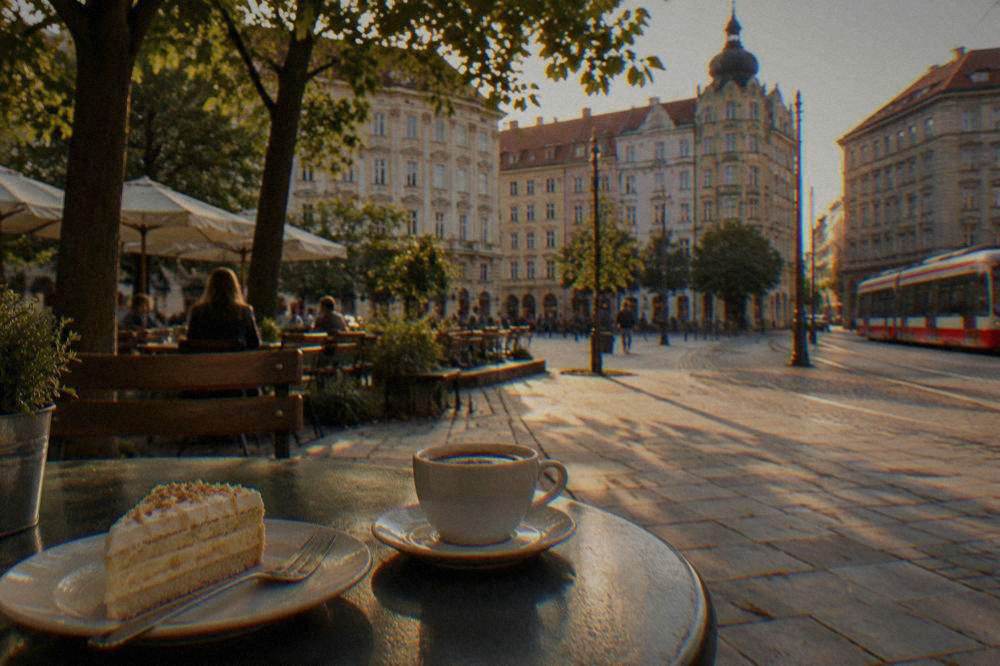
Two practical points shape the order. First, the currency is the Czech koruna; the euro is not the local money, and while a card works nearly everywhere, cash in CZK avoids the poor exchange terms that surface in tourist areas. Second, the water is drinkable, Czech tap water meets EU and Czech standards, so a request for tap water is a normal one, not a fight.
A third point is pace. Czech café service does not rush a table, and the bill comes when you ask for it, so plan a long stop as a long stop and a quick one at the counter. For visitors who want the food side of the city walked through with a guide rather than decoded solo, the small-group tasting walk the site features visits hidden tables across the centre; read about it on the Hidden Gems food tasting tour page and, if the date fits, Check availability.
How Do You Pay And Tip In A Brno Café?
You pay in Czech koruna, you tip 5 to 10 percent or simply round the bill up for good table service, and it is common Czech practice to state the total you want to pay, bill plus tip, at the moment of payment rather than leaving coins on the table; counter-service espresso bars do not carry the same expectation, and cards are accepted widely.
The tipping convention, 5 to 10 percent or rounding up, is the one the site's research reports for the Czech Republic generally, and it applies to table service. At a counter where you order, pay and carry the cup yourself, nothing beyond the price is expected. In a full café restaurant with table service, the rounding habit is the natural one. The wider set of guides lives on Brno Travel Guide.
The money practicalities in one place:
| Item | What applies in Brno |
|---|---|
| Currency | Czech koruna (CZK); Czechia is EU and Schengen but not eurozone |
| Cards | Widely accepted |
| Cash | Useful in CZK; avoid independent ATM machines with high fees, use bank ATMs |
| Tap water | Safe to drink |
| Tipping at a table | 5 to 10 percent or round up, stated when paying |
| Tipping at a counter | Not expected |
| Emergency number | 112 |
Budget visitors should fold café stops into the wider plan; the Brno on a budget guide covers sightseeing costs, and the city card detailed on the Brnopas guide page prices sightseeing at 370 CZK for one day, 490 for two and 610 for three, adult rates, though café spending sits outside any pass.
When Is The Best Time Of Year For Café Hopping In Brno?
The ERA5 reanalysis for Brno, 1991-2020, puts the warmest months in the middle of the year, July with a mean daily high of 25.0 C and June at 22.9 C, and the coolest in January with a mean daily low of minus 3.8 C, so the shoulder months, April at a 14.9 C mean high, May at 19.2 C, September at 19.5 C and October at 13.6 C, give café weather that suits both the indoor room and the outdoor table.
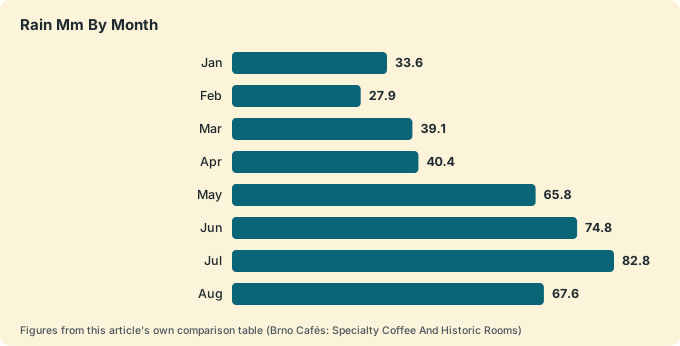
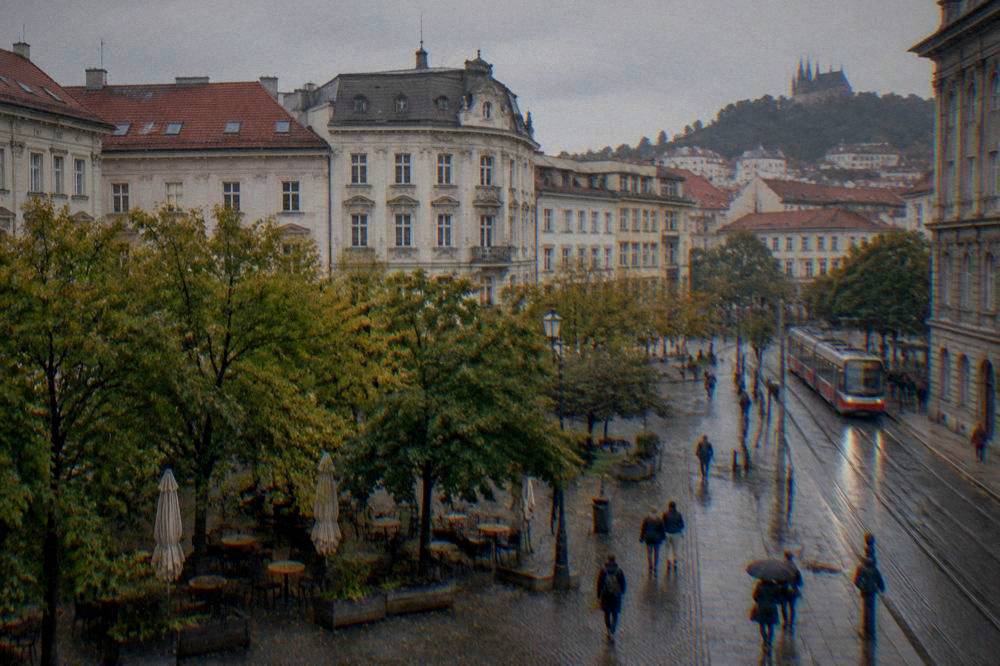
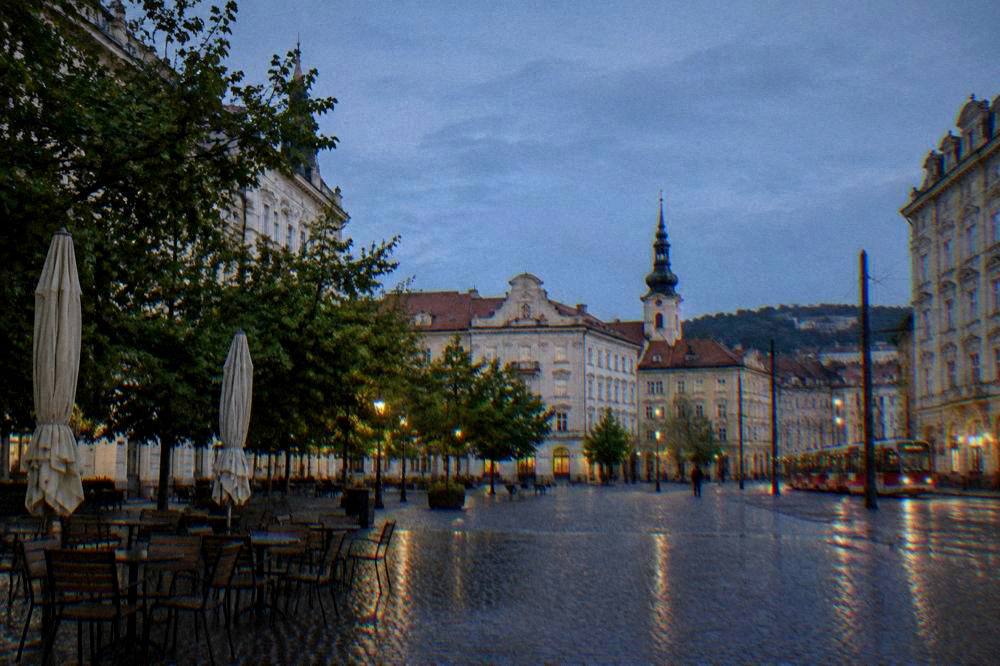
Rain matters as much as temperature for a trip built partly around sitting indoors. July carries the highest monthly rainfall in the table at 82.8 mm, February the lowest at 27.9 mm, and the year totals 617.6 mm. A wet afternoon in Brno is a café afternoon by design, and the Brno weather guide and the rainy-day itinerary build full days around exactly that.
The full monthly picture, figures from the ERA5 reanalysis, 1991-2020:
| Month | Mean high C | Mean low C | Rain mm |
|---|---|---|---|
| Jan | 1.9 | -3.8 | 33.6 |
| Feb | 4.3 | -3.0 | 27.9 |
| Mar | 8.9 | 0.1 | 39.1 |
| Apr | 14.9 | 4.5 | 40.4 |
| May | 19.2 | 9.6 | 65.8 |
| Jun | 22.9 | 13.3 | 74.8 |
| Jul | 25.0 | 15.3 | 82.8 |
| Aug | 24.9 | 15.2 | 67.6 |
| Sep | 19.5 | 10.8 | 64.2 |
| Oct | 13.6 | 6.3 | 43.5 |
| Nov | 7.5 | 2.1 | 41.5 |
| Dec | 2.6 | -2.4 | 36.4 |
The calendar adds its own reasons to visit. The Christmas markets ran 13 November to 31 December in 2026, per the organiser's site, with mulled-wine and coffee stands on Zelný trh and Náměstí Svobody; the Vinobraní wine festival ran 25 September to 3 October; and Ignis Brunensis, the fireworks festival at the Brno Reservoir, ran 30 May to 4 July. The best time to visit Brno guide weighs all of it.
How Do Café Stops Fit A Day Of Sightseeing In Brno?
The compact centre makes café stops a structural part of a sightseeing day rather than a break from it: Špilberk Castle's grounds stay open daily from 06:00 to 23:00 with its ticket office from 09:00 to 18:00, the Cathedral of Sts Peter and Paul rings its bells at 11:00, not noon, and the squares, Náměstí Svobody and Zelný trh, hold the dragon-and-wheel Old Town Hall passage and the Astronomical Clock between them, all reachable on foot with coffee in the gaps.
To link the cathedral and the castle with your coffee stops, book a Brno audio tour here.
A sample pairing of sights and coffee logic, using only the site's sourced hours:
| Sight | Sourced detail | Where the coffee fits |
|---|---|---|
| Špilberk Castle grounds | Daily 06:00 to 23:00 | Early walkers finish near the centre by mid-morning |
| Cathedral of Sts Peter and Paul | Bells ring at 11:00 | Coffee before the bells, sights after |
| Old Town Hall tower | 90 CZK adult, 50 reduced, 200 family, sold only at the tower | A square-side table sits steps away |
| Villa Tugendhat | Interior by pre-booked ticket via Brno iD, closed Mondays | Book ahead, then plan the centre freely |
| Mendel Museum | Tue to Sun 10:00 to 17:00 from 1 October 2026, closed Mondays | Pair with an afternoon stop in Old Brno |
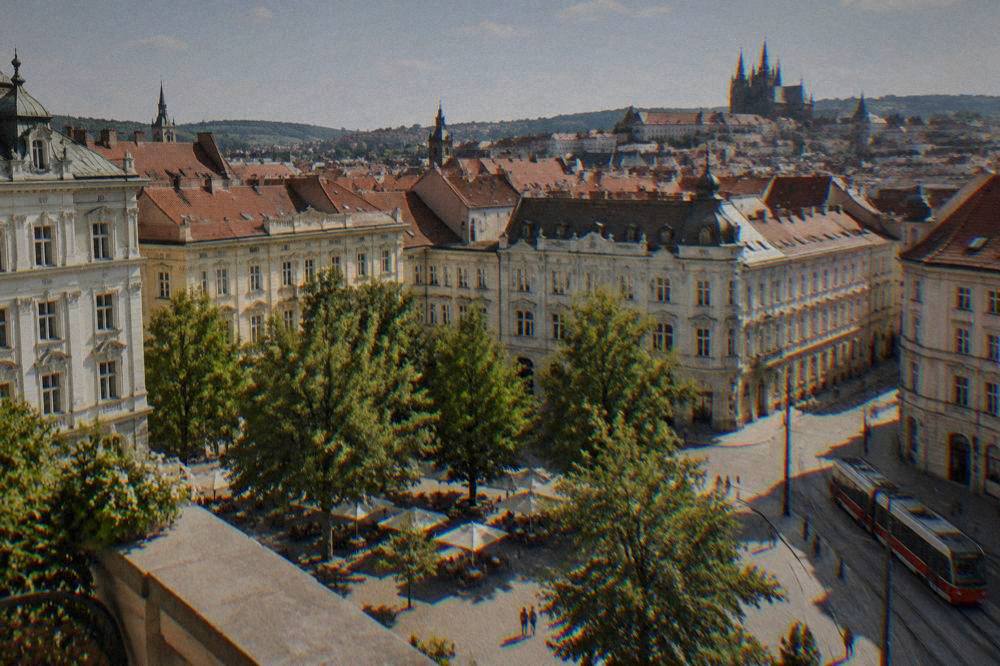
Two traps from the site's corrections file are worth repeating here because they reshape a café-anchored day. The Villa Tugendhat interior cannot be walked into, entry is only with a previously purchased ticket booked through Brno iD, and its prices rise on 1 January 2027, the Extended tour costing 500 CZK full until 31 December 2026 and 550 from 1 January 2027. And the Mendel Museum has closed at 17:00 and on Mondays since 1 October 2026. Neither affects the coffee, both affect the schedule around it.
Getting between the stops is cheap and simple: a 60-minute paper ticket on the city's trams and buses costs 25 CZK, a 90-minute ticket 33 CZK, and a 24-hour Brno ticket 90 CZK, figures from the transport operator's tariff effective 1 October 2026, with details on the public transport guide.
Can You Pair Brno Cafés With Beer, Wine And Food?
Yes, and the pairing is the point: Brno's café establishments commonly pour Moravian wine and Czech beer alongside coffee, the food research names svíčková and Moravian plates as the local standard, and a visitor can move from morning espresso to afternoon wine to an evening pint within the same few central streets, with the tasting-walk format the site features covering the food side in a single guided outing.
The beer-and-pubs side has its own page, the beer and pubs in Brno guide, and the restaurant side is covered in the restaurant guide. What belongs on this page is the overlap: the café as an all-day establishment, a central European pattern rather than an Anglo one, where the same room serves coffee at ten and wine at five.
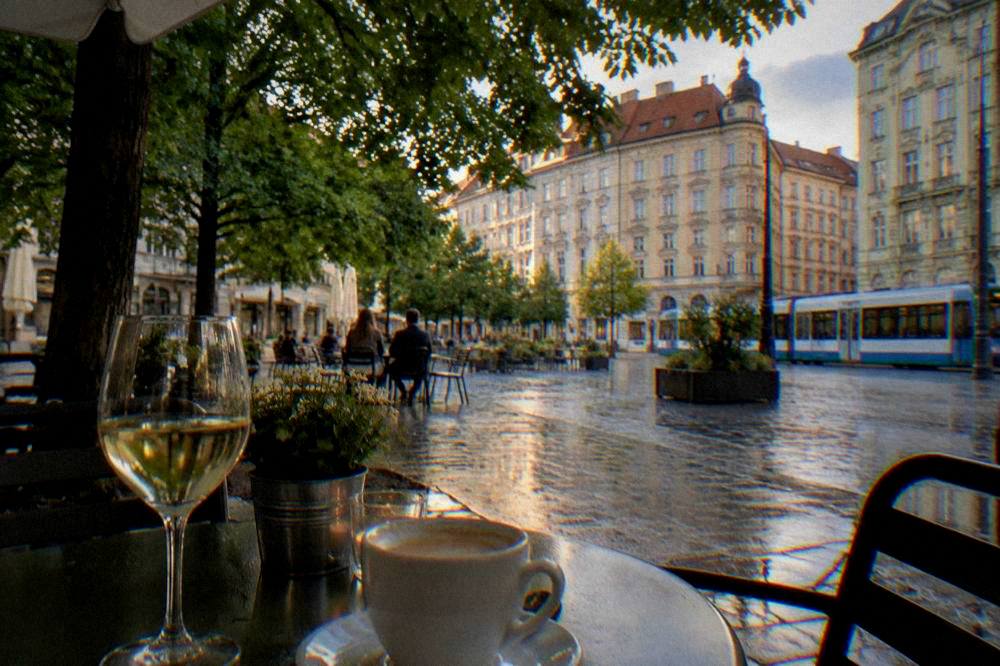
For structure, a day that leans on both cups and kitchens:
| Time of day | Focus | Notes from this page's sources |
|---|---|---|
| Morning | Espresso near the squares | Markets on Zelný trh; bells at 11:00 at the cathedral |
| Midday | Lunch plate | Svíčková and Moravian plates named in the food research |
| Afternoon | Dessert café stop | Tipping 5 to 10 percent or rounding up at table service |
| Early evening | Moravian wine or Starobrno beer | See the wine and pubs guides |
| Night | Nightlife | Covered in the Brno nightlife guide |
Visitors who want the guided version, kitchens and hidden tables walked through in a group, can compare the featured tasting tour with the other options the site carries.
Common Questions About Brno Cafés
What currency do you pay with in Brno cafés?
You pay in Czech koruna (CZK). Czechia is an EU and Schengen member but not in the eurozone, and cards are widely accepted across the city's cafés.
How much should you tip in a Brno café?
Tip 5 to 10 percent or round the bill up for good table service, and state the total you want to pay when you pay. At a counter-service espresso bar, no tip is expected.
Is Brno good for specialty coffee?
Yes. Brno has a specialty espresso and filter scene alongside its older café rooms, supported by a university city of 38,181 students at Masaryk University, per the university's own statistics page.
Can you drink coffee outdoors in Brno year round?
Outdoor tables suit the warmer months; the ERA5 reanalysis, 1991-2020, gives July a mean high of 25.0 C and January a mean high of 1.9 C, so winter café life in Brno happens indoors by the window.
Do Brno cafés serve wine and beer too?
Many café-style establishments do. Moravian wine and Czech beer, including Starobrno, named in the city's food research, sit alongside coffee in the all-day central European café pattern.
How do cafés fit around the main sights in Brno?
Easily, because the centre is compact. The cathedral bells ring at 11:00, the Old Town Hall tower sits on the square, and Špilberk's grounds stay open to 23:00 daily, leaving generous gaps for coffee between them.
Brno's cafés reward exactly the kind of slow, sight-dotted wandering the city itself rewards, and with koruna in hand, a five-to-ten-percent habit at the table and the weather table read before arrival, the coffee city of South Moravia is straightforward to enjoy one cup at a time.