Brno History: Moravia's Capital From The Swedish Siege To Today
Brno, in South Moravia, Czechia, carries a documented history from a 1091 chronicle mention to a UNESCO-listed modernist villa, and the dated record tells the story in sharp outline: sieges, a prison castle, a scientist monk, and a city that became Moravia's capital in 1641.
Short answer
Brno's documented history runs from a first written mention in 1091 and city privileges in 1243, through Swedish sieges in 1643 and 1645, its role as Moravia's capital from 1641, Špilberk's years as a Habsburg prison from 1783, the Battle of Austerlitz nearby in 1805, Mendel's 1865 heredity work, the functionalist boom of 1928 to 1930, and the death march of May 1945, into the present city of 404,296 residents.
Brno, an inland city of 404,296 permanent residents at the end of 2025 on the Svratka and Svitava rivers in South Moravia, keeps its history in plain sight. The first written mention of the city dates to 1091 in the Kosmas Chronicle, city privileges followed in 1243 under Václav I, and the record runs without interruption through sieges, a prison castle, a monk with pea plants, a battlefield 20 km away, and a modernist villa that UNESCO inscribed in 2001. This page walks that timeline year by year, using only dated events, and pairs them with the prices and opening rules for the historic buildings a visitor can actually enter today. For the wider sightseeing picture, the things to do in Brno overview covers the full roster, and Brno Travel Guide keeps every price on this page in Czech koruna, never converted.
Where Does The History Of Brno Begin?
The history of Brno begins with a first written mention in 1091 in the Kosmas Chronicle, followed by city privileges granted in 1243 under King Václav I, as reported by the Czech UNESCO heritage portal, which also records that Brno became the main capital of Moravia in 1641 after earlier alternation with Olomouc. Those three dates, 1091, 1243 and 1641, frame the city's medieval rise.
Everything before 1091 belongs to archaeology rather than chronicle. The 1243 privileges turned a fortified settlement on the trade routes between Bohemia, Moravia and Austria into a chartered city, and the grid of the Old Town squares, Freedom Square and the Cabbage Market, still reflects that medieval plan. The alternation with Olomouc ended in 1641, when Brno took over as Moravia's administrative capital, a role the city kept through the Habsburg era and which explains why its castle, Špilberk, grew into such a formidable fortress. Visitors asking is Brno the capital of the Czech Republic should note the distinction: Prague is the national capital, while Brno was and remains the historic capital of Moravia.
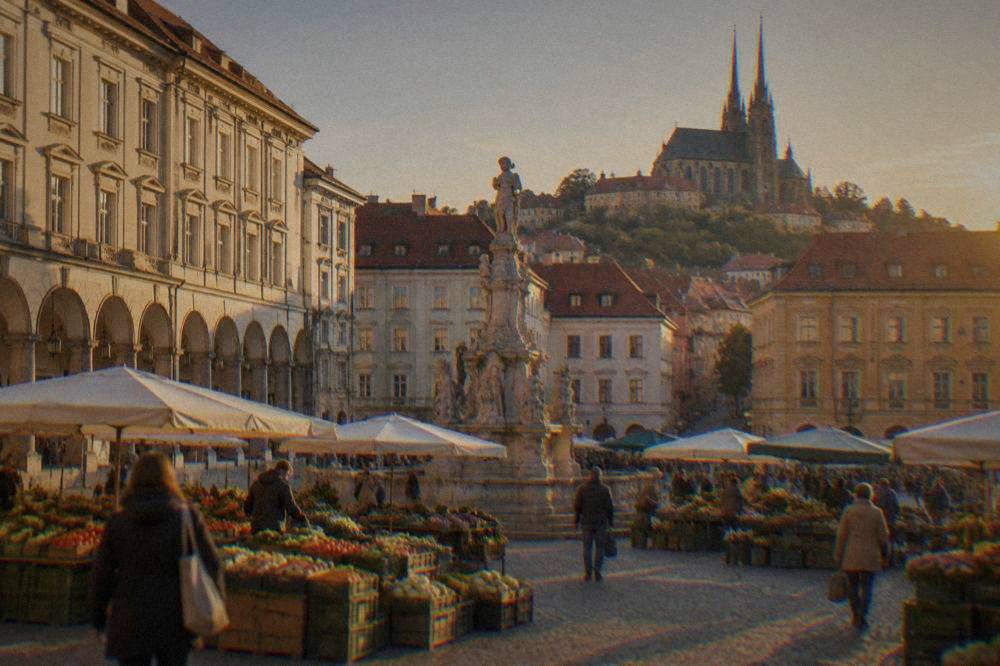
The Cabbage Market, Zelný trh, sits at the centre of this medieval layer, and beneath it lies the Labyrinth under the Cabbage Market, an underground system the operator podzemibrno.cz runs alongside the Ossuary and the 10-Z Bunker; the operator's page lists current hours and prices, and the Ossuary is free with Brnopas.
How Did The Swedish Sieges Of 1643 And 1645 Shape Brno?
The Swedish army besieged Brno twice, in 1643 and 1645, and the city and Špilberk Castle held both times, with the Swedes withdrawing, as reported by the Czech UNESCO heritage portal and the siege records it cites. The 1645 defence left the city its best-known legend: the cathedral bells ring at 11:00 rather than noon, commemorating the ruse by which Brno's defenders tricked the besiegers into leaving an hour early.
The sieges belong to the Thirty Years' War, though this page's dated record carries the events themselves rather than the wider conflict. The 1645 siege is the one that stuck in the city's memory. According to the version on gotobrno.cz, the Swedish commander was said to have vowed to take the city by noon on a fixed day; when the cathedral bells rang at 11:00, the assault was called off, and the bells have rung at 11:00 ever since. The story is a legend, and it is labelled as one, but the bell schedule is a documented fact: the Cathedral of Sts Peter and Paul rings at 11:00, and the cathedral appears on the Czech 10-crown coin, with a Romanesque chapel on Petrov Hill dated to the 11th to 12th century in the site's own listing.
The tailored Brno legends and history walking tour is built around exactly this material, the sieges, the dragon, the wheel and the underground, and it can be themed to a group's interests, Check availability on the operator's live listing.
Why Was Špilberk Castle Turned Into A Prison In 1783?
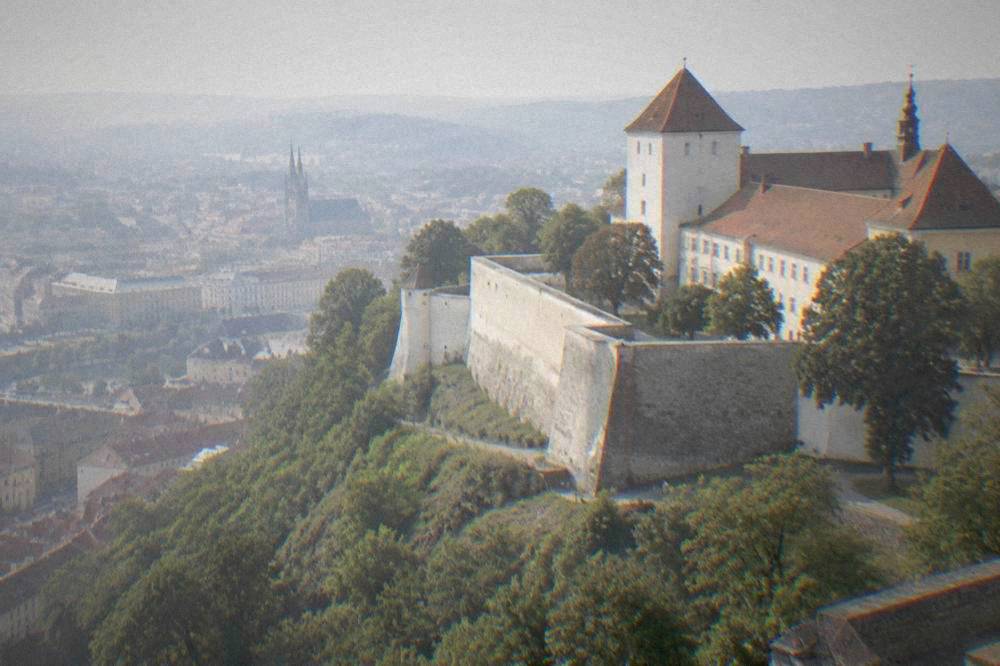
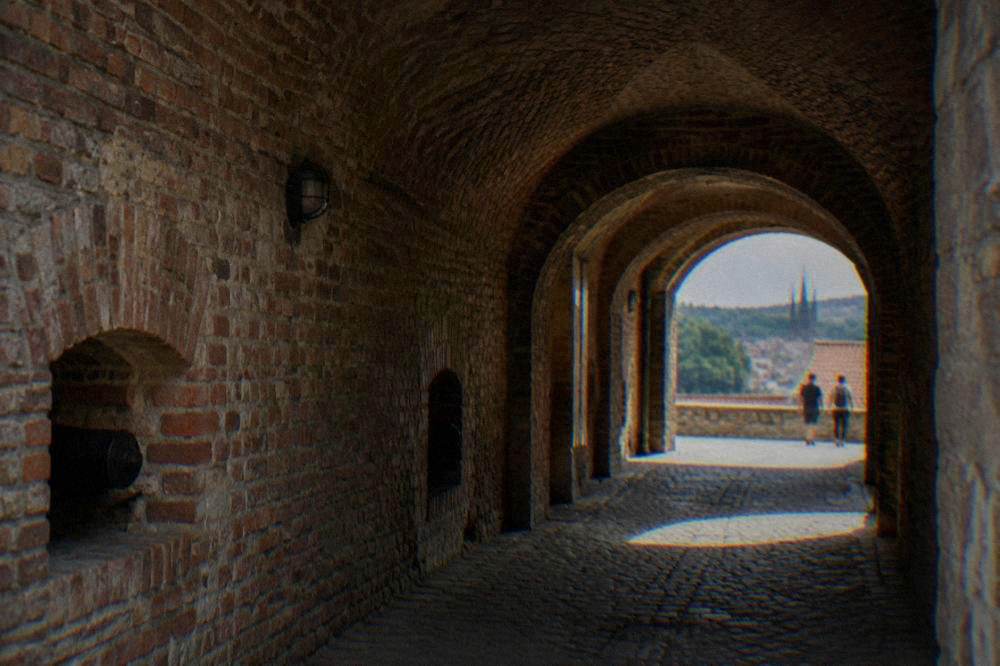
Špilberk Castle was converted into a Habsburg prison in 1783 under Joseph II, as reported in the castle's historiography, and it held political prisoners from across the empire under the name "the prison of nations". The casemates built into the fortress walls held the cells, and today the same spaces are the castle's most visited section, open daily from 09:00 to 21:00 self-guided according to the castle's own opening page.
The transformation from fortress to prison is the hinge of Špilberk's story. The castle that had survived the Swedish sieges became, under Joseph II, a place of detention whose reputation spread across the monarchy, and the phrase "prison of nations" records who was sent there: political prisoners from many lands of the empire. The castle's own ticket page now lists the prices for the tours that cover this history, and the figures below come from spilberk.cz.
| Špilberk tour | Full CZK | Reduced CZK | Family CZK |
|---|---|---|---|
| Story of the Castle (guided) | 180 | 110 | 415 |
| Casemates (guided) | 260 | 155 | 600 |
| Casemates (self-guided) | 190 | 115 | 440 |
| Combined tour with museum | 260 | 155 | 600 |
| Water Tanks (guided) | 120 | 120 | 120 |
Guided tours run Tuesday to Sunday and are booked through Brno iD, the same system Villa Tugendhat uses, and the castle grounds themselves are open daily from 06:00 to 23:00, with the ticket office daily 09:00 to 18:00. A new "Casemates War" section opened in the casemates from August 2026 per the castle's page. The full sight-by-sight detail sits on the Špilberk Castle guide, and the Brnopas city card includes one selected Špilberk tour free.
What Happened At The Battle Of Austerlitz Near Brno?
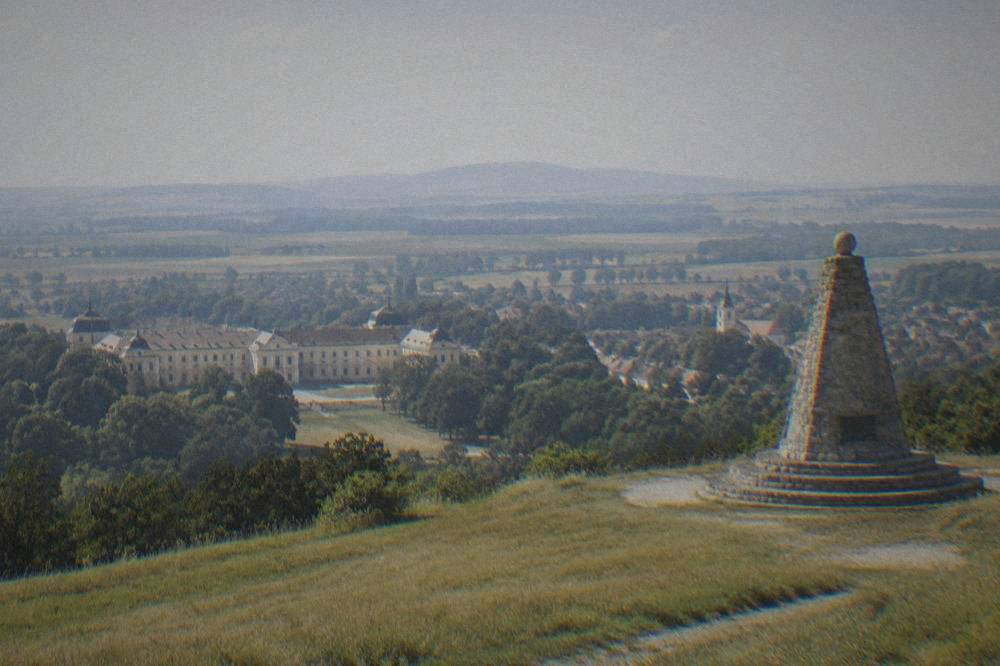
The Battle of Austerlitz was fought on 2 December 1805 at Slavkov u Brna, about 20 km from Brno in a straight line, and it ended in Napoleon's victory, with troops passing through Brno itself, as reported by the Czech UNESCO heritage portal. The battlefield, the Cairn of Peace memorial and Slavkov Chateau are all reachable as a day trip, with train or bus connections of about 20 to 30 minutes reported for the route.
Austerlitz is one of the most studied battles in European history, and its connection to Brno is geographic as much as anything: the armies moved through the region, and the city sat close to the field. The dated record for this page is the day itself, 2 December 1805, and the result. Visitors who want the fuller picture can take the Slavkov and Austerlitz battlefield day trip, and a bookable option exists in the roster, the Trip to the Austerlitz Battlefield near Brno, which covers the field with a guide; check the operator's listing for current scheduling. Slavkov Chateau's ticket prices are on the chateau's own site, zamek-slavkov.cz.
What Did Gregor Mendel Do In Brno?
Gregor Mendel, born in 1822, formulated his theory of heredity through pea experiments at the Augustinian abbey in Old Brno and presented the lecture and publication in 1865, as reported by the Czech UNESCO heritage portal. The abbey, with the Basilica of the Assumption beside it, still stands in the Old Brno district, and the Mendel Museum now tells the story on the abbey site, open Tuesday to Sunday 10:00 to 17:00 from 1 October 2026 and closed Mondays.
The dates matter because they anchor a claim no other city can make: the laws of inheritance were worked out in a monastery garden in Brno, presented to the local natural history society in 1865, and published the same year. The Mendel Museum's entrance runs 40 to 100 CZK per the gotobrno listing, a modest figure for a site of this weight. The museum's own page sets the current hours, the 17:00 closing from 1 October 2026 replacing the longer summer hours some listings still show. The basilica next door belongs to the same complex, and both sit a short walk from the city centre's medieval layer.
How Did Brno Become A City Of Modern Architecture?
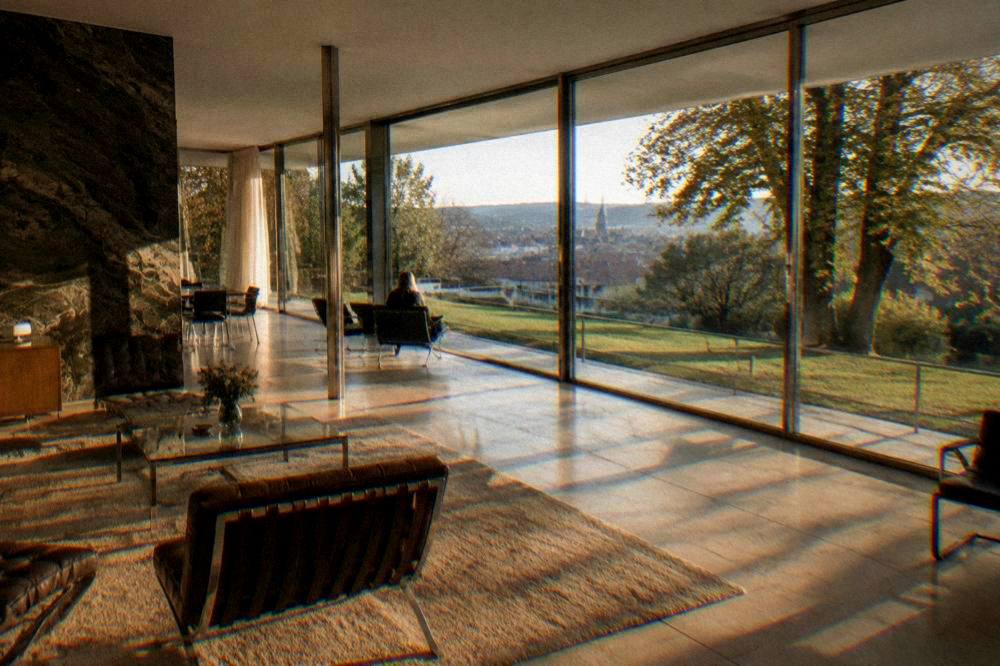
Brno became a centre of modern architecture between 1928 and 1930, the years Villa Tugendhat was built by Ludwig Mies van der Rohe, and the city's Exhibition Centre opened in 1928 with the Exhibition of Contemporary Culture, as reported in the record. UNESCO inscribed Villa Tugendhat on the World Heritage List in 2001, reference 1052, and it remains the only UNESCO site inside Brno itself.
The two dates belong to one moment: Brno in the late 1920s was a wealthy industrial city building boldly. The Exhibition Centre, opened 1928, gave the city a function it still performs as a fair ground. Villa Tugendhat, built 1928 to 1930, gave it a building that changed architectural history, and the UNESCO inscription of 2001 recognised that. The villa is not a walk-in sight: the interior is entered only with a previously purchased ticket booked through Brno iD, tours run in Czech and English, the villa is open daily except Monday 10:00 to 18:00, and prices rise on 1 January 2027. Booking details and strategy are on the Villa Tugendhat tickets guide, and the sight itself is covered on the Villa Tugendhat page.
| Villa Tugendhat tour | Full CZK to 31 Dec 2026 | Reduced CZK | Full CZK from 1 Jan 2027 |
|---|---|---|---|
| Extended, 90 min | 500 | 320 | 550 |
| Basic, 60 min | 450 | 270 | 500 |
| Outside and garden, 40 min | 200 | 150 | 200 |
Children to 6, ICOM members and ZTP/P cardholders with escorts enter free. The Extended tour takes a maximum of 16 per group with up to 3 groups per booking slot.
What Was The Brno Death March Of May 1945?
The Brno death march took place on 30 and 31 May 1945, when around 20,000 ethnic Germans were expelled from the city on foot, with an estimated 1,700 to 2,000 or more deaths along the route, as reported in the historiography of the event. It is the darkest dated event in the city's modern record and belongs to the immediate aftermath of the Second World War in Czechia.
The number of people driven out and the death toll are both reported figures with ranges, and this page keeps them as reported rather than fixing them. The march began in Brno and headed toward the Austrian border; it followed the German surrender but preceded the organized postwar expulsions agreed by the Allies. In the city today the event is commemorated rather than concealed, and it belongs in any honest timeline of Brno, alongside the war years that produced the 10-Z Bunker, the nuclear-era shelter beneath the city that is now a ticketed attraction with a skip-the-line entry ticket in the roster. The operator's page carries current hours and prices for the bunker.
Which Historic Sights In Brno Can You Visit Today?
The historic sights of Brno open to visitors include Špilberk Castle with its casemates, the Cathedral of Sts Peter and Paul on Petrov Hill, the Old Town Hall with its tower, the Brno Ossuary, the Capuchin Crypt, the Labyrinth under the Cabbage Market, Villa Tugendhat and the Mendel Museum, with the Old Town Hall tower at 90 CZK adult, 50 CZK reduced and 200 CZK family per the gotobrno listing, and Brnopas covering a selected set free.
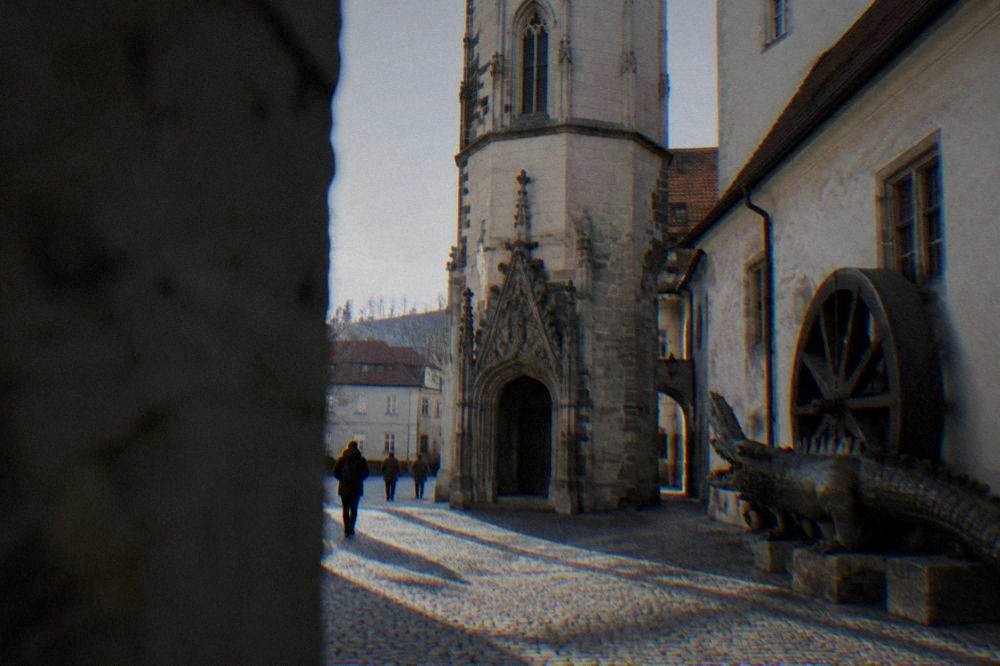
The Old Town Hall tower sells its tickets only at the tower itself, and the hall's passage holds the two city symbols, the Brno dragon and the wheel, the wheel tied to a legend about the wheelwright Birk and a wager, dated 1638 in the city's telling. The dragon is a crocodile specimen, and the gotobrno page for the pair is the reference for the story. The underground sights, Ossuary, Labyrinth and the Capuchin Crypt, are run by podzemibrno.cz, and the Ossuary is free with Brnopas. The card's own figures follow.
Want the legends narrated as you go? Book a legends audio tour here.
| Brnopas card | 1 day CZK | 2 days CZK | 3 days CZK |
|---|---|---|---|
| Adult | 370 | 490 | 610 |
| Child up to 15 | 250 | 330 | 400 |
| Brnopas+ with Villa Tugendhat, adult | 870 | 990 | 1110 |
| Brnopas+ with Water Tanks, adult | 550 | 670 | 790 |
Brnopas free-entry list includes the Old Town Hall tower, the Ossuary, Brno Zoo and the cathedral, and the 3-day card includes a seasonal boat on the Brno Reservoir route between the Bystrc wharf and Veverská Bítýška. The Brnopas guide works out when the card pays for itself.
How Does Brno's Past Reach The Historic Towns Around It?
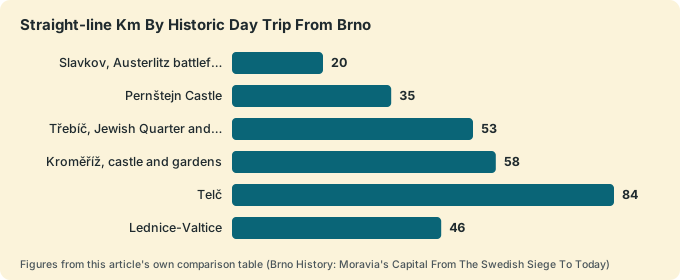
Brno's past reaches outward through four UNESCO World Heritage sites in the wider region, Lednice-Valtice, Telč, Třebíč and Kroměříž, all reachable as day trips, with Lednice-Valtice about 46 km from Brno in a straight line, Telč about 84 km, Třebíč about 53 km and Kroměříž about 58 km, and Vienna about 111 km and Prague about 186 km for the capital-city comparisons.
The distances are straight-line kilometres, computed from the city centre, and the region's UNESCO density is the point: a city with one UNESCO site of its own sits inside a ring of them. Lednice Chateau's own site lists Tour I at 280 CZK full and 200 reduced, Tour II at 220 and 160, a combined ticket at 420 and 300, and an English audio guide at 50, with the park free. Pernštejn Castle, about 35 km away, lists its basic tour at 260 CZK adult, 210 for seniors and youth and 80 for children 6 to 17, and it is seasonal: the castle was closed from 3 November 2025 to 3 April 2026 and runs weekend-only hours in autumn, so check the opening page before going.
| Historic day trip from Brno | Straight-line km | Dated anchor |
|---|---|---|
| Slavkov, Austerlitz battlefield | 20 | Battle, 2 December 1805 |
| Pernštejn Castle | 35 | Basic tour 260 / 210 / 80 CZK |
| Třebíč, Jewish Quarter and basilica | 53 | UNESCO, ref 1078 |
| Kroměříž, castle and gardens | 58 | UNESCO, ref 860 |
| Telč | 84 | UNESCO, ref 621 |
| Lednice-Valtice | 46 | UNESCO, ref 763, 143 km2 |
The Kroměříž day trip guide covers that town's castle and gardens in detail.
A Dated Timeline Of Brno History
The dated timeline of Brno history runs 1091, 1243, 1641, 1643, 1645, 1783, 1805, 1822, 1865, 1928, 1930, 1945 and 2001, each year tied to a documented event in the sources this site reports, from the chronicle mention to the UNESCO inscription of Villa Tugendhat. The table below sets them out with what each date carries.
| Year | Event in Brno's history |
|---|---|
| 1091 | First written mention, Kosmas Chronicle |
| 1243 | City privileges granted under Václav I |
| 1641 | Brno becomes the main capital of Moravia |
| 1643 and 1645 | Swedish sieges; the city and Špilberk hold |
| 1783 | Špilberk converted to a Habsburg prison under Joseph II |
| 1805 | Battle of Austerlitz fought nearby, 2 December |
| 1822 | Gregor Mendel born |
| 1865 | Mendel's heredity lecture and publication in Brno |
| 1928 | Exhibition Centre opens; Villa Tugendhat begins |
| 1930 | Villa Tugendhat completed |
| 1945 | Brno death march, 30 to 31 May |
| 2001 | Villa Tugendhat inscribed by UNESCO, ref 1052 |
Every year in the table is reported by the sources named on this site's research, chiefly the Czech UNESCO heritage portal, the castle and villa's own pages and the UNESCO World Heritage list. The city's modern scale sits at 404,296 permanent residents at the end of 2025 within a South Moravian Region of 1,228,779 on 30 June 2026, and Masaryk University, reported as founded in 1919, carries 38,181 students per the university's own statistics page, which keeps the student-city character visible in the squares and cafés.
For planning around the calendar, the best time to visit Brno guide and the Brno weather guide carry the ERA5 reanalysis, 1991-2020 climate normals, including the July mean daily high of 25.0 C and the July rainfall total of 82.8 mm, the year's highest monthly figure in that table.
Common Questions About Brno History
Where does the history of Brno begin?
The first written mention of Brno dates to 1091 in the Kosmas Chronicle, and the city received its privileges in 1243 under Václav I, as reported by the Czech UNESCO heritage portal.
Why do the bells of the Brno cathedral ring at 11:00?
The Cathedral of Sts Peter and Paul rings its bells at 11:00 rather than noon in memory of the ruse said to have ended the 1645 Swedish siege an hour early. The bell schedule is documented; the story behind it is a legend, told as one.
Was Špilberk Castle really a prison?
Yes. Špilberk was converted into a Habsburg prison in 1783 under Joseph II and held political prisoners from across the empire. The casemates are open to visitors today, with self-guided entry at 190 CZK full per the castle's ticket page.
How far is the Austerlitz battlefield from Brno?
Slavkov u Brna, where the Battle of Austerlitz was fought on 2 December 1805, lies about 20 km from Brno in a straight line, with train or bus connections of about 20 to 30 minutes reported for the route.
Can you visit the house where Mendel worked?
The Augustinian abbey site in Old Brno houses the Mendel Museum, open Tuesday to Sunday 10:00 to 17:00 from 1 October 2026 and closed Mondays, with entrance at 40 to 100 CZK per the gotobrno listing.
Is Brno older than Prague?
This page reports Brno's own dated record, a 1091 first mention, and makes no comparison with any other city's chronology.
The city's layered record, medieval squares, siege legends, a prison castle, a battlefield on the doorstep, a monastery garden and a glass villa, is unusually legible for a city of this size, and the buildings that carry it are open on published schedules and published prices, which is the best kind of history to walk through.