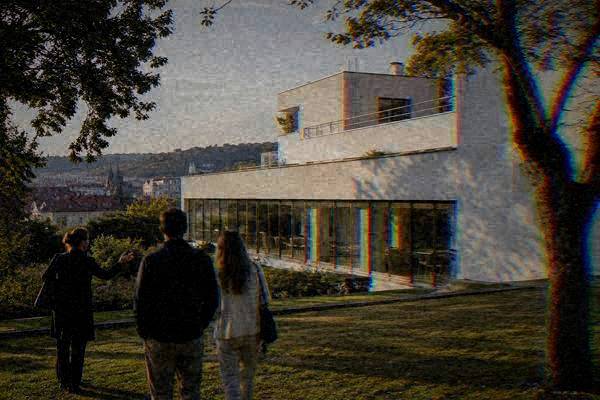
Brno Architecture: Functionalism, Baroque And The Gothic Core
Brno's architecture stacks a thousand years into one walkable city: a castle that became a prison, a Gothic core ringed by Baroque additions, and a 1930 villa by Mies van der Rohe that carries the city's only in-city UNESCO inscription.
Short answer
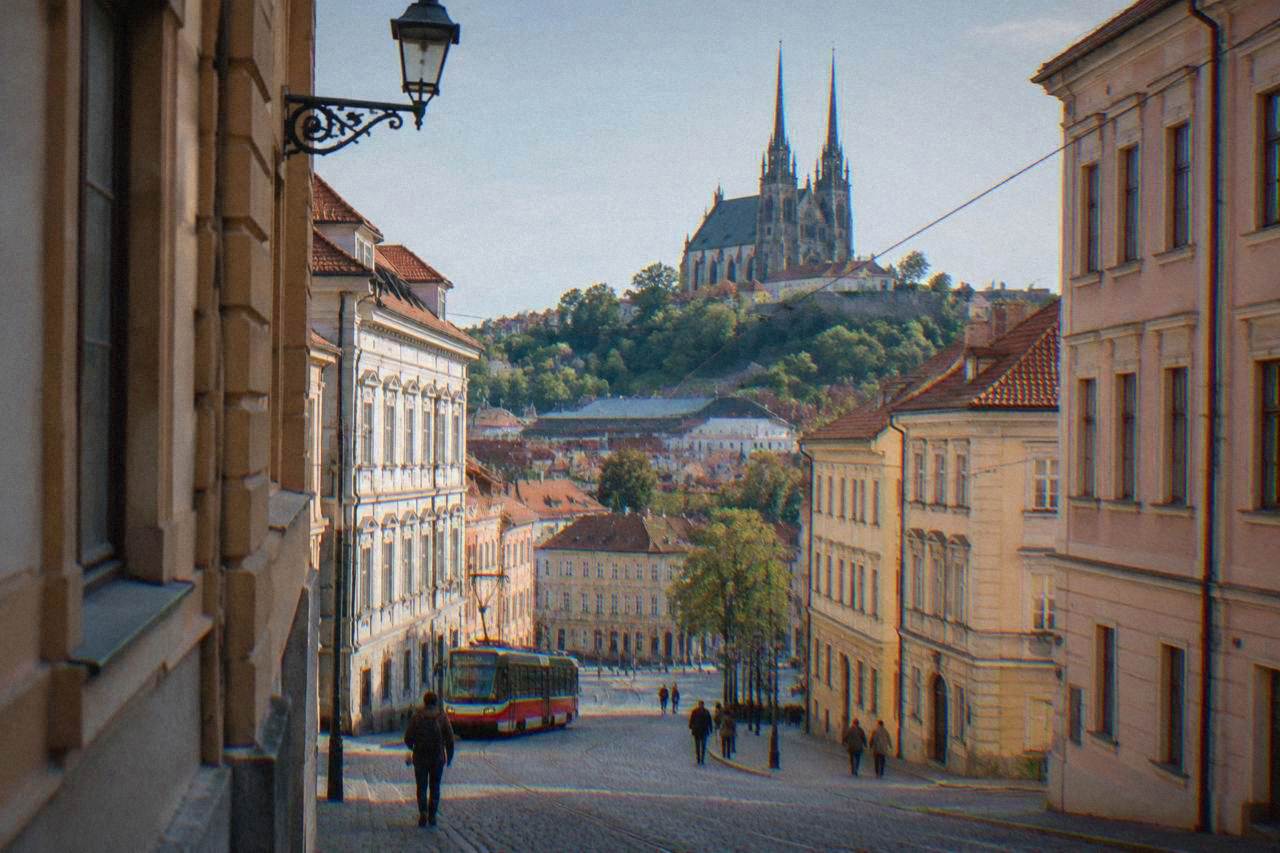
Brno's architecture is defined by three layers: the Gothic core around the Old Town squares and Petrov Hill, Baroque and later additions crowned by Špilberk Castle, and the functionalist era anchored by Villa Tugendhat, built 1928 to 1930 and UNESCO-listed in 2001.
Brno, in South Moravia, Czechia, is a city of about 404,000 permanent residents whose buildings tell its whole history in a compact centre: a castle first mentioned in writing alongside the city itself, a Gothic core that survived Swedish sieges in 1643 and 1645, and a functionalist villa completed in 1930 that put the city on the UNESCO list in 2001. Reading Brno's architecture means moving between these layers, often within a few minutes' walk, from Špilberk Castle above the rooftops to Villa Tugendhat's era of modern building. The itineraries, ticket prices and tour options below are drawn from the official pages of the sights themselves.
What Defines Brno Architecture?
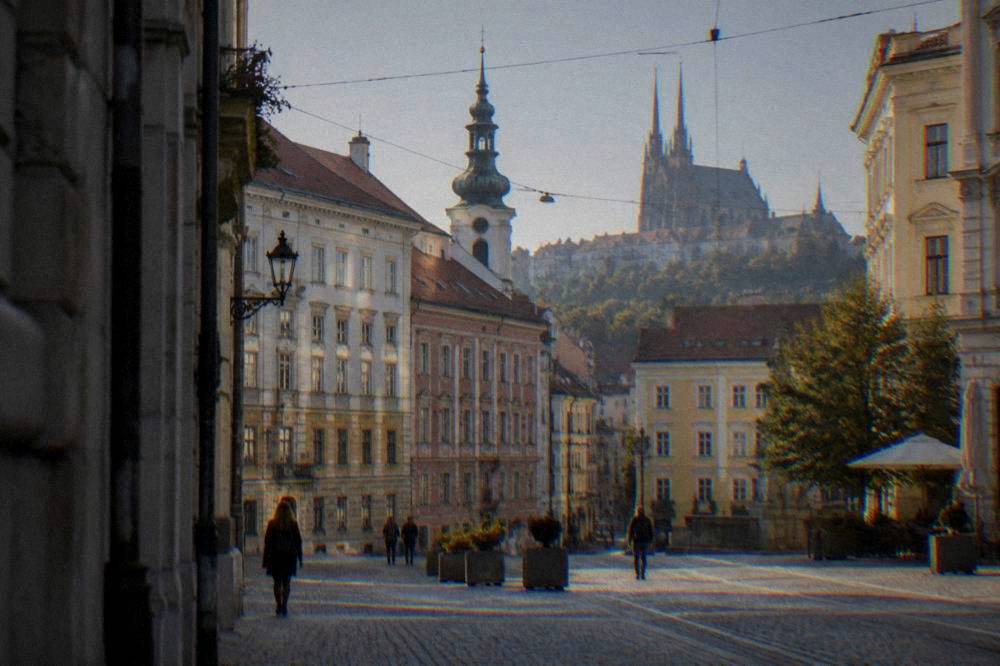
Brno architecture is defined by three stacked layers: a Gothic core dating to the city's early privileges of 1243, Baroque-era fortification and church building shaped by the Swedish sieges of 1643 and 1645, and a modern movement of the 1920s and 1930s whose flagship, Villa Tugendhat, was built 1928 to 1930 and inscribed by UNESCO in 2001. The city's first written mention dates to 1091, and from 1641 Brno served as the capital of Moravia, which concentrated building and power here for centuries. The result is a centre where a single view can hold the cathedral spires on Petrov Hill, the Old Town Hall passage with the Brno dragon and wheel, and the hill of Špilberk Castle.
The dates matter more than stylistic labels, because they are what the sources actually give. Brno received its city privileges in 1243 under Václav I, per the UNESCO Czech heritage site's history of the city. The sieges of 1643 and 1645 left the city and Špilberk unconquered, and the cathedral's bells still ring at 11:00 rather than noon in memory of the 1645 ruse, according to the city's own tourism page for the Cathedral of Sts Peter and Paul. A chapel on Petrov Hill is listed as Romanesque, of the eleventh to twelfth century, on the same page, which makes the hill one of the few places in Brno where the deepest layer is still visible.
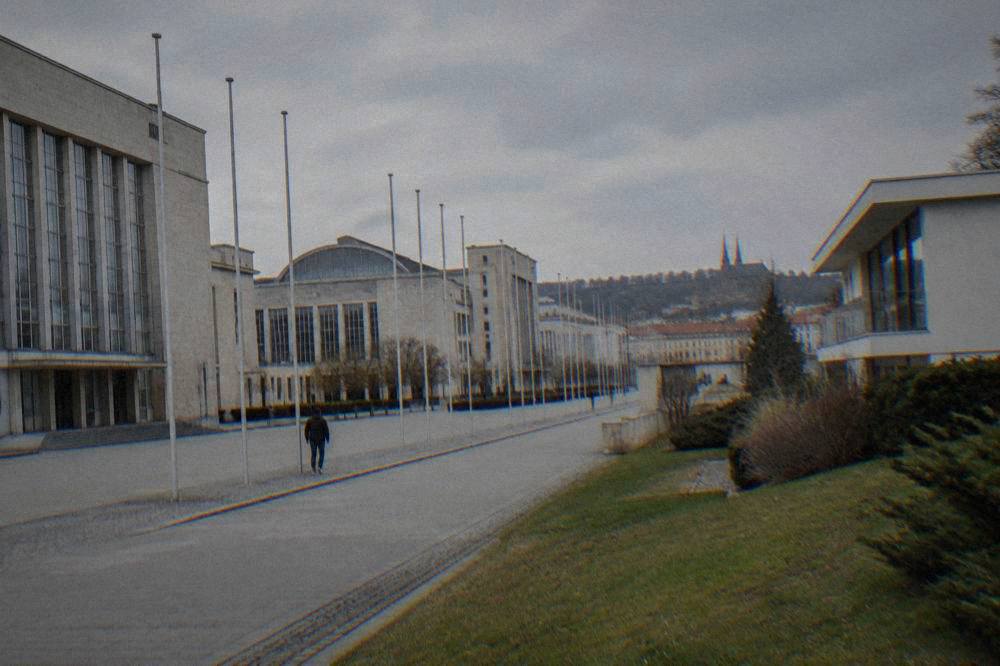
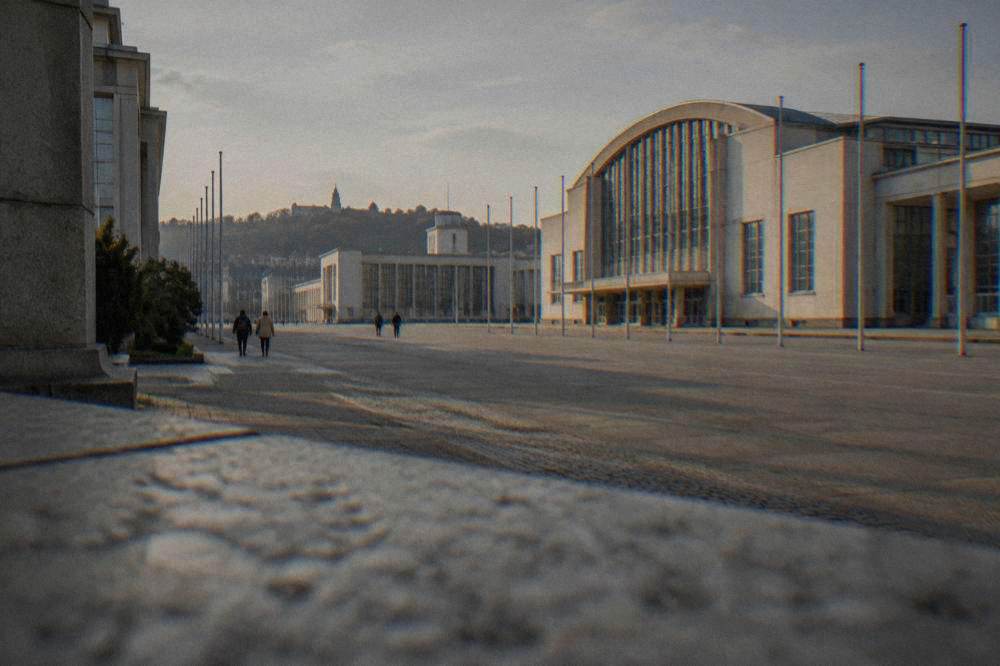
The modern layer is the reason architectural travellers arrive at all. Villa Tugendhat, built by Ludwig Mies van der Rohe between 1928 and 1930, was inscribed on the UNESCO World Heritage list in 2001, reference 1052, and it stands as the only UNESCO site inside the city itself. The Brno Exhibition Centre opened in 1928 with the Exhibition of Contemporary Culture, adding a purpose-built exhibition quarter to the same era. For a fuller rundown of how these layers translate into a day of sightseeing, the site's things to do in Brno page carries the complete inventory.
Why Is Villa Tugendhat The City's UNESCO Landmark?
Villa Tugendhat is Brno's only UNESCO World Heritage site inside the city, inscribed in 2001, and it can only be entered on a guided tour with a previously purchased ticket booked through the Brno iD system; it is open daily except Monday from 10:00 to 18:00, and tours run in Czech and English. The Extended tour lasts 90 minutes, takes groups of at most 16 with at most 3 groups per booking, and costs 500 CZK full, 320 CZK reduced and 1200 CZK family until 31 December 2026, rising to 550 and 330 CZK on 1 January 2027. The Basic tour costs 450 CZK full, 270 reduced and 1050 family until the same date, then 500 and 300 CZK. Children to 6, ICOM members and ZTP/P escorts go free.
The booking rule is the single most important practical fact about the villa. The interior cannot be walked into: the villa's own ticket page states entry is only with a previously purchased ticket, and slots are reported to sell out quickly on release day. There is also a 40-minute outside and garden tour at 200 CZK full, 150 CZK reduced and 400 CZK family, per the same page. Booking goes through Brno iD, the city's online system, so dates should be secured before travel rather than on arrival.
| Villa Tugendhat tour | Length | Full (CZK) | Reduced (CZK) | Family (CZK) |
|---|---|---|---|---|
| Extended tour, to 31 Dec 2026 | 90 min | 500 | 320 | 1200 |
| Extended tour, from 1 Jan 2027 | 90 min | 550 | 330 | price on the villa's page |
| Basic tour, to 31 Dec 2026 | 60 min | 450 | 270 | 1050 |
| Basic tour, from 1 Jan 2027 | 60 min | 500 | 300 | price on the villa's page |
| Outside and garden tour | 40 min | 200 | 150 | 400 |
The villa's fame is architectural, and its paperwork is unusually precise. Built 1928 to 1930 by Mies van der Rohe, it carries UNESCO reference 1052 and sits at the head of the city's functionalist building stock. The Villa Tugendhat tickets guide on this site covers the booking mechanics in more depth, and the functionalist Brno walk itinerary places the villa in a wider route through the city's modern architecture.
What Does Špilberk Castle Tell You About Brno's Past?
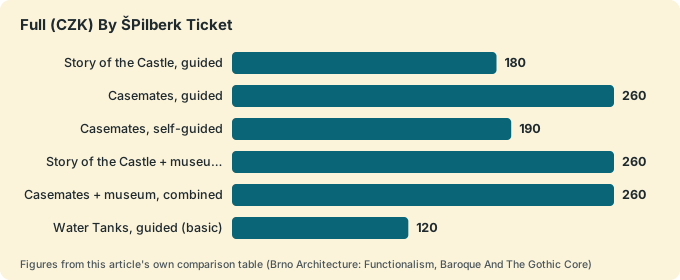
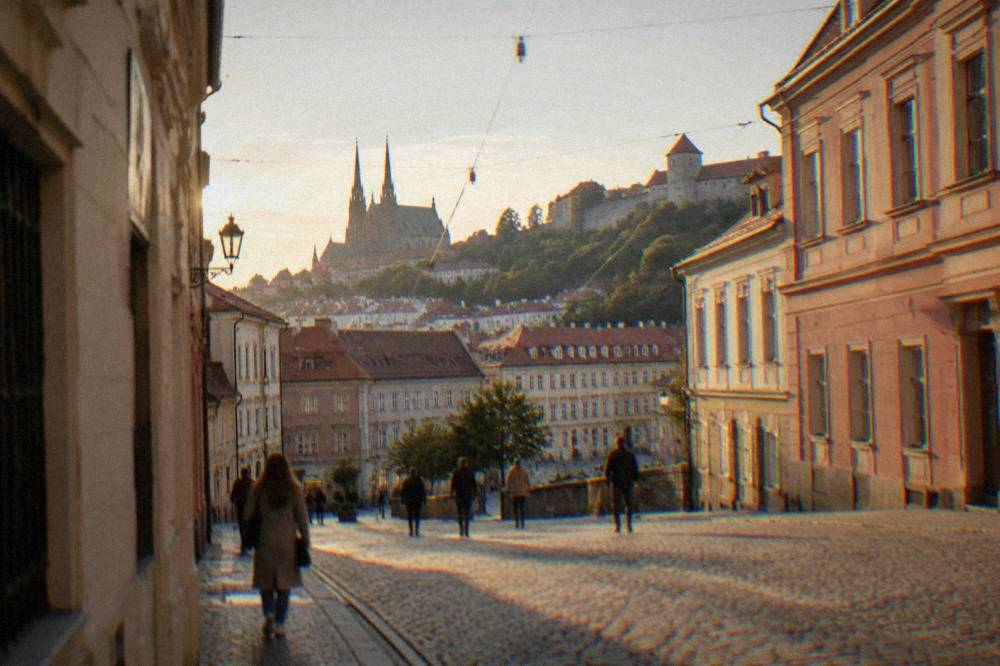
Špilberk Castle is Brno's principal historic building, with grounds open daily from 6:00 to 23:00, a ticket office open daily 9:00 to 18:00, and a layered history that runs from royal fortress to Habsburg prison, converted in 1783 under Joseph II, to museum; guided tours run Tuesday to Sunday and are booked through Brno iD. The Story of the Castle guided tour costs 180 CZK full, 110 CZK reduced and 415 CZK family, per the castle's own ticket page. The guided Casemates tour costs 260 CZK full, 155 CZK reduced and 600 CZK family, and the self-guided Casemates visit is 190, 115 and 440 CZK.
The castle's opening structure rewards a little planning. Museum exhibitions, the lookout, the Royal Chapel and the Prism Tower run Tuesday to Sunday 10:00 to 18:00, while the self-guided Casemates and the Bastion are open daily 9:00 to 21:00, all per the castle's opening-hours page. A combined Story of the Castle plus museum ticket, and a combined Casemates plus museum ticket, each cost 260 CZK full and 155 CZK reduced, and a Water Tanks guided tour is 120 CZK basic. The Casemates gained a new "Casemates War" section in August 2026, per the castle's site.
| Špilberk ticket | Full (CZK) | Reduced (CZK) | Family (CZK) |
|---|---|---|---|
| Story of the Castle, guided | 180 | 110 | 415 |
| Casemates, guided | 260 | 155 | 600 |
| Casemates, self-guided | 190 | 115 | 440 |
| Story of the Castle + museum, combined | 260 | 155 | 600 |
| Casemates + museum, combined | 260 | 155 | 600 |
| Water Tanks, guided (basic) | 120 | price on the castle page | price on the castle page |
The prison chapter is the part no other Brno building shares. Converted to a Habsburg prison in 1783 under Joseph II, the castle held political prisoners from across the empire, which is why its casemates became the monument they are now. The Špilberk Castle guide on this site goes deeper, and the city's broader history, including the sieges of 1643 and 1645, is covered in the Brno history page.
How Do You Visit The Cathedral Of Sts Peter And Paul?
The Cathedral of Sts Peter and Paul stands on Petrov Hill above the city, a landmark the tour listing describes as carrying Gothic and Baroque elements with twin spires visible across Brno, and its bells famously ring at 11:00 rather than noon in memory of the 1645 Swedish siege. The hill holds a Romanesque chapel of the eleventh to twelfth century, per the city tourism page, and the cathedral appears on the Czech 10-crown coin. The cathedral's tower admission price should be checked on site or on the official page before a visit; the tower is free with the Brnopas city card, which also covers the Old Town Hall tower, the Ossuary and the Brno Zoo.
The 11:00 bells are the detail that catches visitors out, and the reason is architectural history as much as legend: the city tourism page records that the ringing commemorates the ruse that ended the 1645 siege. The cathedral, together with Špilberk, forms the two-hill silhouette that defines Brno's skyline, and the Spilberk and Petrov guide pairs them as a single walk. For anyone who wants the hill explained rather than just climbed, the Petrov Hill History and Legends walking tour covers the cathedral and the stories around it, and it can be checked through the operator's live listing: Check availability.
The practical layer is the Brnopas card. A standard Brnopas costs 370 CZK adult for one day, 490 for two days and 610 for three days, with child prices at 250, 330 and 400 CZK, and it grants free entry to the Old Town Hall tower, the Ossuary, the Brno Zoo and the cathedral tower, per the card's official page. A Brnopas+ variant bundled with a Villa Tugendhat tour runs 870, 990 and 1110 CZK adult for one, two and three days. The full mechanics are laid out in the Brno pass guide.
Which Other Buildings Shape The Brno Cityscape?
Beyond the castle, the cathedral and the villa, Brno's core is anchored by the Old Town Hall with its tower and the Brno dragon and wheel in its passage, the two historic squares of Náměstí Svobody and Zelný trh, the Church of St James, and the 1928 Exhibition Centre, together with a functionalist building stock that made the city a destination for modern-architecture travellers. The Old Town Hall tower costs 90 CZK adult, 50 CZK reduced and 200 CZK family with at most two children, sold only at the tower itself and free with Brnopas, per the city tourism page. The dragon, a crocodile specimen, and the legendary wheel made by wheelwright Birk in 1638 hang as the city's symbols in the passage.
The squares are the connective tissue of the Gothic core. Freedom Square, Náměstí Svobody, and the Cabbage Market, Zelný trh, hold the markets and the Christmas programme, with the 2026 Christmas market running 13 November to 31 December per its organiser. The Freedom Square and Cabbage Market pages on this site cover each in detail, and the Church of St James page handles the church whose ossuary sits beneath it. The ossuary is free with Brnopas; its hours and any admission price should be checked on the operator's page before a visit.
The 1920s and 1930s layer is what separates Brno from many Central European cities of similar size. Villa Tugendhat is the inscribed emblem, but the era also produced the Exhibition Centre, opened in 1928, and a set of functionalist buildings that the city now markets as a distinct architecture trail. The Mendel Museum at the Augustinian abbey in Old Brno, where Gregor Mendel, born 1822, delivered his 1865 lecture on heredity, adds a scientific chapter to the same district; it is open Tuesday to Sunday 10:00 to 17:00 from 1 October 2026, closed Mondays, with entrance listed at 40 to 100 CZK on the city tourism page. The Old Brno and Mendel Museum pages continue the story.
| Brno sight | Key dated fact | Entry figure (CZK) |
|---|---|---|
| Špilberk Castle | prison conversion 1783 | Story of the Castle 180 full |
| Cathedral of Sts Peter and Paul | bells at 11:00, siege of 1645 | tower free with Brnopas |
| Old Town Hall tower | wheel legend, Birk, 1638 | 90 adult, 50 reduced, 200 family |
| Villa Tugendhat | built 1928 to 1930, UNESCO 2001 | Extended 500 full to 31 Dec 2026 |
| Exhibition Centre | opened 1928 | site access, check event pages |
| Mendel Museum | Mendel's 1865 lecture | 40 to 100 |
How Does Brno's Gothic Core Compare With The Regional UNESCO Sites?
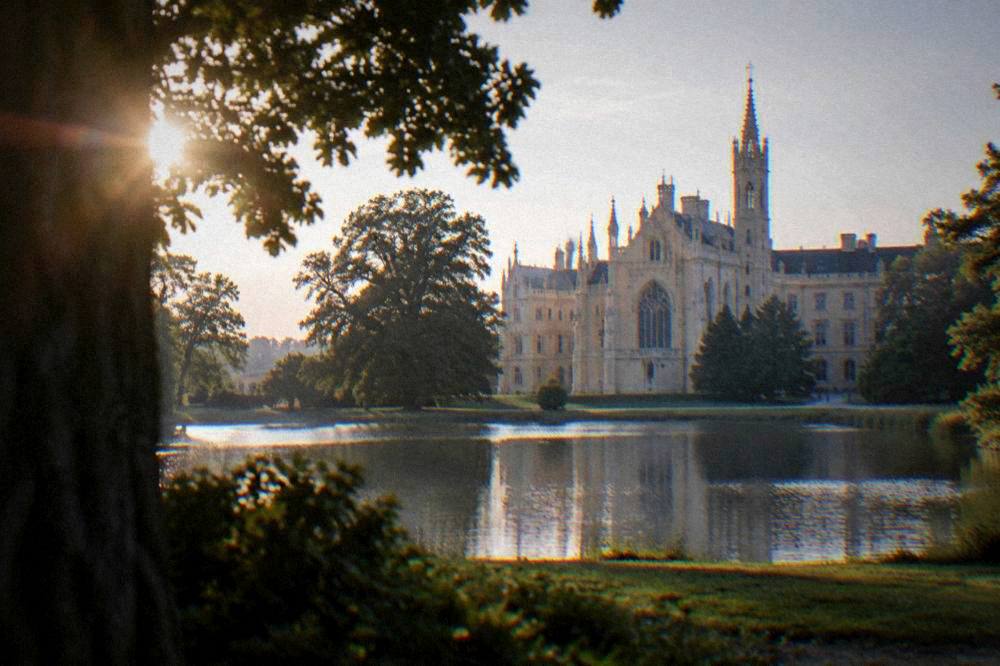
Brno holds one UNESCO site inside the city, Villa Tugendhat from 2001, while the surrounding South Moravian region adds four more within day-trip range: the Lednice-Valtice Cultural Landscape, Telč, Třebíč and Kroměříž, which lie about 46, 84, 53 and 58 kilometres from Brno in a straight line respectively. Lednice-Valtice is the closest at about 46 km straight-line, and its chateau carries printed prices: Tour I state rooms at 280 CZK adult and 200 reduced, Tour II private apartments at 220 and 160, a combined ticket at 420 and 300, and an English audio guide at 50, with the park free, per the chateau's official site. Pernštejn Castle, about 35 km straight-line, charges 260 CZK adult, 210 for seniors and youth, and 80 for children 6 to 17, and is seasonal: it closed from 3 November 2025 to 3 April 2026 and runs weekend-only hours in autumn, so check before going.
These regional sites extend the same architectural story outward. Lednice-Valtice is a designed cultural landscape inscribed by UNESCO; Telč, Třebíč and Kroměříž each carry their own inscription. Entry prices for those three are not stated here; check the official ticket pages when planning. The Lednice-Valtice, Telč, Třebíč and Kroměříž pages on this site cover each destination, and the Pernštejn Castle page handles the seasonal castle in detail.
| UNESCO or castle site | Straight-line distance from Brno centre | Ticket figure (CZK) |
|---|---|---|
| Villa Tugendhat (in city) | 0 km | Extended 500 full to 31 Dec 2026 |
| Lednice-Valtice | about 46 km | Tour I 280 adult, 200 reduced |
| Pernštejn Castle | about 35 km | 260 adult, 210 seniors and youth |
| Třebíč | about 53 km | check the official ticket page |
| Kroměříž | about 58 km | check the official ticket page |
| Telč | about 84 km | check the official ticket page |
For travellers based in the city, the pairing is simple: the gothic core and the functionalist layer are walkable in a day or two, and the regional sites reward a full day each. The Brno in two days and Brno in three days itineraries sequence both layers, and the where to stay in Brno page handles the base. More of these guides are collected on Brno Travel Guide.
What Does Brno Architecture Look Like Through The Year?
Brno's climate is continental, with ERA5 reanalysis 1991-2020 normals showing a July mean daily high of 25.0 C against a January mean daily high of 1.9 C, and July also the month with the most rain in the table at 82.8 mm of rain against February's 27.9 mm, so sightseeing splits naturally between outdoor squares and castle grounds in the warmer half of the year and interior-heavy museum and villa visits in winter. The castle grounds at Špilberk stay open daily 6:00 to 23:00 year-round, which makes the hill itself an all-season viewpoint even when the museum exhibitions inside keep their Tuesday-to-Sunday 10:00-to-18:00 hours.
The events calendar wraps the architecture in seasonal light. Ignis Brunensis, the fireworks festival at the Brno Reservoir, ran 30 May to 4 July in 2026, and the Christmas market ran 13 November to 31 December, filling Zelný trh and Náměstí Svobody. MotoGP returned to the circuit on the 2026 calendar for 19 to 21 June, race day Sunday 21 June; the 2027 date had not been announced. The month-by-month breakdown lives in the best time to visit Brno guide, with the numbers behind it in Brno weather.
| Month | Mean high (C) | Mean low (C) | Rain (mm) |
|---|---|---|---|
| January | 1.9 | -3.8 | 33.6 |
| April | 14.9 | 4.5 | 40.4 |
| July | 25.0 | 15.3 | 82.8 |
| October | 13.6 | 6.3 | 43.5 |
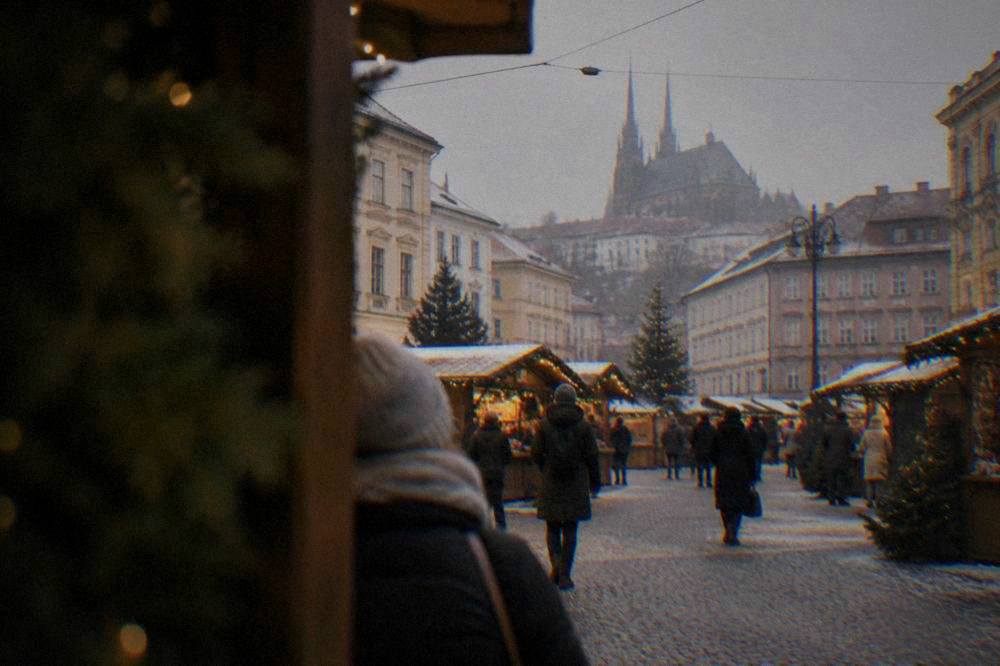
A wet-day plan needs no improvisation in this city. The museum layer, from Špilberk's exhibitions to the Technical Museum and the Moravian Gallery, covers whole days indoors, and the underground sites beneath the Cabbage Market and St James run regardless of weather. The Brno in the rain page assembles the full wet-weather itinerary.
Which Tours Help You Read The City?
The tours that serve Brno's architecture best are the guided walks that bind the sights into a narrative: the Petrov Hill History and Legends walking tour for the cathedral layer, a private functionalism-focused architectural walking tour for the 1920s and 1930s layer, and the budget historical walk or the themed walk for the Gothic core, with day trips covering Pernštejn Castle and the Moravian Karst beyond the city. Each renders its own price, rating and duration on the operator's live listing, so figures should be read there rather than assumed. What matters for planning is fit: the cathedral tour pairs with a Špilberk visit, the functionalism walk pairs with a Villa Tugendhat booking, and the day trips pair with nothing, because they take the whole day.
To walk the whole story from Gothic core to functionalism, book a private heritage walking tour here.
Practical sequencing beats ambition. Villa Tugendhat must be booked ahead through Brno iD, the castle's guided tours run Tuesday to Sunday, and the Mendel Museum now closes Mondays too, so a Monday arrival shifts the plan toward the squares, the open castle grounds and the self-guided Casemates, which run daily 9:00 to 21:00. The Brno public transport page covers the trams that hold it all together, with a 24-hour city ticket at 90 CZK, and the Brnopas question decides whether the bundle beats the single tickets for your length of stay.
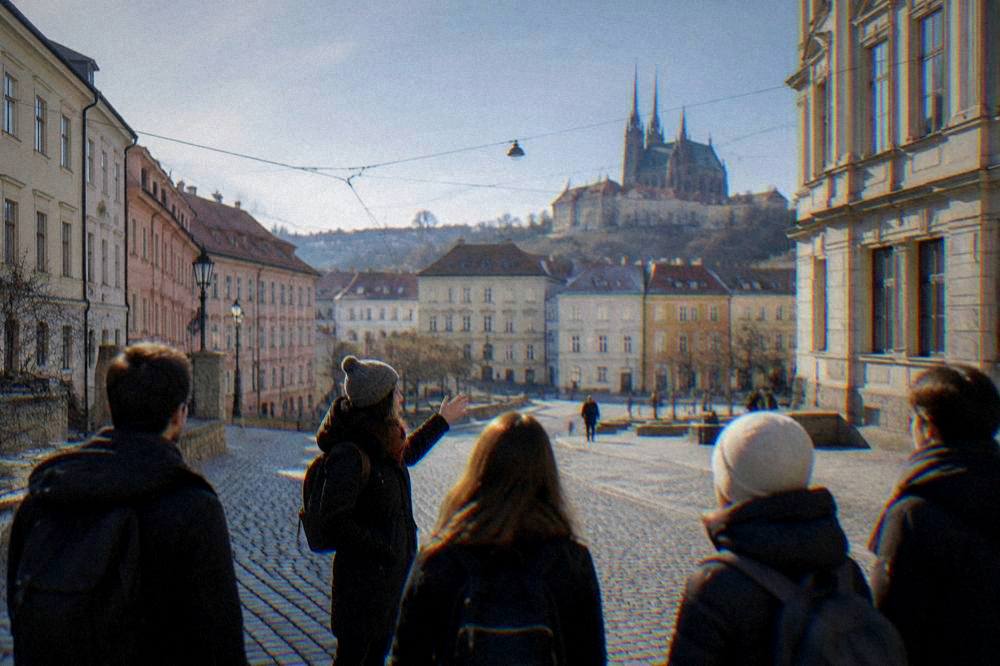
One final note on money: Czechia uses the Czech koruna, CZK, and is in the EU and Schengen but not the eurozone, so castle and villa tickets are paid in crowns. The czech koruna and money page covers cards, cash and withdrawals for a trip built around buildings rather than beaches, which Brno, an inland city, has never had. Everything above reflects what the sights' own pages state.
Common Questions About Brno Architecture
What defines Brno architecture?
Three layers: the Gothic core around Petrov Hill and the historic squares, with city privileges dating to 1243; the fortress and Baroque era crowned by Špilberk, later a prison from 1783; and the functionalist movement anchored by Villa Tugendhat, built 1928 to 1930 and UNESCO-listed in 2001.
Can you walk into Villa Tugendhat?
No. The interior is entered only with a previously purchased ticket booked through Brno iD, on guided tours in Czech or English, and the villa is closed Mondays. Prices rise on 1 January 2027.
Why do the cathedral bells in Brno ring at 11:00?
The bells of the Cathedral of Sts Peter and Paul ring at 11:00 rather than noon in memory of the ruse that ended the Swedish siege of 1645, per the city's own tourism page for the cathedral.
What is the oldest architectural layer visible in Brno?
A Romanesque chapel of the eleventh to twelfth century on Petrov Hill is the deepest layer the city's tourism page lists, alongside a first written mention of Brno in 1091.
How many UNESCO sites are in Brno?
One inside the city: Villa Tugendhat, inscribed in 2001. The region adds Lednice-Valtice, Telč, Třebíč and Kroměříž as separate inscriptions within day-trip range.
Do I need a card or pass for Brno's architectural sights?
Not necessarily, but Brnopas at 370, 490 or 610 CZK adult for one, two or three days covers the Old Town Hall tower, the Ossuary, the Brno Zoo and the cathedral tower, and a Brnopas+ variant bundles a Villa Tugendhat tour.