Is Czechia The Same As The Czech Republic?
Yes: Czechia and the Czech Republic are two names for one country, and Brno is its second-largest city. A clear answer with currency, EU status, Moravia and travel basics.
Yes, Czechia and the Czech Republic are exactly the same country: two names, one state, one government and one flag. The Czech Republic is the longer formal name and Czechia is its short form, and both appear on maps, in official use and in casual speech. The country sits in central Europe, and Brno, the city this site covers, is its second-largest city by population, an inland city in the historic region of South Moravia, on the Svratka and Svitava rivers. The distinction trips up travellers for one practical reason: guidebooks, ticket sites and road signs mix the two names freely, so a search for "Czech Republic trains" and a search for "Czechia trains" returns the same national operator.
Is Czechia The Same As The Czech Republic?
Yes, completely. Czechia is simply the shorter name of the Czech Republic, referring to the same country in central Europe, with the same capital (Prague), the same currency (the Czech koruna, not the euro) and the same borders. Brno, home to about 404,296 permanent residents at the end of 2025, is the same city under either name: the second-largest city in the country and the heart of South Moravia.
Nothing changes on the ground depending on which name you use. The country is a member of the European Union and of the Schengen area, but it does not use the euro; the currency is the Czech koruna, abbreviated CZK. The official language is Czech, and the timezone is Europe/Prague, one hour ahead of Greenwich Mean Time in winter and two in summer.
For a Brno trip the name question matters less than the country facts. Here they are in one place.
| Question | Answer for Czechia (the Czech Republic) |
|---|---|
| Is Czechia a different country from the Czech Republic? | No, one country, two names |
| Capital | Prague |
| Second-largest city | Brno, about 404,296 permanent residents (end of 2025) |
| Region around Brno | South Moravia, 1,228,779 residents (30 June 2026) |
| Currency | Czech koruna (CZK), not the euro |
| EU member | Yes |
| Schengen member | Yes |
| Language | Czech |
| Timezone | Europe/Prague |
The two-name situation has a practical edge for bookings. A hotel listing may say "Brno, Czechia" while its confirmation email says "Czech Republic"; both are correct and both describe the same destination. The same applies to train tickets: the Railjet from Brno to Prague takes 2 h 59 min regardless of which country name is printed on it.
Where Is Brno In Czechia?
Brno sits in the south-east of Czechia, in the historic land of Moravia, specifically the South Moravian Region, and it is an inland city with no coastline. It stands where the Svratka and Svitava rivers meet, roughly 186 km in a straight line from Prague, 111 km from Vienna and 122 km from Bratislava. From 1641, Brno served as the main capital of Moravia, a role reported in the country's heritage records.
Moravia is the eastern half of the country and Bohemia the western half; Prague is in Bohemia, Brno in Moravia. The first written mention of Brno dates to 1091 and the city received its privileges in 1243, both years recorded by the Czech UNESCO heritage association. Readers who want the full geography breakdown can follow the companion page on where Brno is located, and the plain-language answer to how do you pronounce Brno settles the other question first-time visitors always ask.
Because Brno is inland, the water body locals and guides refer to is the Brno Reservoir, an artificial lake on the Svratka about 7 km in a straight line from the centre, not a sea or a lagoon. Day trips fan out from the city across Moravia and beyond.
| Day-trip destination from Brno | Straight-line distance |
|---|---|
| Brno Reservoir | 7 km |
| Veveří Castle | 13 km |
| Moravian Karst | 20 km |
| Slavkov (Austerlitz battlefield) | 20 km |
| Mikulov | 43 km |
| Lednice-Valtice | 46 km |
| Vienna | 111 km |
| Prague | 186 km |
The distances above are straight-line measurements, not road distances, and they explain why Brno works as a base: Vienna, Bratislava and Prague are all reachable, and the Moravian Karst and the Lednice-Valtice UNESCO landscape are close enough for half-day and full-day excursions.
Is Moravia Czech Or Slovak?
Moravia is Czech. It is one of the historic lands of Czechia, the same country as the Czech Republic, and Brno is its historic capital. Slovakia is a separate, independent country to the east; the Slovak capital Bratislava lies about 122 km in a straight line from Brno, and crossing into it means crossing an international border, even though both states are in the EU and Schengen.
The confusion is understandable: Czechoslovakia was a single state before the two successor countries divided, and they share a language family and similar food traditions. But they split into Czechia (the Czech Republic) and Slovakia, and Moravia stayed on the Czech side of the line. South Moravia, the region around Brno, is wine country, which surprises visitors who associate the country with beer alone.
Wine is one of the region's draws, and a guided Moravian wine tour from Brno covers the cellars and hills of the Pálava area around Mikulov, about 43 km away. For travellers weighing the two biggest Czech cities against each other, the Brno or Prague comparison breaks down cost, sights and pace.
A second point that follows from the geography: Brno's identity is Moravian before it is national. The city was the administrative capital of Moravia from 1641, per the Czech UNESCO heritage record, and the regional population of 1,228,779 (30 June 2026) makes South Moravia the country's second engine after Prague. None of that changes the passport situation, which is the next question.
Do You Need A Passport To Travel To Brno?
Czechia is in the Schengen area, so travellers arriving from another Schengen country, such as Austria, Germany or Slovakia, cross into Brno without systematic border checks, carrying only a valid ID card or passport. Arrivals from outside Schengen, including the United Kingdom, the United States and Canada, pass through external border controls and need a valid passport. The same rules apply whether the paperwork says Czech Republic or Czechia.
Because Brno sits close to two borders, this matters in practice. Vienna is about 111 km away and Bratislava about 122 km, both straight-line figures, and day trips in both directions are routine. The Vienna to Brno Railjet connection takes about 1 h 31 min according to schedule aggregators, so the border is crossed at speed and often without stopping. Flights into the region land at Brno-Tuřany, 8 km from the centre, or at Vienna or Prague airports, both served by direct buses and trains to Brno. More of these guides are collected on Brno Travel Guide.
The koruna point deserves its own section, because it is where the country-name question costs real money if you get it wrong.
What Currency Does Czechia Use?
The currency of Czechia, the same country as the Czech Republic, is the Czech koruna (CZK), not the euro, despite the country's EU membership. In Brno, public transport paper tickets cost 20 CZK for 15 minutes, 25 CZK for 60 minutes and 33 CZK for 90 minutes from 1 October 2026, and a 24-hour Brno ticket costs 90 CZK. Prices are quoted and paid in koruna.
Cards are widely used, and the practical advice is to check whether a card machine offers dynamic currency conversion and to decline it, so the charge stays in CZK. Local attraction prices never convert on this site: Špilberk Castle's guided Story of the Castle tour lists at 180 CZK full and 110 reduced on the castle's own ticket page, and Villa Tugendhat's Basic tour lists at 450 CZK full until 31 December 2026, rising to 500 CZK on 1 January 2027. Those figures are meaningful only in koruna.
There is one city-specific money tool worth knowing: the Brnopas visitor card, at 370 CZK for one day, 490 for two and 610 for three (adult), covering entry to sights including the Ossuary and the Old Town Hall tower, with a Brnopas+ variant bundled with a Villa Tugendhat tour at 870 to 1110 CZK. Full details are on the Brno pass page.
| Item | Price in CZK |
|---|---|
| Public transport ticket, 15 min | 20 |
| Public transport ticket, 60 min | 25 |
| Public transport ticket, 90 min | 33 |
| 24-hour Brno ticket | 90 |
| Brnopas, 1 / 2 / 3 days (adult) | 370 / 490 / 610 |
| Špilberk guided Story of the Castle, full / reduced | 180 / 110 |
| Villa Tugendhat Basic tour, full (to 31 Dec 2026) | 450 |
Is Brno The Capital Of Czechia?
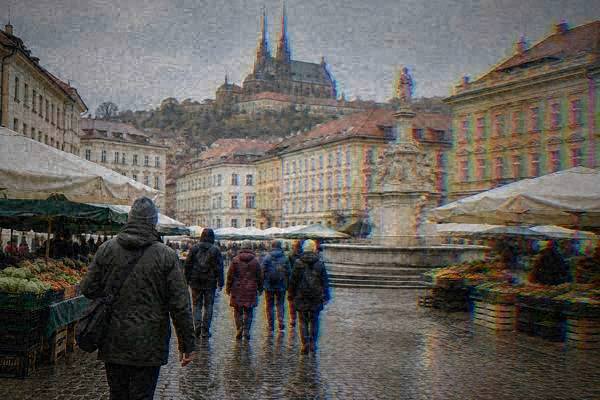
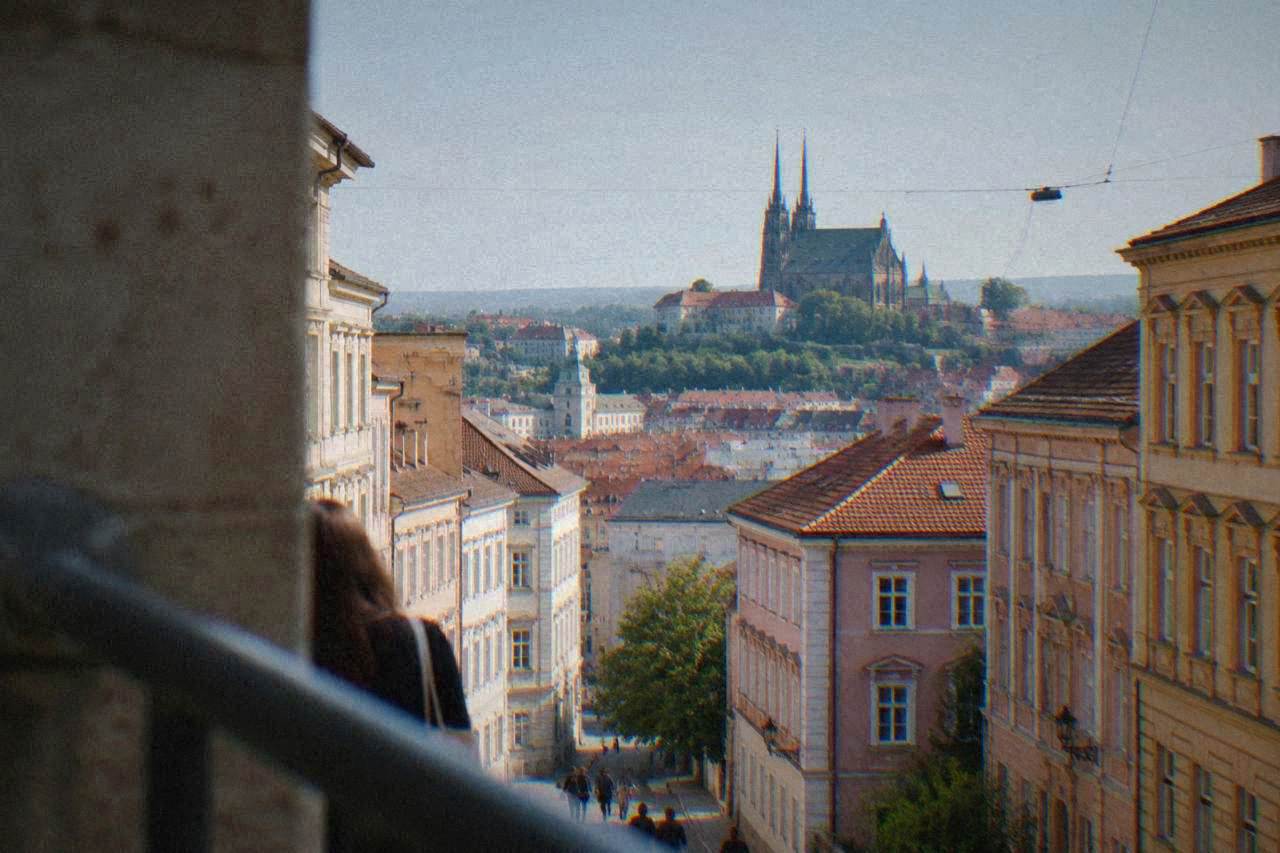
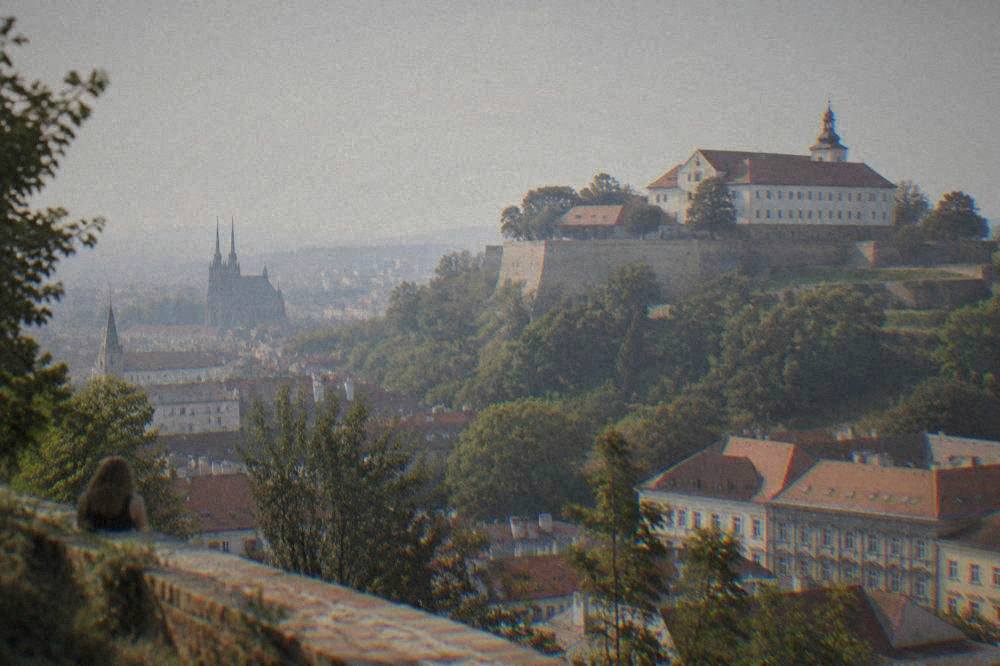
No. The capital of Czechia, the Czech Republic under its longer name, is Prague, roughly 186 km in a straight line north-west of Brno. Brno is the country's second-largest city and the historic capital of Moravia, a role the city held from 1641 according to the Czech UNESCO heritage record. Its skyline is anchored by the Cathedral of Sts Peter and Paul on Petrov Hill, whose bells famously ring at 11:00 rather than noon, commemorating the Swedish siege of 1645.
The distinction matters for planning. Travellers who expect a capital-city scale in Brno find something more compact instead, and the question of how many days you need in Brno has a different answer than for Prague. The city's UNESCO listing, Villa Tugendhat, inscribed in 2001, sits alongside four more UNESCO sites within day-trip range: Lednice-Valtice, Telč, Třebíč and Kroměříž.
Architecture is one of the reasons the city is known at all, and functionalism is its strong suit: Villa Tugendhat, built 1928 to 1930 by Ludwig Mies van der Rohe, anchors a wider stretch of interwar design across the city. The Private Functionalism Architecture Walk covers exactly that thread with a dedicated guide; Check availability to see current dates.
Why Do The Two Names Both Exist?
The Czech Republic is the country's long formal name and Czechia is its official short form, adopted so the country has a practical one-word name in English the way France or Austria does. Both names are correct in official and everyday use, on tickets, in atlases and in search engines, and they point to the same state, the same borders and the same koruna. Neither name refers to Slovakia, which has been a separate country since Czechoslovakia divided.
For travellers the short name has simply won the convenience war: it fits on signs, boards and booking forms. The country's institutions use both interchangeably, and no rule tells a visitor which to say. What does follow the name is a cluster of practical facts that do not change: EU membership, Schengen membership, the koruna and the Europe/Prague timezone.
The weather question also has a fixed answer under either name. The ERA5 reanalysis, 1991-2020, for the grid cell at Brno's centre puts the January mean daily high at 1.9 C and the July mean high at 25.0 C, with July also carrying the highest monthly rainfall total at 82.8 mm. Those are modelled climate normals, and they describe the same continental, inland city whether it is labelled Czechia or the Czech Republic.
Common Questions About Czechia And The Czech Republic
Is Czechia the same as the Czech Republic?
Yes. Czechia is the short name and the Czech Republic the long name of one country in central Europe. Brno, in South Moravia, is the same city under either name: Czechia's second-largest city, with about 404,296 permanent residents at the end of 2025.
Does Czechia use the euro?
No. Czechia is an EU member but not in the eurozone; the currency is the Czech koruna (CZK). In Brno, a 60-minute public transport paper ticket costs 25 CZK and a 24-hour Brno ticket 90 CZK from 1 October 2026.
Is Brno the capital of Czechia?
No, Prague is the capital. Brno is the second-largest city and the historic capital of Moravia, a role the city held from 1641 per the Czech UNESCO heritage record.
Is Moravia in Czechia or Slovakia?
Moravia is in Czechia. It is the historic eastern land of the country, and Brno is its centre. Slovakia is a separate country about 122 km in a straight line from Brno.
Is Czechia in the Schengen area?
Yes. Czechia is in both the EU and Schengen, so arrivals from other Schengen states cross without systematic checks, while arrivals from outside Schengen go through external border control with a valid passport.
Why is Brno famous?
Brno is known for Špilberk Castle, Villa Tugendhat (UNESCO, 2001), the Cathedral of Sts Peter and Paul whose bells ring at 11:00, the Cabbage Market and its functionalist architecture. The full answer is on the page about why Brno is famous.