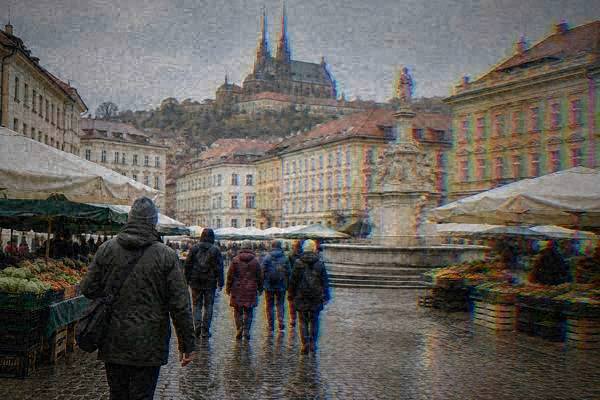
Are Czechs Friendly To Americans?
A practical, sourced answer for American visitors to Brno: everyday etiquette, language, safety, tipping, money and the facts that shape a first trip to Czechia's second city.
Nothing in the record on Brno singles out American visitors for anything other than ordinary tourist attention. Brno is Czechia's second city by population, with 404,296 permanent residents at the end of 2025, sitting inland in South Moravia on the Svratka and Svitava rivers. Czechia is a member of the EU and of the Schengen area but keeps its own currency, the koruna (CZK), and US citizens travel there visa-free for short stays under the standard Schengen allowance. Friendliness, as a national trait, is not something any source in this site's research measures, so this page sticks to what is documented: how the city receives visitors, what etiquette the sources describe, and which practical facts Americans most often ask about.
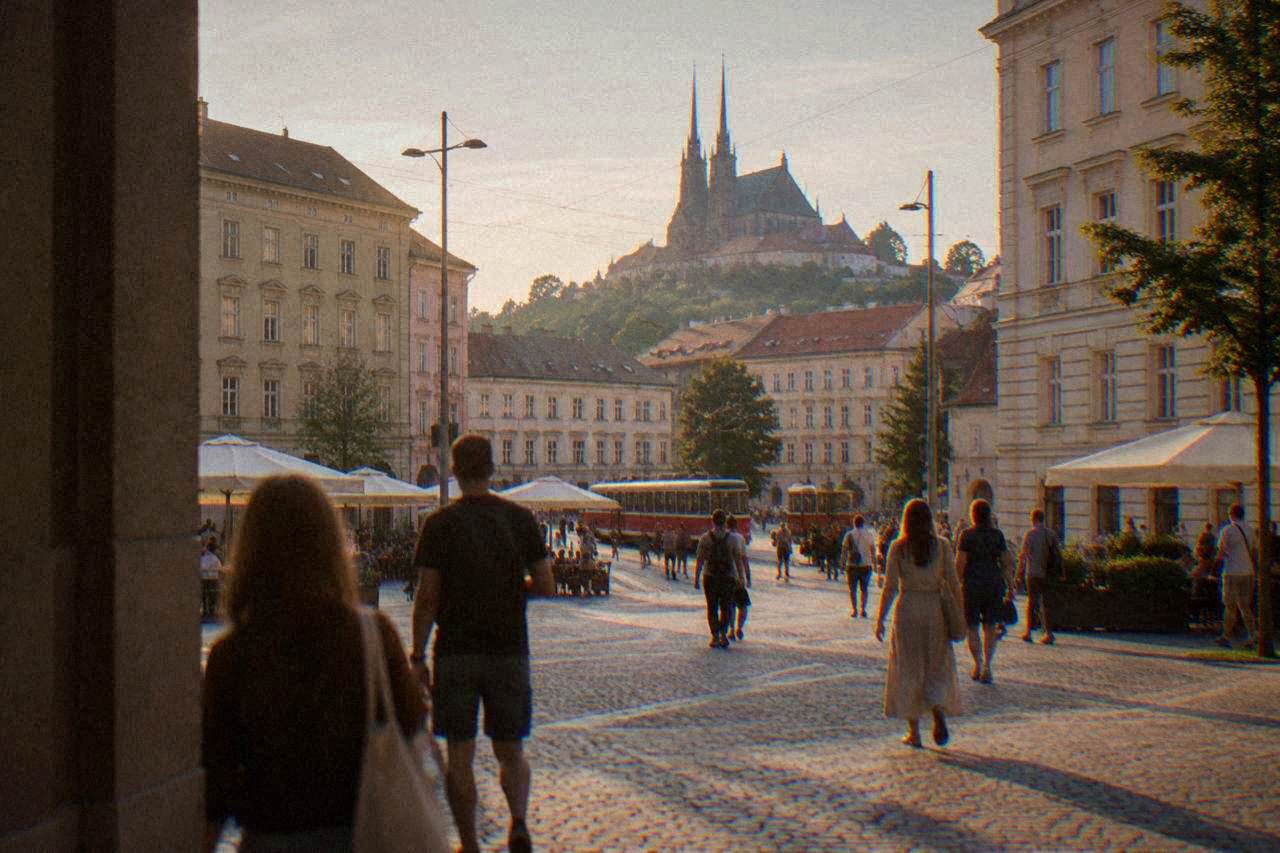
What Should American Visitors Know About Brno And Czechia?
Brno is an inland university city of about 404,000 residents in South Moravia, Czechia's second-largest city, not the capital; Prague holds that role. Czechia sits in the EU and Schengen but uses the koruna rather than the euro, and Brno's own documented basics, from a 112 emergency number to a 1991 first written mention, describe a settled central-European city that receives foreign visitors through a well-established tourism sector.
The city's documented character is academic and architectural. Masaryk University enrolls 38,181 students according to the university's own statistics page, and the wider South Moravian Region counted 1,228,779 residents on 30 June 2026. Brno's first written mention dates to 1091, its city privileges to 1243, and it served as the main capital of Moravia from 1641, all reported by the Czech UNESCO heritage site. Villa Tugendhat, built 1928 to 1930 by Ludwig Mies van der Rohe, joined the UNESCO World Heritage list in 2001.
For an American planning a visit, the practical picture is straightforward. The timezone is Europe/Prague, typically six hours ahead of the US East Coast. The currency is the koruna, prices are not converted on this site because local sources quote in CZK, and card payment is described as widely used in the Czech context. The general cultural framing is central-European rather than Anglo-American: quieter public spaces, more formal service, and a tipping habit of rounding up or adding a small percentage, described below.
| Basic | Figure | Notes |
|---|---|---|
| City population | 404,296 | Permanent residents, end of 2025 |
| Region population | 1,228,779 | South Moravian Region, 30 June 2026 |
| University students | 38,181 | Masaryk University, own statistics |
| Currency | CZK | Czech koruna; not the euro |
| Emergency number | 112 | Standard EU-wide number |
| Timezone | Europe/Prague | Central European Time |
Are Czechs Friendly To Americans?
No source in this site's research records hostility toward Americans in Brno or Czechia, and no survey, index or statistic on national friendliness appears in that research. What the record does show is a city whose headline attractions operate in English where their own sites say so: Villa Tugendhat runs its tours in Czech and English, and Špilberk Castle publishes English visitor pages. Hospitality toward foreigners is documented in infrastructure, not in a personality score.
That distinction matters. Travel writing leans on warmth anecdotes, but the reporting here rests on sources, and the sources describe systems. Villa Tugendhat, the city's UNESCO site, states on its own ticket page that tours run in Czech and English, with tickets booked in advance through Brno iD and the interior closed to walk-ins. Špilberk Castle, the former Habsburg prison converted in 1783, maintains English-language pages for opening hours and admission. The Moravian Karst cave authority publishes English visitor material, and the city's tourism ecosystem, from gotobrno.cz to the Brnopas city card, operates bilingually.
Cultural context, where the sources give it, is modest. Czech restaurant etiquette guides describe a tipping norm of 5 to 10 percent or simply rounding up, with customers often stating the total they wish to pay rather than leaving cash on the table. None of this is aimed at Americans specifically; it is the local custom for everyone. The practical read is that Brno treats an American visitor the same way it treats any foreign guest, through ordinary commerce and ordinary courtesy, and the absence of any documented friction in the record is itself the honest answer to the question.
A guided walk is one documented way Americans engage with locals in the city. The Brno Historical Walking Tour pairs a guide with the city's core stories at a budget price point, and it can be checked via Check availability.
Do People In Brno Speak English?
Villa Tugendhat's own ticket page lists its tours in Czech and English, and the city's main visitor institutions publish English-language material, but no source measures how widely English is spoken among Brno's 404,296 residents. The documented picture is that Brno's official tourism layer functions in English, while everyday conversation in shops and trams operates in Czech, the country's only official language.
The evidence sits at the institution level. Villa Tugendhat's booking and tour information is published in English. Špilberk Castle's opening-hours and admission pages exist in English. The Brno city card, Brnopas, is documented on an English-language page covering prices from 370 CZK for a one-day adult card to 610 CZK for three days, with Brnopas+ variants bundled with Villa Tugendhat entry at 870 to 1,110 CZK. The public transport operator DPMB and the regional IDS JMK system both maintain English ticket pages.
None of that predicts any individual interaction. What it can say is that an American visitor moving through Brno's documented attractions, transport and ticketing does so through English-language official material at every step this site has checked. For a fuller treatment of the language question, see Do They Speak English In Brno?.
Is Brno Safe For American Tourists?
Brno appears in the practical guidance this site's research gathered as a generally low-risk destination for tourists, with the ordinary caveats that apply to any central-European city: pickpocketing is flagged as possible at stations, on trams and in crowded squares, and the emergency number is 112. No safety statistic, ranking or named unsafe area appears, and none will be invented here.
The safety advice that exists is procedural rather than statistical. Standard precautions, as the gathered guidance puts it, apply at the main station and in crowded public spaces. The 112 number reaches emergency services across the EU, and Czech police can be reached on 158, medical services on 155. Tap water in Brno is described as safe to drink by the sources this site gathered, meeting Czech and EU standards. Everything else covered here is indexed on Brno Travel Guide.
For context on the city's character rather than its crime picture: Brno is a university city of 38,181 students at Masaryk University alone, and its calendar is public and documented, from the Ignis Brunensis fireworks at the Brno Reservoir, which ran 30 May to 4 July in 2026, to the MotoGP Czech Grand Prix on 19 to 21 June 2026. Large public events, in other words, are a normal part of the city's summer. A separate page covers Is Brno Safe For Tourists? in full.
How Do Tipping And Everyday Etiquette Work In Brno?
Czech tipping guides describe a norm of 5 to 10 percent in restaurants, or simply rounding the bill up, with the customer stating the total they want to pay when the card terminal arrives. This applies to everyone at the table, American or otherwise, and no source describes any etiquette rule specific to foreign visitors or to Americans in Brno.
The rounding habit is the practical detail Americans ask about most, because it differs from US practice. Rather than leaving a calculated tip on the table, the custom described in Czech etiquette guides is to tell the server the final figure, bill plus tip, at the moment of payment. For service that was merely adequate, guides describe rounding up to the nearest convenient figure as acceptable.
Beyond tipping, the documented etiquette picture is thin and this page stays thin with it. Mealtimes, greetings and forms of address are not in this site's record, and a reader wanting the food context can read What Food Is Brno Known For?. What the record does carry is the money side: the koruna is the currency, prices at documented attractions are quoted in CZK, and a paper transport ticket for 60 minutes costs 25 CZK, with a 24-hour Brno ticket at 90 CZK from 1 October 2026.
| Situation | Documented norm | Where it comes from |
|---|---|---|
| Restaurant tipping | 5 to 10 percent or round up, stated when paying | Czech etiquette guides gathered by this site |
| Currency | CZK, never converted on this site | Czechia is EU and Schengen but not eurozone |
| 60-minute transport ticket | 25 CZK paper, 12 CZK reduced | DPMB tariff from 1 October 2026 |
| 24-hour Brno ticket | 90 CZK, zones 100 and 101 | IDS JMK tourist ticket page |
| Tap water | Described as safe to drink | Gathered guidance on Brno water supply |
What Practical Basics Help Americans In Brno?
An American visitor needs a passport, koruna for small purchases, and either paper tickets or contactless payment for Brno's trams and buses, with a 15-minute ride at 20 CZK and a 90-minute ticket at 33 CZK. The city is inland, six hours ahead of the US East Coast, and its documented attractions sell tickets in CZK through their own channels, including Brno iD for Špilberk and Villa Tugendhat guided tours.
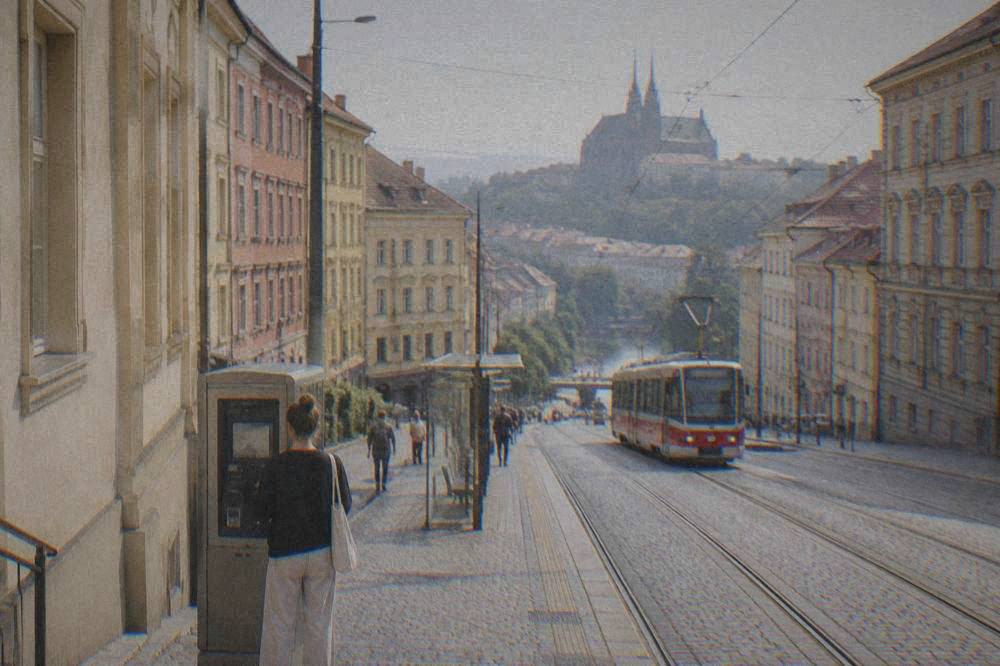
The transport figures are worth memorising because they are exact. From 1 October 2026, DPMB paper tickets cost 20 CZK for 15 minutes, 25 CZK for 60 minutes and 33 CZK for 90 minutes, with reduced fares at 10, 12 and 16 CZK. A 24-hour ticket covering the city's two tariff zones, 100 and 101, costs 90 CZK. Public transport in Brno is not free, a point this site answers separately, and tickets are available from machines, contactless purchase on board, and the operator's points of sale.
Attraction pricing is equally concrete where it is documented. Špilberk's guided Story of the Castle tour lists 180 CZK full and 110 reduced on the castle's own ticket page, with the guided Casemates tour at 260 CZK full and 155 reduced. Villa Tugendhat's Extended tour costs 500 CZK full until 31 December 2026, rising to 550 CZK from 1 January 2027, and its Basic tour 450 CZK rising to 500, all booked through Brno iD with no walk-up interior entry. The Brnopas city card bundles several of these, including the Ossuary, the Old Town Hall tower at 90 CZK standalone, and the zoo.
Weather planning runs on the site's climate table, ERA5 reanalysis for 1991-2020: July carries a mean daily high of 25.0 C and the year's largest mean rainfall total at 82.8 mm, while January's mean daily low sits at -3.8 C. February sits at 27.9 mm of rain in the table. None of this says anything about crowds or crowdsourcing friendliness; it is simply what the modelled normals show, and a reader deciding when to come can weigh it directly. Snowfall has its own page at Does It Snow In Brno?, and budget planning has one at Is Brno Expensive For Tourists?.
How Can Americans See Brno With A Local Guide?
Brno's documented guided offering covers historical walks, private tours and free tip-based walks, with the Brno Historical Walking Tour as this site's featured budget option and two free walks available in the city. Every price, rating and duration renders from the listings themselves, and the free walks charge nothing up front, with participants paying what they choose at the end.
The two free walks listed for Brno cost nothing to join, and the tip at the end is whatever the walker decides. This site never prints prices, meeting points or guide names for those walks; the listing carries those details, and availability can be checked through the tour pages.
Paid options span a range rather than a single band, because every figure comes from a listing. The historical walking tour this page features covers the city's core with a guide at a budget price. Beyond the city, day trips reach documented destinations such as Pernštejn Castle, whose basic tour lists 260 CZK adult, 210 CZK reduced and 80 CZK for children aged 6 to 17 on the castle's own admission page, and which keeps seasonal hours, having closed from 3 November 2025 to 3 April 2026. The broader list of options sits on things to do in Brno, and a longer comparison of the two cities Americans most often weigh is at Is Brno Or Prague Better To Visit?.
The honest closing thought is that a city's welcome is measured in its systems more than its smiles. Brno's systems, documented attraction by attraction on this site, work in English where their operators say they do, price themselves in koruna without surprises, and connect to the rest of Czechia and Europe through a station served by a Railjet to Prague in 2 hours 59 minutes. An American who books ahead for Villa Tugendhat, carries a few hundred koruna and greets people in whatever Czech they can manage is operating exactly within the documented customs of the city.
Common Questions About Americans Visiting Brno
Are Czechs Friendly To Americans?
No documented source records hostility toward American visitors in Brno, and no credible friendliness statistic exists. What is documented is English-language operation at major attractions such as Villa Tugendhat and Špilberk Castle, and a tourism infrastructure built for foreign guests.
Do People In Brno Speak English?
Villa Tugendhat lists its tours in Czech and English on its own ticket page, and the city's main visitor institutions publish English material. No source measures everyday English fluency across the city's 404,296 residents.
How Much Should I Tip In Brno?
Czech etiquette guides describe 5 to 10 percent in restaurants, or rounding up, with the customer stating the final total when paying. The habit applies to everyone, not specifically to Americans.
Is Brno Safe For Tourists?
Guidance gathered by this site describes Brno as generally low risk, with ordinary precautions against pickpocketing at stations and in crowded areas. The emergency number is 112.
Does Brno Use The Euro?
No. Czechia is in the EU and Schengen but keeps the koruna, CZK. A 60-minute public transport ticket costs 25 CZK and a 24-hour city ticket 90 CZK from 1 October 2026.