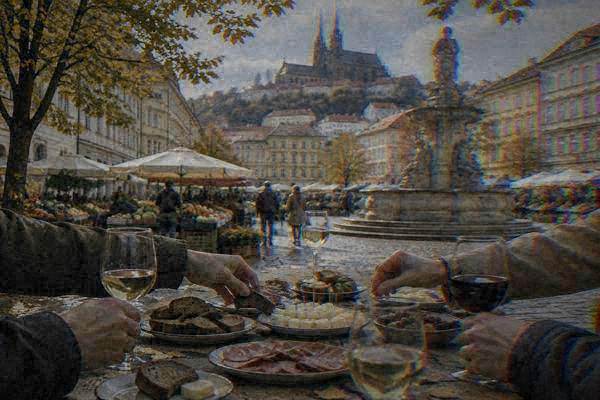
What Food Is Brno Known For?
Brno is known for svíčková, Moravian wine, burčák season and Starobrno beer. A plain-answer guide to the food and drink South Moravia's capital is famous for.
Brno, the second-largest city of Czechia and the capital of South Moravia, sits inland on the Svratka and Svitava rivers, and its food reputation runs through three things the sources keep returning to: svíčková, the beef-in-cream-sauce dish that anchors Czech menus; the wine of South Moravia, the country's principal wine region; and Starobrno, the brewery named in the research as the city's beer reference point. Around those three sits a calendar of food events, from the burčák season that legally runs 1 August to 30 November to the Vinobraní wine festival that filled Náměstí Svobody from 25 September to 3 October in 2026. This page sets out what is documented about each, in plain terms, without inventing dishes, prices or restaurant names the sources never supply.
What Food Is Brno Known For?
Brno is known for svíčková, beef in a cream sauce served with bread dumplings, for Moravian plates built around the South Moravian wine region, and for Starobrno beer, the brewery the destination research names as the city's own. Around them sits a seasonal calendar: partially fermented burčák grape must, whose legal season runs 1 August to 30 November, and the autumn wine festivals held on the city's central squares.
Czech cuisine, not Slovak, is the frame; Moravia is a historic region of Czechia and Brno has been its main city since 1641.
That is the honest core of it. The local dishes on record are svíčková and Moravian plates, the regional drink is Moravian wine, and Starobrno is the brewery associated with the city. Each of those deserves its own section, because each carries a different kind of context: svíčková is a national dish Brno eats as part of Czechia, wine is the thing that genuinely belongs to South Moravia rather than to the whole country, and beer is the layer that runs under everything.
What the sources do not support is a list of specific restaurants, cafés, bakeries or bars. Names, addresses, opening hours and meal prices for individual venues are excluded from this site's facts, so none appear here. What can be documented instead is the structure: which dishes and drinks are on record, when the wine and food festivals run, what things cost, and how a visitor can taste the lot without guessing.
One framing fact worth knowing early: Brno had 404,296 permanent residents at the end of 2025, and the wider South Moravian Region 1,228,779 on 30 June 2026. It is a university city as well; Masaryk University counts 38,181 students on its own statistics page. A city of that shape and size eats well and cheaply by western European standards, and the tipping custom, reported at 5 to 10 percent or simply rounding up, follows the Czech norm of stating the total you want to pay rather than leaving coins on the table.
Where Does Moravian Wine Fit Into Eating In Brno?
Moravian wine is the region's defining drink, and Brno is its natural gateway: the vineyard landscapes of Pálava sit about 36 km away in a straight line, Mikulov about 43 km, and the UNESCO-listed Lednice-Valtice Cultural Landscape about 46 km. The city itself marks the wine year with the Vinobraní festival, which ran on Náměstí Svobody from 25 September to 3 October 2026, and with burčák, the partially fermented young grape must whose legal season runs 1 August to 30 November.
South Moravia is Czechia's wine country, and that single fact shapes what Brno drinks more than any brewery does. The Lednice-Valtice Cultural Landscape, inscribed by UNESCO and covering 143 square kilometres of South Moravia, is a landscape of chateaus, parkland and vineyards within easy reach of the city. Mikulov and the Pálava hills, a UNESCO biosphere reserve area, sit just beyond it. These are the straight-line distances the site's computed data gives; travel times depend on the connection you choose.
The wine year in Brno has documented dates. Vinobraní, the wine harvest festival, ran from 25 September to 3 October 2026 on Náměstí Svobody, the city's main square, per the organiser's own site. Before it comes burčák season: burčák is cloudy, sweet, still-fermenting grape must, and the legal season for it is reported as 1 August to 30 November, with the young wine sold across the region in that window. It is a drink with a calendar, not a year-round product, and a summer or autumn visit lands inside it.
| Event or season | 2026 dates | Where | Basis |
|---|---|---|---|
| Burčák (young wine) season | 1 August to 30 November | Region-wide | Reported, legal season |
| Vinobraní Brno wine festival | 25 September to 3 October 2026 | Náměstí Svobody | Organiser's site |
| Slavnosti Brno May festival | 12 to 17 May 2026 | City centre | Organiser's site |
| Christmas markets | 13 November to 31 December 2026 | Zelný trh and centre | Organiser's site |
For visitors who want the wine without planning a route, a guided day trip covers Lednice, Valtice and Mikulov with tastings, or the question can be explored at the city's own pace. A related page on this site, the Moravian wine tour from Brno guide, goes deeper on the region. The wine region is also why a food answer about Brno keeps drifting outward: the city eats Czech, but it drinks South Moravian.
What Is Svíčková And Why Does It Anchor A Brno Menu?
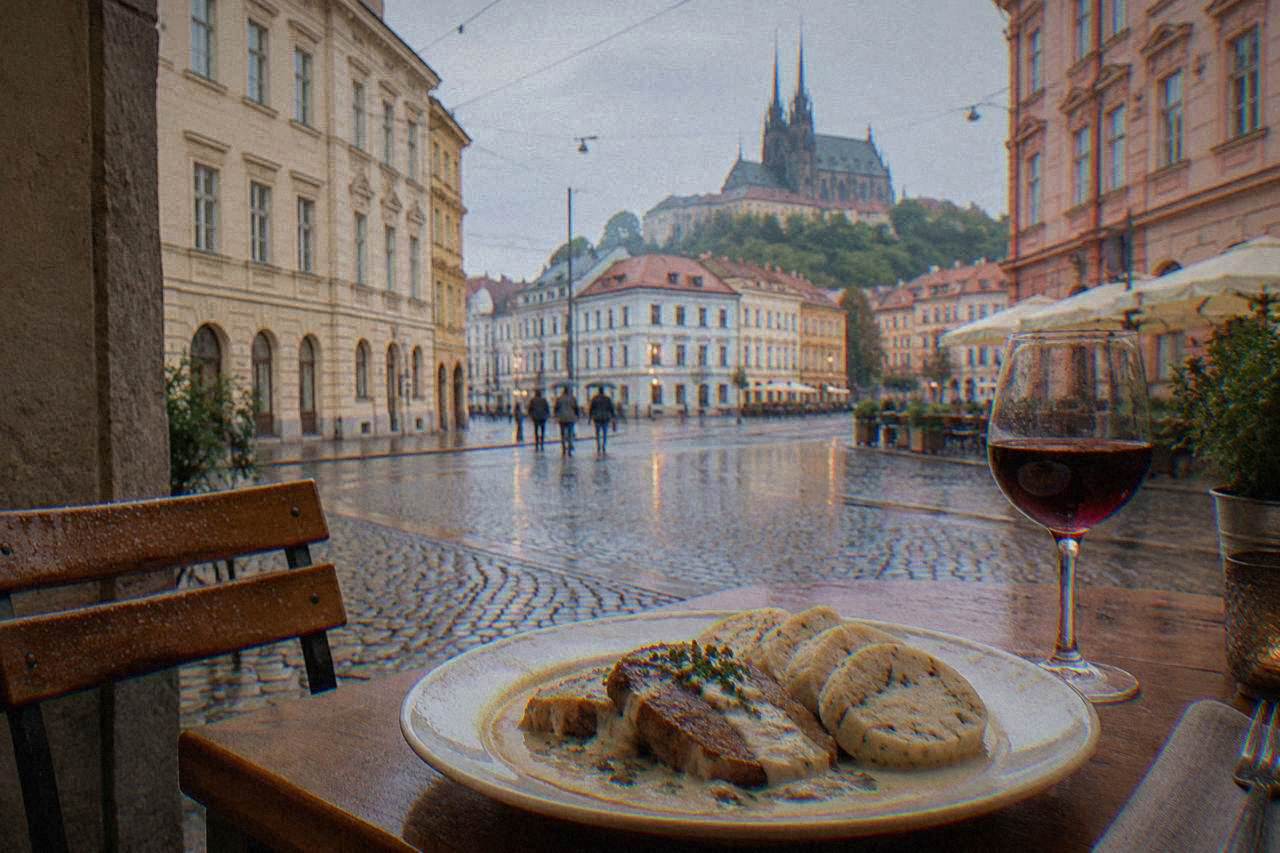
Svíčková is beef, typically sirloin, slow-cooked and served in a cream sauce with bread dumplings, classically topped with cranberry and a slice of lemon; the destination research names it, alongside broader Moravian plates, as the dish on record for Brno. It is a Czech national dish rather than a Brno exclusive, but in a city that has been part of the Czech culinary mainstream since long before it became a student hub, it is the plate the sources name first.
The sauce is the point: vegetables and spice cooked down, blended, finished with cream. Around it come the bread dumplings, knedlíky, sliced rather than spooned. That combination, meat plus sauce plus dumpling, is the template Czech cuisine returns to, and svíčková is its most documented form.
"Moravian plates" is the second phrase the research uses, a looser label that in practice means the roasts, dumplings and stewed compositions common across the region, washed down with the wine described above rather than only beer. Beyond those two labels the sources go quiet on specifics, offering no third label, no specialty dishes, no restaurant names and no prices for a plate.
Where a figure does exist, it is usually about something adjacent to the meal, like getting to it. A 60-minute public transport ticket in Brno costs 25 CZK, a 24-hour ticket 90 CZK, and the Brnopas visitor card 370, 490 or 610 CZK for one, two or three days, per the city's own listings. Those numbers let a visitor budget the frame of a food day without any invented meal prices inside it.
Is Starobrno The Beer Brno Is Known For?
Starobrno is the brewery the destination research names for Brno, reported as the city's beer reference point, and Czech lager culture generally runs beneath the city's food scene. The research does not license naming other specific breweries, pubs or bars, and it does not give beer prices, so this page names the one brewery on record and describes the culture around it: pilsner-style lager as the default pour, and beer treated as an everyday accompaniment to food rather than a separate occasion.
One documented way the beer culture turns up as an experience rather than just a pour is the beer spa, a Brno product where a private tub and unlimited Pilsner Urquell combine into something between a bath and a tasting. The details and price of that product render from its listing rather than from this page, but its existence is on the roster: food-and-drink experiences in Brno extend past the table. The full index of guides sits on Brno Travel Guide.
The pairing logic of the city is worth stating plainly. Czech menus of the svíčková type are built to work with lager, and South Moravian menus are built to work with wine; Brno, sitting between the Czech interior and the Moravian vineyards, runs both. A visitor eating their way through the city will meet Starobrno as the local pour and Moravian white and red as the regional one, and the festival calendar described above decides which dominates in any given month.
Can You Taste Brno's Food On A Guided Tour?
Yes: the site's roster carries a small-group food tasting tour of Brno's less obvious eating spots, a private beer spa experience and a hidden-gems culinary walk, so the tasting side of the city can be covered with a guide rather than by guesswork. The food tasting walk is this page's featured product; its price, rating and details render from the operator's live listing, and it visits the kind of small venues whose names this page's sources do not license printing.
The featured tour walks small groups through food stops in the city centre, pairing local dishes with the regional drinks described above. For anyone who wants the structure handled, Check availability on the operator's live listing. The same page explains what is covered before anything is booked.
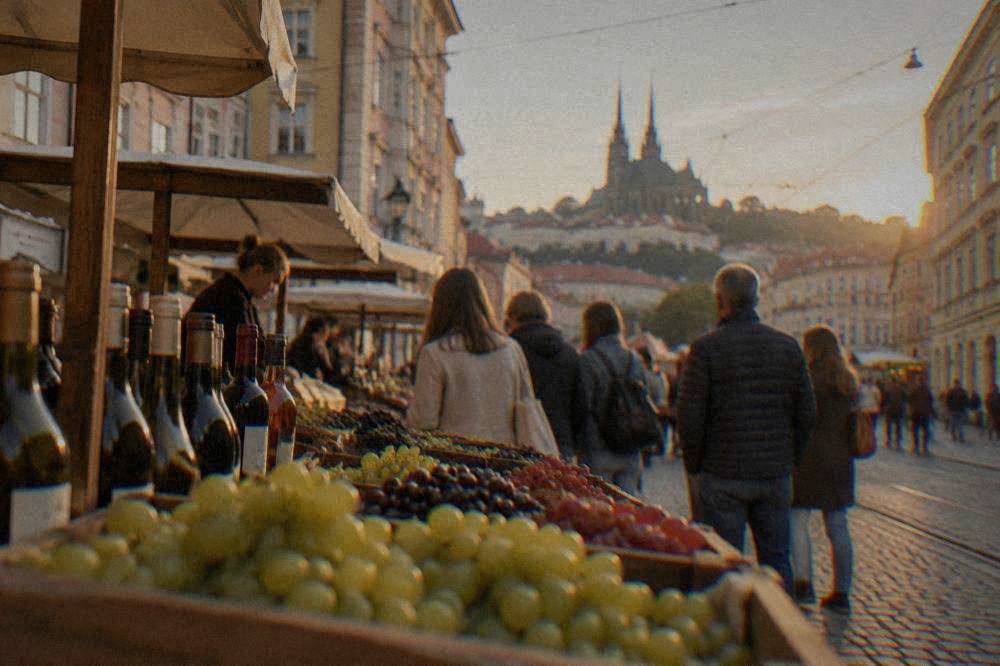
An alternative structure is to build the food day around the fixed anchors instead. The Cabbage Market, Zelný trh, is one of the city's two historic squares and the site of the main Christmas market from 13 November to 31 December 2026; on a market square, the produce and the festival calendar do the curating. The Old Town Hall on the same square displays the Brno dragon, a crocodile specimen and one of the city's better-known legends, and the question of why there is a crocodile in Brno has its own answer page on this site.
How Much Does Eating In Brno Cost, And How Does Tipping Work?
Brno prices in Czech koruna, never converted: a 15-minute public transport ticket is 20 CZK, a 60-minute ticket 25 CZK, a 24-hour ticket 90 CZK, and the Špilberk Story of the Castle guided tour 180 CZK full price, per the castle's own ticket page, figures that frame a cheap-to-mid-priced city by regional standards. Tipping is reported at 5 to 10 percent or rounding up, stated as the total when paying. Meal prices themselves are not covered on this site, so none are printed.
The koruna point matters. Czechia is in the EU and the Schengen area but not the eurozone, and Brno prices are quoted in CZK. A visitor budgeting a food-focused day can anchor on the figures that do exist and treat the meals themselves as the variable.
| Item | Price (CZK) | Notes |
|---|---|---|
| 15-minute transport ticket | 20 full / 10 reduced | DPMB paper ticket |
| 60-minute transport ticket | 25 full / 12 reduced | DPMB paper ticket |
| 24-hour Brno ticket | 90 full / 45 reduced | Zones 100 + 101 |
| Brnopas visitor card | 370 / 490 / 610 | 1 / 2 / 3 days, adult |
| Špilberk guided tour | 180 full / 110 reduced | Story of the Castle |
Whether that adds up to an expensive city is a fair follow-up question, and it has its own page: is Brno expensive for tourists. The short version consistent with the figures above is that the fixed, verifiable costs of moving around and sightseeing in Brno are modest, and the food costs sit in the same Czech bracket rather than a capital-city one.
What Food Souvenirs And Seasonal Specialities Travel Home From Brno?
The two on-record answers are Moravian wine and burčák-season products, with the wine being the one that travels: bottles from the South Moravian region are the documented take-home, and the burčák window of 1 August to 30 November is a drink for the season rather than the suitcase. Beyond those, the calendar products are the festival ones, Christmas-market food and drink from 13 November to 31 December 2026, and the autumn wine festival stalls, all documented with dates by their organisers.
Wine is the practical answer. South Moravia's still and sparkling wines come from a compact, UNESCO-recognised landscape an hour or less from the city, and buying at source in Lednice, Valtice or Mikulov, or at the festival stalls on Náměstí Svobody, is the documented route. Whether a specific vintage or producer is worth the money is exactly the kind of judgement this site's sources do not make, so none is offered here.
The seasonal answer depends on the month of the visit. A late-September visit overlaps the Vinobraní festival window; a November or December visit lands on the Christmas markets at Zelný trh and the centre; an August-to-October visit falls inside burčák season. Each of these is dated from organiser or reported sources above, and each turns the city's squares into the food venue, which is the cheapest way to taste the region's output without committing to a restaurant.
For everything else, the honest summary is that Brno's food identity is Czech cooking done in a wine region: svíčková on the plate, Moravian wine in the glass, Starobrno as the local pour, and a festival calendar that schedules the eating. Visitors weighing the city against the capital can read why Brno is famous or the comparison page on whether Brno or Prague is the better visit; the food case for Brno is the wine case, and that case is regional.
Common Questions About Food In Brno
The questions below repeat the short answers from this page: svíčková as the named dish, Moravian wine and burčák as the seasonal drinks, Starobrno as the named brewery, the 2026 festival dates as documented, and the tipping custom at 5 to 10 percent or rounding up, all drawn from the reported figures above.
What Food Is Brno Known For?
Svíčková, beef in cream sauce with bread dumplings, Moravian plates, Moravian wine and Starobrno beer. The destination research names those as the on-record dishes and drinks; the seasonal layer is burčák between 1 August and 30 November and the autumn wine festivals on the city's squares.
When Is Burčák Season In Brno?
The legal season is reported as 1 August to 30 November, with the young, still-fermenting grape must sold across South Moravia in that window. It is a seasonal product, not a year-round one.
When Do Brno's Food And Wine Festivals Run?
Vinobraní ran 25 September to 3 October 2026 on Náměstí Svobody, and the Christmas markets ran 13 November to 31 December 2026 at Zelný trh and the centre, both per the organisers' own sites. Check the current year's dates before planning around them.
How Much Should I Tip In Brno Restaurants?
The reported Czech custom is 5 to 10 percent or simply rounding up, and it is common to state the total you want to pay, bill plus tip, when paying rather than leaving money on the table.
Can You Visit The Moravian Wine Region From Brno?
Yes. Pálava is about 36 km away in a straight line, Mikulov about 43 km and the UNESCO-listed Lednice-Valtice Landscape about 46 km, and guided wine day trips from Brno cover the area with tastings.