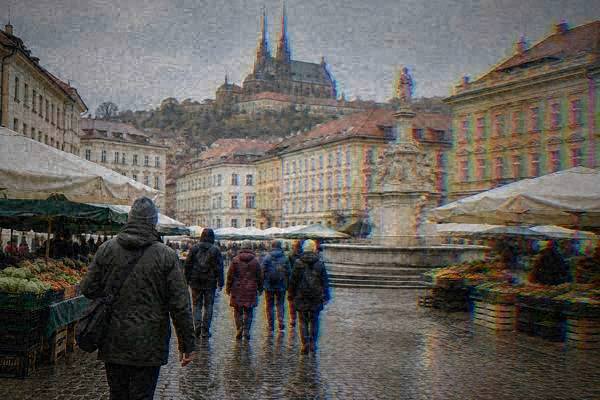
Does It Snow In Brno?
Does it snow in Brno? The ERA5 climate normals for Brno, what winter temperatures to expect in South Moravia, and how snow fits into a winter visit.
Brno sits inland in South Moravia, Czechia, hundreds of kilometres from any sea, and its winters behave the way continental central-European winters do: cold enough for snow. The climate normals for the city, drawn from the ERA5 reanalysis, 1991-2020, put the mean daily low below freezing in December, January and February, and rainfall spread across every winter month. That combination, sub-zero nights and regular precipitation, is the recipe for snow, and Brno has it every year. How much snow, how often it settles and what a snowy week does to a visit are the questions this page answers with the actual numbers.
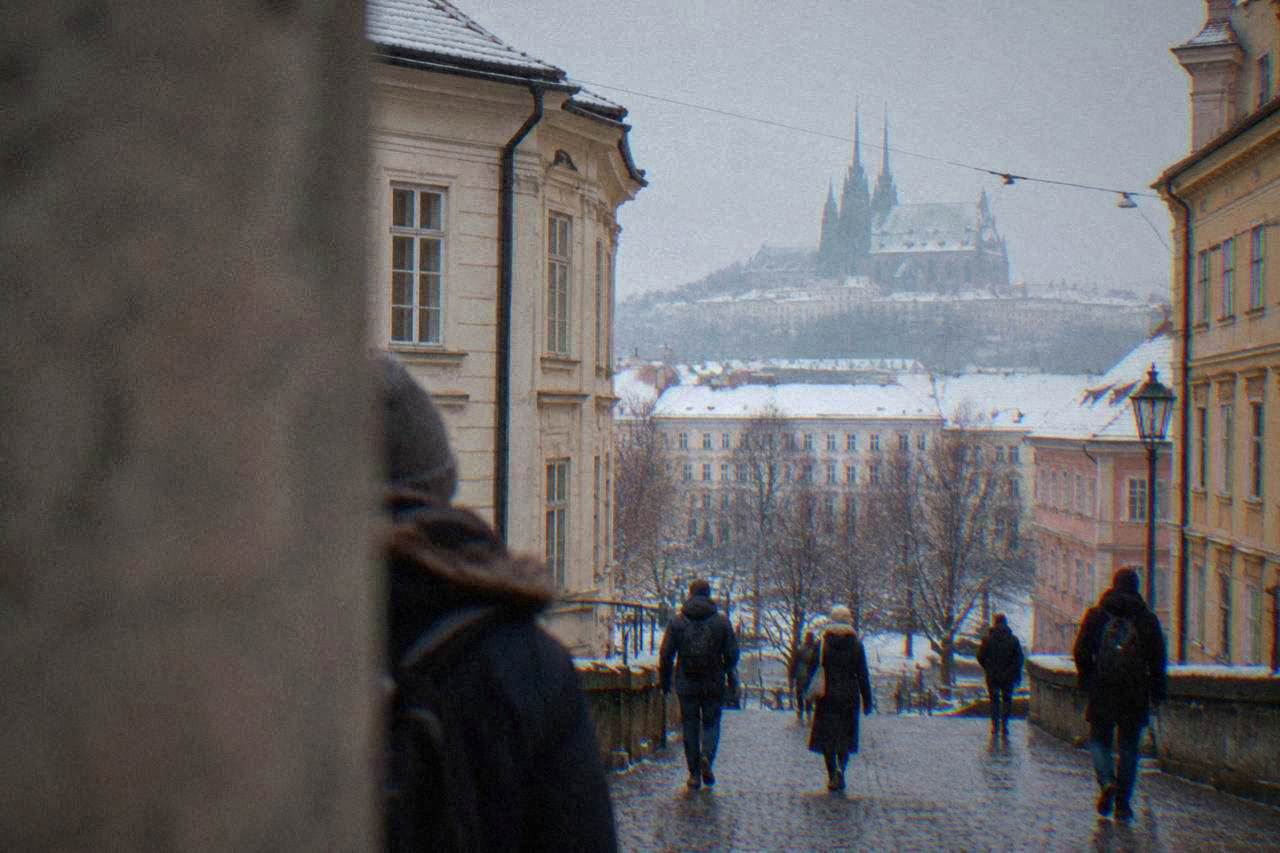
Does It Snow In Brno?
Yes, Brno gets snow. The ERA5 reanalysis, 1991-2020, a modelled grid cell at the city centre rather than a weather-station record, shows mean daily lows of minus 3.8 C in January, minus 3.0 C in February and minus 2.4 C in December, with 33.6 mm, 27.9 mm and 36.4 mm of precipitation respectively across those months. Nights below freezing plus regular precipitation is exactly the pattern that produces snow in this part of central Europe.
That is the honest version of the answer. Snow in Brno is not a question of whether but of when and how much, and the city's position matters to both. Brno lies in a basin at the meeting of the Svratka and Svitava rivers, in South Moravia, one of the warmer corners of Czechia. The same continental climate that freezes the city in January pushes July's mean daily high to 25.0 C. Winter cold arrives reliably; what varies is whether a given week's precipitation falls as snow or rain.
A useful comparison: Prague, 186 km away in a straight line, shares broadly the same climate regime, and winters there raise the same questions for travellers. The is Brno or Prague better to visit question has no climate answer, both cities freeze, but it is a fair thing to weigh when packing.
What Do The Brno Winter Numbers Actually Show?
The ERA5 reanalysis, 1991-2020, gives Brno a January mean daily high of 1.9 C against a low of minus 3.8 C, February a high of 4.3 C and low of minus 3.0 C, and December a high of 2.6 C and low of minus 2.4 C, with monthly rainfall of 33.6 mm, 27.9 mm and 36.4 mm in that order. February is a month of modest rainfall; July, at 82.8 mm, carries the largest monthly rainfall total.
Read those rows together and the snow picture becomes concrete. January afternoons hover around the freezing point while nights drop well below it, so snow that falls tends to survive on shaded ground and re-freeze after dark. December and February sit within a degree or two of the same pattern. Rainfall is modest in every winter month, which matters: Brno's winter precipitation comes in small, frequent doses rather than single storms, and a 27.9 mm month spread over many days is a month of frequent light snowfall when temperatures cooperate.
| Month | Mean Daily High (C) | Mean Daily Low (C) | Rainfall (mm) |
|---|---|---|---|
| December | 2.6 | -2.4 | 36.4 |
| January | 1.9 | -3.8 | 33.6 |
| February | 4.3 | -3.0 | 27.9 |
The shoulder months matter too. March averages a low of 0.1 C, essentially the freezing point, and November's mean low sits at 2.1 C, so late-autumn and early-spring snowfalls happen on either side of the core winter. A traveller visiting in late March can still meet a snowy morning. For the full picture, including the months that melt it all, the site's climate page carries the whole table.
How Does Brno's Winter Compare With The Rest Of The Year?
Brno's climate is one of wide swings: the same ERA5 reanalysis, 1991-2020, that freezes January at a mean daily low of minus 3.8 C lifts July to a mean daily high of 25.0 C, and monthly rainfall runs from 27.9 mm in February to 82.8 mm in July. The year's total comes to 617.6 mm. Winter is cold and comparatively dry; summer is warm and carries the year's heaviest rainfall totals.
This swing is the continental signature. Brno is far from any ocean's moderating hand, so the sun's angle, not a sea breeze, sets the temperature. The table below sets the two extremes side by side with the transition months between them.
| Month | Mean Daily High (C) | Mean Daily Low (C) | Rainfall (mm) |
|---|---|---|---|
| January | 1.9 | -3.8 | 33.6 |
| April | 14.9 | 4.5 | 40.4 |
| July | 25.0 | 15.3 | 82.8 |
| October | 13.6 | 6.3 | 43.5 |
For a visitor deciding when to come, the practical reading is this: a January or February trip is a winter trip, full stop, and should be planned for short days, icy pavements and indoor-heavy sightseeing, while May through September offers the warm-weather version of the city. The how many days do you need in Brno question answers differently by season, because winter daylight compresses every itinerary.
What Does Snow Mean For A Day Of Sightseeing In Brno?
Snow in Brno rarely stops the city; it repaints it. The main sights that make a Brno visit, Špilberk Castle, the Cathedral of Sts Peter and Paul on Petrov Hill, the Old Town squares and the underground spaces, all operate through winter, and the castle grounds stay open daily from 06:00 to 23:00, with the ticket office and shop daily 09:00 to 18:00, per the castle's own opening page. Museum exhibitions there run Tuesday to Sunday 10:00 to 18:00.
A snowfall changes the look of Petrov Hill and the castle ridge dramatically, and it costs nothing to walk through. Špilberk's grounds are free to enter at those hours, and the view over a white city from the ramparts is the winter postcard version of Brno. Guided tours at the castle, the Story of the Castle and the Casemates, run Tuesday to Sunday with tickets through Brno iD, so a snowy afternoon underground is a dry option. The Story of the Castle tour is 180 CZK full price, 110 CZK reduced, per the castle's ticket page. Other pages covering the same trip are gathered on Brno Travel Guide.
The underground sights behave the same way in any weather, which is their winter virtue. The Brno Ossuary, the Labyrinth under the Cabbage Market and the 10-Z Bunker are indoor spaces where snow is irrelevant; check the operator's page for current hours and prices before going. Villa Tugendhat is the one winter sight that needs planning: the interior is entered only with a previously purchased ticket booked through Brno iD, the villa is closed Mondays, and its prices rise on 1 January 2027, so a winter visit hinges on booking ahead.
Does Snow Disrupt Travel To And Around Brno?
Brno is a rail and road hub with snow-ready infrastructure, and normal winter snowfall does not shut the city down; the practical winter risks for a visitor are icy pavements and re-frozen slush rather than cancelled connections. The Railjet service to Prague runs the route in 2 h 59 min per the operator's own advertising, and Brno's public transport runs trams, trolleybuses and buses across the city year-round.
For arrivals, the picture is straightforward. Brno-Tuřany airport is 8 km from the centre in a straight line, and its E76 bus link to Hlavní nádraží takes about 20 minutes, per the airport's public-transport page. Trains arrive at Brno hlavní nádraží, which has self-service luggage lockers available around the clock, useful when a snowy arrival day and a late departure collide. Vienna's airport connects by bus in about 1 h 50 to 2 h 40 with fares from about EUR 10, per aggregator listings; the direct Railjet from Vienna Hbf takes about 1 h 31 min.
Within the city, a 24-hour Brno ticket covering the city's two tariff zones costs 90 CZK, and paper singles run 20 CZK for 15 minutes, 25 CZK for 60 minutes and 33 CZK for 90 minutes. On icy days the trams are the steadier surface, and the is public transport free in Brno answer is no, it is cheap but paid. Practical winter packing advice from the desk: shoes with real grip, because January's freeze-thaw cycle glazes the old-town pavements.
When Should You Visit Brno For Snow?
January is the month to bet on: the ERA5 reanalysis, 1991-2020, gives it the year's lowest mean daily low, minus 3.8 C, with a mean daily high of just 1.9 C, so whatever falls from the sky in January has every chance of lying. December and February flank it, with mean lows of minus 2.4 C and minus 3.0 C respectively. No snow-day count is published on this site, and none is needed: the temperature margins do the talking.
A January visit also lands in the quiet stretch of Brno's events calendar. The Christmas markets, which in 2026 ran from 13 November to 31 December on Zelný trh and other squares, finish on New Year's Eve, and the next anchors, the Slavnosti Brno Easter programme among them, arrive in spring. Ignis Brunensis, the fireworks festival over the Brno Reservoir, ran 30 May to 4 July in its 2026 edition, very much a snow-free event. Winter Brno is a city for museums, cafés, the castle ridge and the underground, and for the things to do in Brno list's indoor half.
The cold months also carry the year's best-value sightseeing. The Brnopas city card costs 370 CZK for one day, 490 CZK for two and 610 CZK for three at adult rate, and it bundles free entry to a list that includes the Old Town Hall tower, the Ossuary, the Brno Zoo and the cathedral, per the card's own page. Winter, in short, asks for a different plan, not a smaller one. A guided walk is part of that plan: the Brno Historical Walking Tour is the budget option among the city's guided walks, covering the old centre's main sights, and you can Check availability alongside the site's own Brno walking tour guide.
Common Questions About Snow In Brno
Does It Snow In Brno?
Yes. The ERA5 reanalysis, 1991-2020, puts Brno's mean daily lows below freezing in December, January and February, with regular precipitation in each month, the conditions that produce snow in this inland continental climate.
How cold does Brno get in winter?
January, the month with the lowest mean daily low in the ERA5 1991-2020 table, averages minus 3.8 C at night and 1.9 C by day. December and February average lows of minus 2.4 C and minus 3.0 C.
Does it snow in Brno at Christmas?
It can. December's mean daily low of minus 2.4 C and its 36.4 mm of monthly precipitation make snow around Christmas entirely normal, though the normals are averages, not a forecast for any given week.
Is Brno colder than Prague?
The two cities share the same continental climate regime and sit 186 km apart in a straight line. This site publishes no temperature comparison between them, and the ERA5 table covers Brno only.
What should I pack for winter in Brno?
Layers for around-freezing days, serious footwear for icy pavements, and a hat for nights that average below minus 3 C in January. An umbrella covers the rain-snow boundary months of November and March.
Is Brno worth visiting in winter?
Yes: the castle grounds, the underground sights, the museums and the walkable old centre all run through the cold months, and the Brnopas card keeps sightseeing inexpensive. More on that in is Brno worth visiting.