Is Brno Worth Visiting?
Is Brno worth visiting? A direct answer for South Moravia's capital, with ticket prices, climate figures, day-trip distances and what the city is famous for.
Brno, in South Moravia, Czechia, is a city of about 404,296 permanent residents, and the honest answer to whether it rewards a visit is yes, with reasons a first page of search results rarely quantifies. It holds one UNESCO World Heritage site inside the city, Villa Tugendhat, inscribed in 2001, and sits within day-trip range of four more, plus a cave system with an underground river and one of the great battlefields of European history. The decision rests on figures rather than adjectives, drawn from what primary sources actually say, from castle ticket pages to climate reanalysis.
Is Brno Worth Visiting?
Yes: Brno earns a visit for three reasons the sources back with hard figures. It has a UNESCO World Heritage site, Villa Tugendhat, inscribed in 2001, a hilltop castle with guided tours from 180 CZK, and a position that puts four further UNESCO landscapes and the Moravian Karst within day-trip range. Prague is about 186 km away in a straight line and Vienna about 111 km, so the city works both as a destination and as a base.
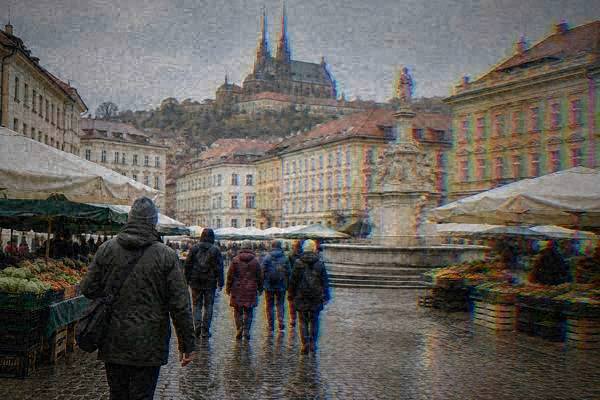
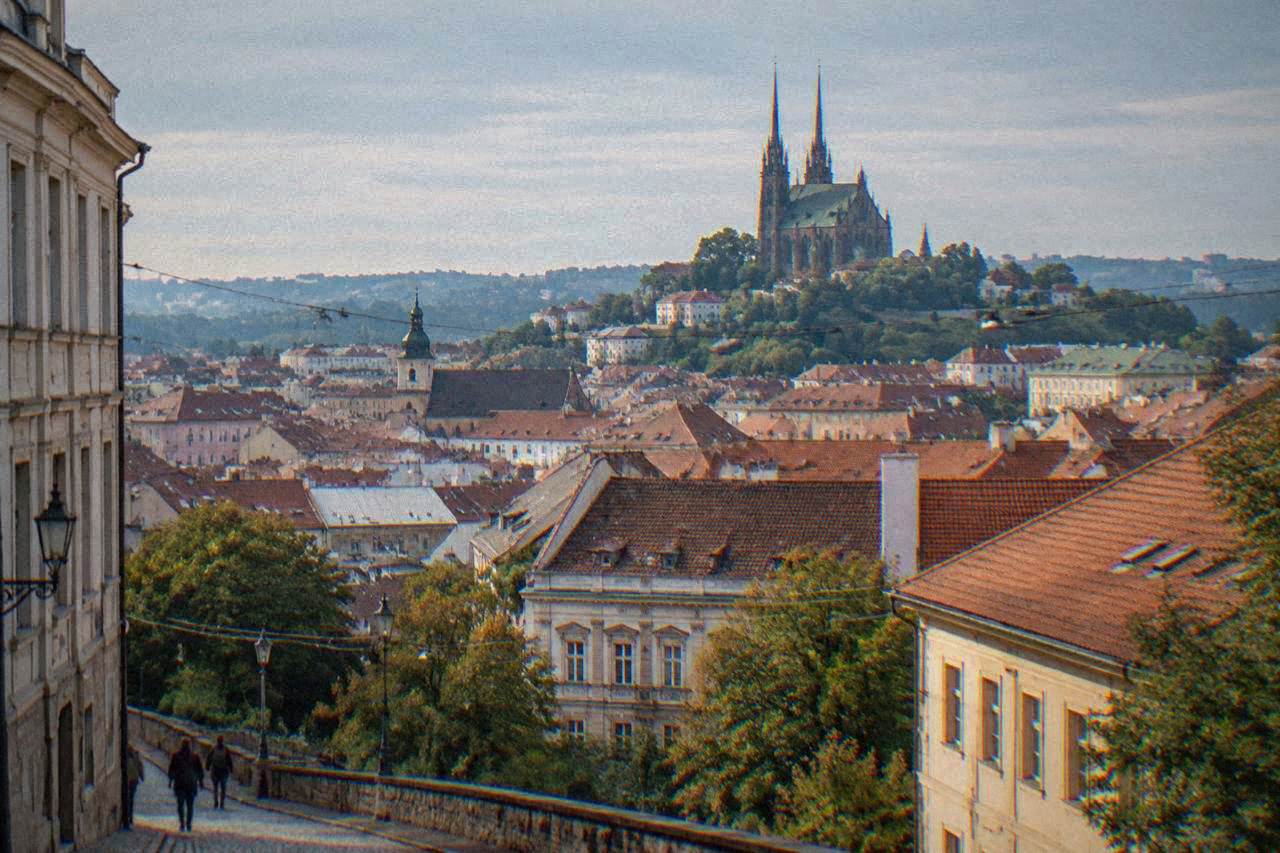
The case starts with density. Within the historic core you can move between Špilberk Castle, the Cathedral of Sts Peter and Paul on Petrov Hill, the Cabbage Market and the Old Town Hall, where the famous Brno dragon and the legendary wheel of 1638 hang in the passage, in a walkable centre that public transport covers with a 90 CZK day ticket. The castle grounds are open daily 6:00 to 23:00, free to wander, with the paid exhibitions and tours running Tuesday to Sunday.
Want a narrated route linking those sights? Book a self-guided audio tour here.
The second pillar is architecture. Villa Tugendhat, built 1928 to 1930 by Ludwig Mies van der Rohe, is the city's UNESCO inscription, and its interior is entered only with a previously purchased ticket booked through Brno iD, closed Mondays. That booking friction is itself a signal of demand. A fuller rundown of the city's claims to fame is in Why Is Brno Famous?.
Third, cost. Local prices are in Czech koruna, not euros, and the figures below, castle tours, museum entries, transport tickets, are modest by the standards of cities two hours west by train.
What Are The Best Things To See In Brno?
The core shortlist is Špilberk Castle, the Cathedral of Sts Peter and Paul, Villa Tugendhat, the Cabbage Market and the Old Town Hall with its dragon and wheel. Špilberk's ticket page lists the Story of the Castle tour at 180 CZK full and 110 CZK reduced, the Mendel Museum lists entry from 40 to 100 CZK, and Villa Tugendhat's Basic tour is 450 CZK until the end of 2026. All three are listed prices.
Špilberk is the anchor. A Habsburg prison from 1783 under Joseph II, it survived Swedish sieges in 1643 and 1645 when the city held. Its casemates can be walked self-guided for 190 CZK full or 115 CZK reduced, with the guided Casemates tour at 260 CZK full and 155 CZK reduced, per the castle's ticket page. A combined ticket with the museum is also listed.
Villa Tugendhat needs planning. Booking is online only through Brno iD, and the villa's own ticket page notes that tours can sell out quickly on release day. The Extended tour, 90 minutes covering the full building, technical spaces and garden, is 500 CZK full until 31 December 2026, rising to 550 CZK on 1 January 2027. There is more detail in the guide to Villa Tugendhat tickets and the story of Why Villa Tugendhat Is Famous.
The lesser-known entry is the Mendel Museum at the Augustinian abbey in Old Brno, where Gregor Mendel, born 1822, formulated his heredity theory with peas and lectured on it in 1865. Entry runs 40 to 100 CZK, and since 1 October 2026 it opens Tuesday to Sunday 10:00 to 17:00, closed Mondays.
| Sight | Full price (CZK) | Reduced (CZK) | Notes |
|---|---|---|---|
| Špilberk, Story of the Castle (guided) | 180 | 110 | Family 415, per castle ticket page |
| Špilberk, Casemates (self-guided) | 190 | 115 | Daily 9:00 to 21:00 |
| Villa Tugendhat, Basic tour | 450 | 270 | 500 / 300 from 1 Jan 2027 |
| Villa Tugendhat, Extended tour | 500 | 320 | 550 / 330 from 1 Jan 2027 |
| Mendel Museum | 40 to 100 | listed by age | Tue to Sun, closed Monday |
| Old Town Hall tower | 90 | 50 | Sold only at the tower, free with Brnopas |
Brno's architecture is the reason a guided walk pays off here beyond the standard old-town circuit, and the functionalist thread from the 1928 to 1930 period runs through it. The Private Architectural Walking Tour in Brno Functionalism covers exactly that layer, Check availability if the UNESCO story is the draw.
Is Brno Expensive To Visit?
No, local prices are in Czech koruna and the sightseeing costs are modest. A 60-minute transport ticket is 25 CZK, a 24-hour ticket covering the whole city is 90 CZK, the Špilberk guided tour is 180 CZK, and the Brnopas city card is 370 CZK for one day or 610 CZK for three, bundling entries including the Ossuary and the Old Town Hall tower.
The transport tariff, valid from 1 October 2026, lists paper tickets at 20 CZK for 15 minutes, 25 CZK for 60 minutes and 33 CZK for 90 minutes, with a 24-hour Brno ticket at 90 CZK. Public transport is not free for visitors, a point worth settling because it is asked often, and the details are in Is Public Transport Free In Brno?.
Brnopas changes the arithmetic if the list of sights is long. At 370 / 490 / 610 CZK for one, two or three days it includes free entry to the Špilberk selected tour, the Ossuary, the Old Town Hall tower, the Cathedral tower and the Zoo, per the official Brnopas page. The Brnopas+ variants with Villa Tugendhat run 870 / 990 / 1110 CZK.
One reported figure to flag rather than state flatly: a tourist tax of 21 CZK per person per night, cited by a third-party page referencing the city ordinance, is described as reported and should be confirmed at booking. The broader cost picture, including food, is covered in Is Brno Expensive For Tourists?.
When Is The Best Time To Visit Brno?
By the ERA5 reanalysis for Brno, 1991-2020, July has the highest mean daily high at 25.0 C and the highest monthly rainfall at 82.8 mm, May reaches a mean high of 19.2 C with 65.8 mm of rain, and January sits at a mean high of 1.9 C and a mean low of -3.8 C. May and September, at 19.2 C and 19.5 C mean highs, pair warmth with less rain than July.
These are modelled climate normals from the ERA5 reanalysis grid cell at the centre of Brno, not a weather-station record, and they describe averages rather than any particular year. February averages 27.9 mm of precipitation, which surprises readers who assume a continental winter is uniformly grey. More of these guides are collected on Brno Travel Guide.
The events calendar gives the year its shape. Ignis Brunensis, the fireworks festival at the Brno Reservoir, ran 30 May to 4 July in 2026, not the late-June slot often repeated. The MotoGP Czech GP at the Automotodrom ran 19 to 21 June 2026. Christmas markets ran 13 November to 31 December, and the Vinobraní wine festival 25 September to 3 October. Snow is a separate question, answered in Does It Snow In Brno?.
| Month | Mean high C | Mean low C | Rain mm |
|---|---|---|---|
| January | 1.9 | -3.8 | 33.6 |
| April | 14.9 | 4.5 | 40.4 |
| May | 19.2 | 9.6 | 65.8 |
| July | 25.0 | 15.3 | 82.8 |
| September | 19.5 | 10.8 | 64.2 |
| December | 2.6 | -2.4 | 36.4 |
What Day Trips Can You Take From Brno?
The Moravian Karst lies about 20 km from the centre in a straight line, Macocha Abyss about 22 km, the Lednice-Valtice UNESCO landscape about 46 km, Mikulov about 43 km and the Austerlitz battlefield at Slavkov about 20 km. The Punkva Caves tour runs about 60 minutes with a boat on the underground river, and the train from Brno to Blansko takes 18 to 24 minutes.
These are straight-line distances from the centre, computed rather than driven, and they explain why Brno functions as a base. The karst is the headline: the Punkva Caves tour ends with a boat ride to the base of Macocha Abyss, and booking is online in advance through the portal linked from the caves' official site, with the price confirmed there before you go. The train to Blansko takes 18 to 24 minutes, per the reported schedule.
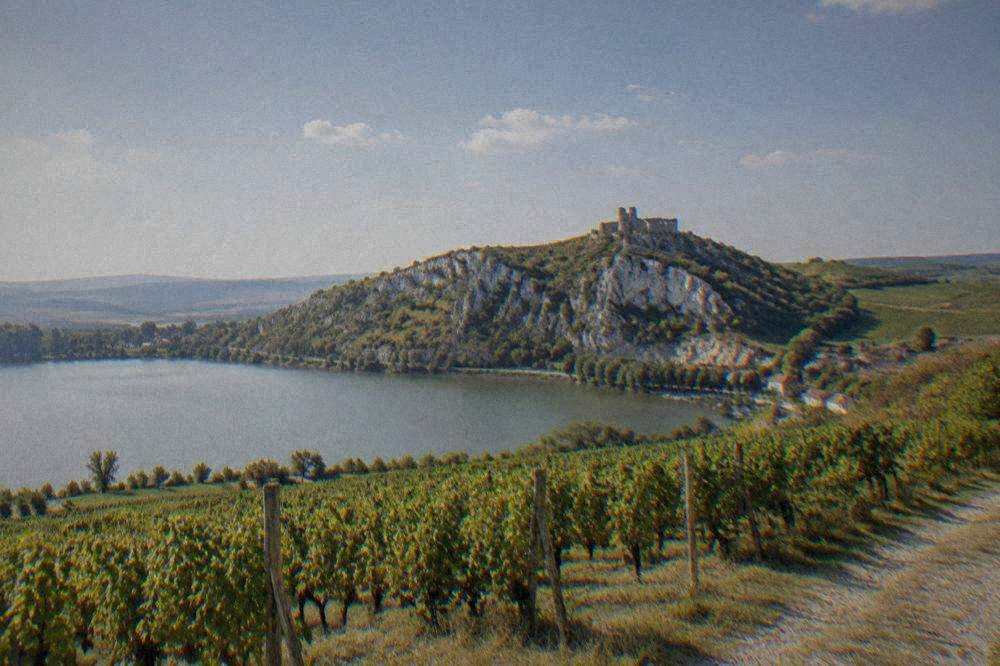
Wine country is the second arm. Lednice-Valtice, UNESCO reference 763, spans 143 square kilometres of South Moravia, and the Lednice Chateau's official site lists Tour I at 280 CZK full and 200 CZK reduced, Tour II at 220 / 160 CZK, combined at 420 / 300 CZK and an English audio guide at 50 CZK, with the park free. Mikulov and the Pálava hills sit about 43 and 36 km away respectively.
History completes the set. The Battle of Austerlitz was fought at Slavkov on 2 December 1805, and the battlefield is a straightforward trip from the city. Pernštejn Castle, about 35 km away, lists its basic tour at 260 CZK adult, 210 CZK for seniors and youth and 80 CZK for children, but it is seasonal: it was closed from 3 November 2025 to 3 April 2026, so check opening dates before planning. Telč, Třebíč and Kroměříž add three more UNESCO sites at 84, 53 and 58 km.
| Day trip from Brno | Straight-line distance | Entry price on file |
|---|---|---|
| Moravian Karst | about 20 km | Punkva price on official cave site |
| Slavkov (Austerlitz) | about 20 km | check chateau site |
| Veveří Castle | about 13 km | check official site |
| Pernštejn Castle | about 35 km | 260 / 210 / 80 CZK, seasonal |
| Mikulov | about 43 km | check official site |
| Lednice-Valtice | about 46 km | 280 / 200 CZK Tour I, park free |
| Třebíč | about 53 km | check official site |
| Vienna | about 111 km | n/a, about 1 h 31 by Railjet, reported |
| Prague | about 186 km | n/a, 2 h 59 by Railjet |
Is Brno Worth Visiting Instead Of Prague?
The sourced comparison is narrow but real: Prague is about 186 km from Brno in a straight line and the Railjet between them takes 2 h 59 min, so the two are not either-or. Brno carries its own UNESCO inscription, Villa Tugendhat 2001, its own castle with 180 CZK guided tours, and lower-friction access to the Moravian Karst and wine country. No source ranks one city over the other.
What the sources permit is a statement of differences, not preferences. Vienna is about 111 km away in a straight line, with the direct Railjet from Vienna Hbf reported at about 1 h 31 min, and airport buses reported at about 1 h 50 to 2 h 40 with fares from about EUR 10, per the aggregators that list them. That puts Brno inside a triangle with two capitals, which is unusual for a city of its size and is the practical argument for including it.
Whether the comparison matters depends on trip length. The How Many Days Do You Need In Brno? breakdown and the Is Brno Or Prague Better To Visit? answer treat that question directly, and the Is Brno Worth A Day Trip From Prague? page handles the specific rail case. The full sight list is on the things to do in Brno page.
Common Questions About Visiting Brno
Is Brno Worth Visiting?
Yes. The city holds a UNESCO site, Villa Tugendhat from 2001, a hilltop castle with guided tours from 180 CZK, and sits within day-trip range of the Moravian Karst, the Lednice-Valtice UNESCO landscape and the Austerlitz battlefield. Prague is 2 h 59 away by Railjet, so it also combines easily with a capital-city itinerary.
Is Brno A Capital City?
Brno is the capital of South Moravia and was the administrative capital of Moravia from 1641, but it is not the capital of Czechia, which is Prague. It is Czechia's second-largest city, with 404,296 permanent residents at the end of 2025.
Can You Just Walk Into Villa Tugendhat?
No. The interior is entered only with a previously purchased ticket booked through Brno iD, the villa is closed Mondays, and its own ticket page notes tours can sell out quickly on release day. The Basic tour is 450 CZK until 31 December 2026, rising to 500 CZK on 1 January 2027.
Is Brno On The Way Between Prague And Vienna?
Yes, geographically. Prague is about 186 km from Brno in a straight line and Vienna about 111 km, with the Prague Railjet at 2 h 59 min and the Vienna Railjet reported at about 1 h 31 min, so Brno sits naturally between the two.
Do The Cathedral Bells Ring At Noon In Brno?
No, and this is one of the city's genuine quirks: the bells of the Cathedral of Sts Peter and Paul ring at 11:00 rather than noon, commemorating, per the legend, the ruse said to have helped the city hold during the Swedish siege of 1645.
What Currency Does Brno Use?
The Czech koruna, CZK. Czechia is an EU and Schengen member but not in the eurozone, so local prices, including every ticket figure on this page, are quoted in koruna and never converted.