Is Brno Safe For Tourists?
Is Brno safe for tourists? A plain answer on street safety, transport, tap water, money and scams in Brno, South Moravia, with the practical numbers that matter.
Brno sits inland in South Moravia, Czechia, about 404,000 residents strong, and the question of safety there has a short answer: general travel guidance places it in the low-risk category for tourists, with petty crime such as pickpocketing the main thing to guard against, and 112 the number to call in an emergency. That guidance is generic rather than statistical. No Brno crime figure or official tourist warning appears in the sources this site works from, so this page reports what the practical sources do say: where the ordinary city risks sit, how the transport system treats a visitor, what the water, the money and the emergency services are like, and which corners of a visit need a bit of planning rather than worry.
Is Brno Safe For Tourists?
Yes, in the sense the general guidance supports: Brno is described as a low-risk destination for tourists, with no city-specific crime statistic or official travel warning in place. The risks worth naming are the ordinary ones of any central European city, principally pickpocketing at stations, on trams and in crowded squares. The single emergency number is 112, and the standard advice is to keep valuables closed and front-facing in busy places.
That answer deserves its shape explained. On Brno the sources offer a consistent practical picture rather than a ranked safety score. Guides covering the city describe the risk to tourists as generally low, with violent crime against visitors not the concern; the named risk is petty theft in the places where crowds and transit meet. That is the same advice given for Prague, Vienna or any comparable city in the region.
What follows breaks the question into the parts a traveller can actually act on: the streets and squares, the trams and buses, the water, the cash machines, and the few situations in Brno that catch visitors out for reasons that have nothing to do with crime, such as ticket inspections on public transport. For a wider picture of the city's appeal, the companion piece is Brno worth visiting covers the reasons to go at all.
What Are The Street-Level Risks In Brno?
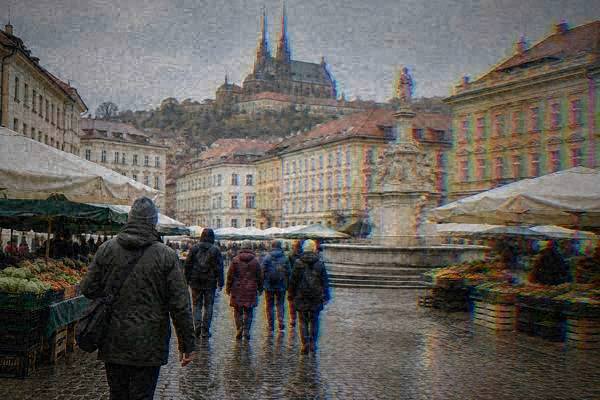
The practical guidance names pickpocketing as the main tourist risk in Brno, possible at the main train station, on trams and in crowded squares such as Náměstí Svobody and the Cabbage Market during events. No unsafe street, no neighbourhood warning and no crime statistic is on record. The advice is the standard one: keep bags closed and in front of you in crowds, and guard cards and phones at station concourses.
Squares fill up during the city's calendar events. The Christmas markets ran 13 November to 31 December in 2026, the Vinobraní wine festival filled Náměstí Svobody from 25 September to 3 October, and Ignis Brunensis drew crowds to the Brno Reservoir from 30 May to 4 July. Any crowded square at such moments deserves the usual attention to pockets and bags, not because a source flags a specific incident, but because crowd conditions are exactly where the pickpocketing risk the guidance names applies.
The same logic covers night arrival. Trains pull into Brno hlavní nádraží through the evening, and the station concourse is one of the named pickpocketing locations. Self-service luggage lockers operate there around the clock if an arrival wants to stow bags rather than track them through the city.
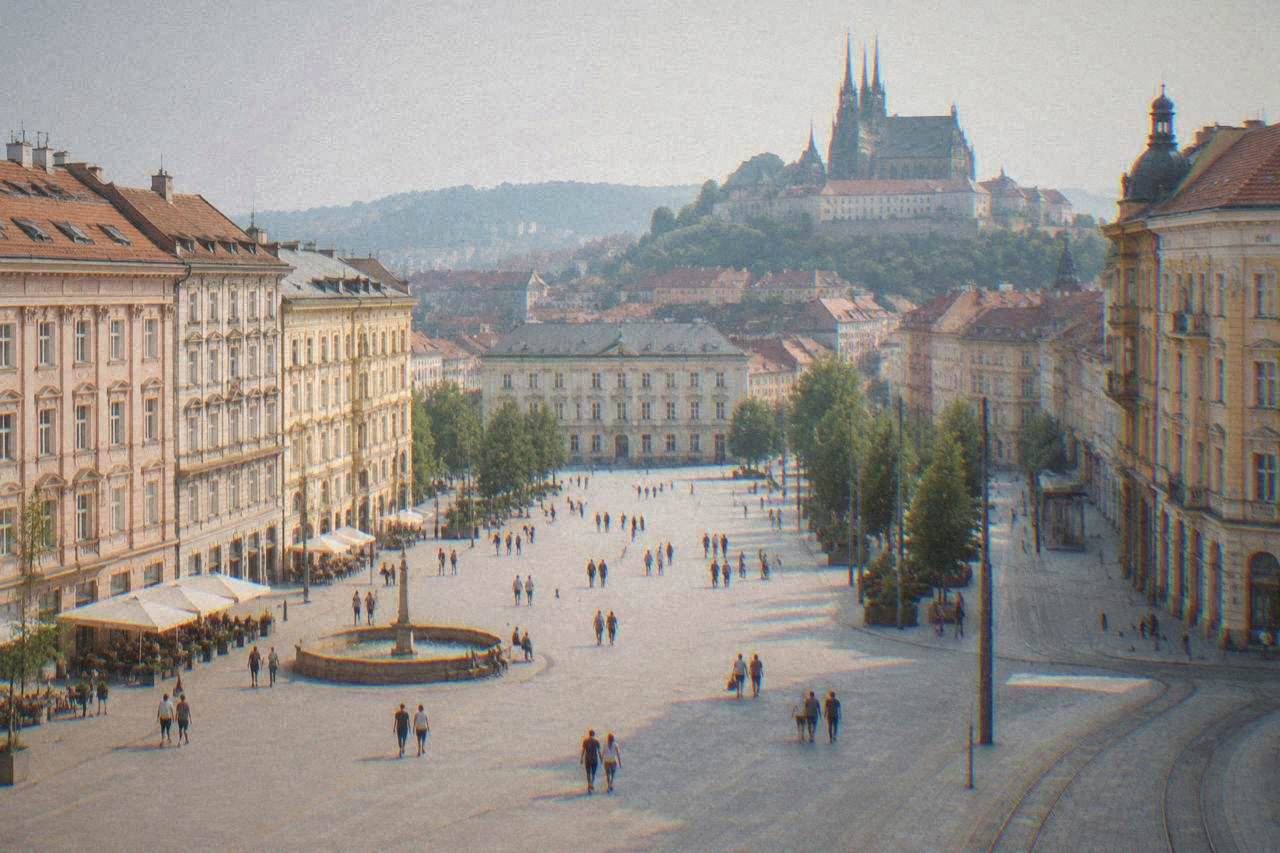
A practical point on orientation: the historic core is compact and the two hills, Špilberk Castle and Petrov with the Cathedral of Sts Peter and Paul, stand at its edges as landmarks visible across the city, which keeps evening navigation straightforward. The question of how many days you need in Brno matters more than safety for planning a walkable stay.
Is Public Transport In Brno Safe And Straightforward?
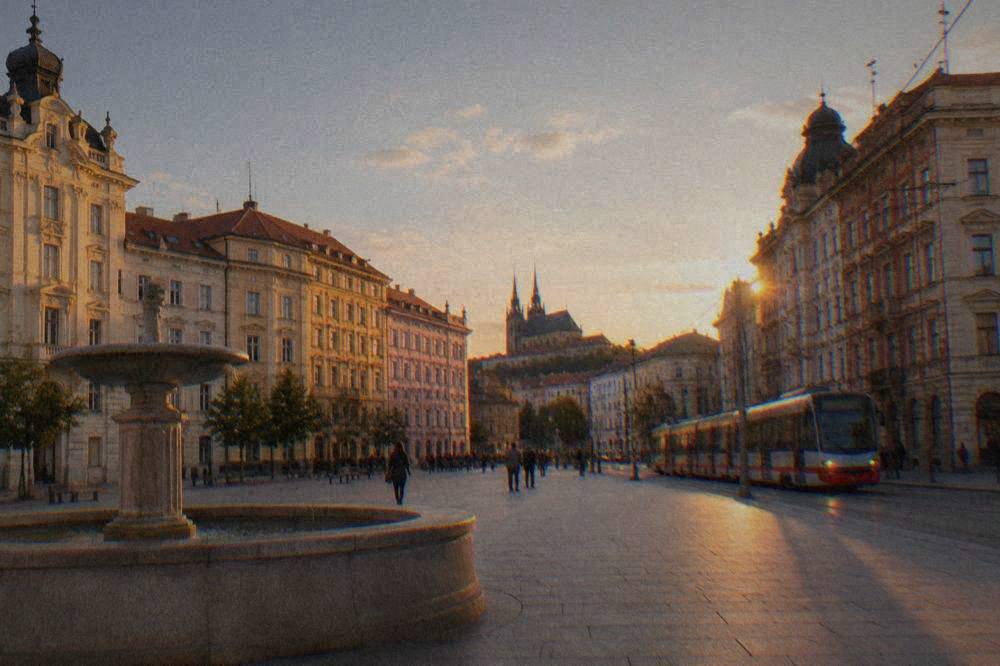
Brno's trams, trolleybuses and buses are a normal, well-used central European system, and the safety question is less about crime than about tickets: transport is not free, paper tickets cost 20, 25 or 33 CZK depending on length, and a fine awaits a passenger caught without a valid one. Contactless payment and phone purchase are supported on board, so there is no need to carry large cash for rides.
The fare structure comes from the operator's own tariff. A 15-minute two-zone paper ticket is 20 CZK, a 60-minute ticket 25 CZK, and a 90-minute three-zone ticket 33 CZK, with reduced fares roughly half those figures. The 24-hour Brno ticket covering the city's two zones costs 90 CZK. Brno sits in tariff zones 100 and 101 of the integrated South Moravian system. The operator's pages state that contactless and mobile purchase are supported on the vehicles themselves, which removes the fumbling-with-cash moment that marks a visitor out.
| Ticket | Price (CZK) | Notes |
|---|---|---|
| 15 minutes, 2 zones | 20 | reduced 10 |
| 60 minutes, 2 zones | 25 | reduced 12 |
| 90 minutes, 3 zones | 33 | reduced 16 |
| 24-hour Brno ticket | 90 | zones 100 + 101 |
| Airport bus E76 to main station | 25 | about 20 minutes, per the airport's site |
Taxis need one clarification: Bolt operates in Brno and Uber does not, per local reporting. The airport lists a taxi stand and a centre transfer around 500 CZK on its own site; agree on the app or the stand rather than an unsolicited offer at the arrivals door. Whether public transport is free in Brno has its own full answer, and the short version is no, it does not apply to visitors.
For getting oriented with a guide rather than alone, the guided walking tour with Špilberk Castle covers the centre with a local guide and ends at the castle hill, Check availability.
Can You Drink The Tap Water In Brno?
Brno's tap water is reported safe to drink, meeting Czech and EU standards, with sources including the Vír reservoir and groundwater. The reporting source is a general water-safety page rather than a utility statement, so frame it as reported rather than guaranteed. The usual practical note applies in older buildings: if the taste from a hot tap seems off, draw cold water instead.
This matters for the budget question as much as the safety one, because buying bottled water every day adds up in koruna for no health reason. It also matters environmentally to the city, which is a student town: Masaryk University counts 38,181 students, and refill bottles are a normal sight in a city built around that population. The wider set of guides lives on Brno Travel Guide.
One money warning belongs next to any water-and-cash advice: avoid independent ATM machines of the kind found around tourist squares, which charge high fees, and use a bank's own machine. Cards are widely accepted in Brno. The currency is the Czech koruna, not the euro, since Czechia is in the EU and Schengen but outside the eurozone, and the cost side of a visit is covered separately.
What Practical Traps Catch Visitors In Brno, If Not Crime?
The traps that actually catch visitors in Brno are booking and timing errors rather than crimes: Villa Tugendhat admits the interior only with a pre-booked ticket through Brno iD and closes on Mondays, the Mendel Museum closes Mondays and shuts at 17:00 from 1 October 2026, the cathedral bells ring at 11:00 rather than noon, and Pernštejn Castle closes for winter and runs weekend-only hours in autumn. None of these are dangers, and all of them are avoidable with a check before setting out.
The pattern is that Brno's risks are scheduling risks. The full details sit on the dedicated pages for Villa Tugendhat and the Mendel Museum, but the safety-relevant point is simple: a visitor who turns up at a closed door on a Monday has not been harmed, only inconvenienced, and a two-minute check prevents it.
A few more plain facts from the sources. The reported city tourist tax is 21 CZK per person per night, charged through accommodation, a figure attributed to a third-party page citing the city ordinance, so confirm it at booking. Large shops close on listed public holidays including 1 January, Easter Monday, 8 May, 28 September, 28 October and 25 to 26 December, with Christmas Eve closing at noon, per general Czech guidance. Tipping, per the same class of source, runs 5 to 10 percent or a round-up in restaurants.
| Situation | What the sources say | Action |
|---|---|---|
| Crowded squares and trams | Pickpocketing possible, per general guidance | Keep bags closed and front-facing |
| Emergency | 112 | Save it before arrival |
| Tap water | Reported safe, meets Czech and EU standards | Drink it, prefer cold taps in old buildings |
| Cash machines | Independent ATMs charge high fees | Use bank ATMs |
| Ride apps | Bolt operates, Uber does not | Book through the app |
How Does Weather Affect Safety And Comfort In Brno?
Brno's climate, per the ERA5 reanalysis for 1991-2020, is continental: mean daily highs run from 1.9 C in January to 25.0 C in July, with July also carrying the highest monthly rainfall at 82.8 mm and January the lowest mean low at -3.8 C. Weather here is a comfort question, not a hazard question, and the numbers say pack for cold, damp winters and warm, occasionally wet summers.
The monthly picture from the same table: March highs average 8.9 C, May 19.2 C, September 19.5 C and December 2.6 C. February brings 27.9 mm of rain, and the year totals 617.6 mm. Ice on cobbled squares and castle hills in winter is the one weather point worth naming for shoe choice, and snow in Brno has its own detailed answer at does it snow in Brno.
Day trips add nothing dramatic to the safety picture. The Moravian Karst lies about 20 km from the centre in a straight line, the Punkva Caves tour runs about 60 minutes with an underground boat, and the cave interior holds around 7 to 8 C year-round per the cave authority's materials, so a warm layer is the practical item. Lednice-Valtice lies about 46 km straight-line, Mikulov 43 and Pernštejn 35. None of these journeys carries a travel warning of any kind in the sources.
Is Brno Safe For Solo Travellers And Families?
Nothing in the sources marks Brno out as riskier for a solo traveller or a family than for any other visitor, and the guidance applies the same low-risk framing regardless of party size: guard pockets at stations and on trams, keep 112 to hand, and use the city's normal transport and tap water.
For families, the practical notes are closing days, above all Mondays at Villa Tugendhat and the Mendel Museum, and the Brnopas card, which at 370 to 610 CZK for adults covers entry to sights including the zoo.
Families planning around the card should know the prices: Brnopas costs 370 CZK for one day, 490 for two and 610 for three at adult rate, with child rates at 250, 330 and 400, and the list of free entries includes the Old Town Hall tower, the Ossuary, the Brno Zoo and the cathedral tower. Hours for the zoo itself should be checked on the day, per this page's constraints, at the official pages rather than assumed.
Solo travellers who want company in the evening can look at the food and drinking side of the city, covered at what food is Brno known for; a guided tasting walk is one structured way into it. Language is rarely the barrier it is feared to be, and whether they speak English in Brno has the full answer.
Common Questions About Tourist Safety In Brno
Is Brno Safe For Tourists?
Per general travel guidance, yes: Brno is described as a low-risk destination for tourists, with pickpocketing at stations, on trams and in crowded squares the main named risk. No crime statistic or official tourist warning for the city appears in the sources this site uses. The emergency number is 112.
Is Brno safe at night?
The sources for this site give no Brno-specific night-crime guidance and no unsafe street. The general advice stands: the main station concourse and crowded squares are the named pickpocketing locations, and the historic centre is compact, with Špilberk Castle and the cathedral on Petrov Hill as visible landmarks for orientation.
Can you drink tap water in Brno?
Tap water in Brno is reported safe to drink, meeting Czech and EU standards, drawing on sources including the Vír reservoir. The reporting is from a general water-safety page rather than a utility statement. In older buildings, prefer the cold tap if taste is a concern.
Does Uber work in Brno?
No, per local reporting Uber does not operate in Brno. Bolt does. The airport's own site lists a taxi stand and a centre transfer around 500 CZK.
What is the emergency number in Brno?
112. It is the single European emergency number and the one the practical guidance for Brno gives. Save it before arrival.
Is public transport in Brno safe?
The system is a normal central European network, and the real risk is administrative: travelling without a valid ticket. Paper tickets cost 20, 25 or 33 CZK by duration, contactless payment works on board, and the 24-hour Brno ticket is 90 CZK.
The balance of the evidence this site works from is simple: Brno asks for ordinary city caution and good scheduling, not vigilance. Keep the wallet front-facing at the station, buy the tram ticket, check the Monday closures, and the safety question answers itself.