Brno Parking And Driving: Zones, Garages And Vignette
Brno has paid on-street parking zones in the centre, park-and-ride lots on the edges, and a compact walkable core that makes a car optional for a city stay but useful for South Moravian day trips. Here is what the sources say about each.
Short answer
You do not need a car inside Brno: the centre is compact and a 24-hour public transport ticket costs 90 CZK. A car earns its keep for day trips to Lednice-Valtice, Pernštejn or the Moravian Karst, and any Czech motorway use requires a vignette.
Brno sits in the South Moravian basin of Czechia, an inland city of 404,296 permanent residents at the end of 2025, strung along the Svratka and Svitava rivers and linked to Prague, Vienna and Bratislava by motorway and rail. For drivers, that geography cuts two ways: the city itself is compact, hilly at the edges and partly pedestrianised in the centre, while the surrounding region, with the Moravian Karst 20 km away in a straight line and Lednice-Valtice 46 km, rewards having wheels. This guide lays out what is known about Brno parking zones, park-and-ride options, garages and the Czech vignette, and where a car is genuinely worth it.
The city's public transport operator DPMB runs the trams, trolleybuses and buses that make central parking avoidable altogether, and a full ticket price table follows below. The Brno Brno Travel Guide desk covers the transit system in detail on the Brno public transport page; this page sticks to the car.
Do You Actually Need A Car To Visit Brno?
For a stay focused on the city centre, Špilberk Castle, Villa Tugendhat, the Cathedral of Sts Peter and Paul on Petrov Hill and the Cabbage Market, a car is a liability rather than an asset, because the historic core is compact and walkable and DPMB covers the rest: a 24-hour Brno ticket costs 90 CZK regular or 45 CZK discounted, and a single 60-minute paper ticket is 25 CZK. The castle grounds at Špilberk are open daily from 6:00 to 23:00 with the ticket office from 9:00 to 18:00, so even the hilltop sights involve no driving between them. Villa Tugendhat, the city's UNESCO World Heritage site since 2001, is entered only with a pre-booked ticket through Brno iD, which removes the last common reason to arrive by car on spec.
The arithmetic is straightforward. Add up a day of zone parking, which is charged on weekdays in the reported central zone, against a 90 CZK day ticket for the whole city network in tariff zones 100 and 101, and the tram wins for anyone sleeping near a stop. The how to get to Brno guide covers arrivals by train and plane, and the Brno train station guide explains the station area, including self-service luggage lockers available 24/7, useful on a car-free layover.
| DPMB paper ticket | Regular (CZK) | Reduced (CZK) |
|---|---|---|
| 2 zones, 15 minutes | 20 | 10 |
| 2 zones, 60 minutes | 25 | 12 |
| 3 zones, 90 minutes | 33 | 16 |
| 8-trip ticket | 156 | 78 |
| Zone upgrade | 19 | 9 |
Prices are valid from 1 October 2026 per the operator's tariff. Multi-day options extend the saving: the 24-hour all-zones ticket runs 250 CZK (or 230 CZK in some sales channels), the 5-day Brno ticket is 250 CZK, and a 3-day all-zones ticket is 420 CZK regular or 210 reduced. Contactless and in-app purchase exist as well.
What Are The Brno Parking Zones And How Do They Work?
Brno operates paid on-street parking zones reported to cover a central zone plus outer zones, charged on weekdays, with payment handled by apps such as ParkSimply and at the on-street machines, and the city's official parking portal parkovanivbrne.cz is the place to confirm the current hourly rates, zone boundaries and operating hours before you drive in, because the detailed tariffs are set by the city and change. The zone system exists to keep long-term commuter parking out of the centre, so on-street space in the core is priced and time-managed rather than free. What the sources consistently show is the structure: a tighter, pricier inner zone and cheaper outer rings, weekdays paid, with park-and-ride lots on the approach roads as the intended relief valve.
The one habit worth adopting is checking the zone sign at the kerb itself. Signs carry the zone letter, the charged hours and the maximum stay, and the app maps the same boundaries. Winter visitors should pair this with the Brno winter guide, since snow narrowing the streets changes parking pressure in the centre in practical terms.
Where Are The Best Places To Park When Staying In Central Brno?
The pattern the sources support is park-and-ride on the city edge plus a tram in, reported as available at lots near the centre's approach roads including one by the Vaňkovka shopping area and one at Lesná, with the on-street central zone as a short-stop option and underground and multi-storey garages at the hotels and shopping centres of the core for overnight guests. Garage and hotel parking prices vary by operator and are quoted at the desk or on the booking page, so confirm the nightly rate before reserving a room on the assumption of parking. The park-and-ride lots are the budget backbone: leave the car outside the paid zone, buy a 25 CZK 60-minute ticket or a 90 CZK day ticket, and ride in.
For choosing where to sleep in the first place, the where to stay in Brno guide maps the central districts against transport, and the logic there feeds directly into parking here: a hotel inside the walking core removes the car question for the whole stay, while a hotel on a tram corridor makes the park-and-ride pattern painless.
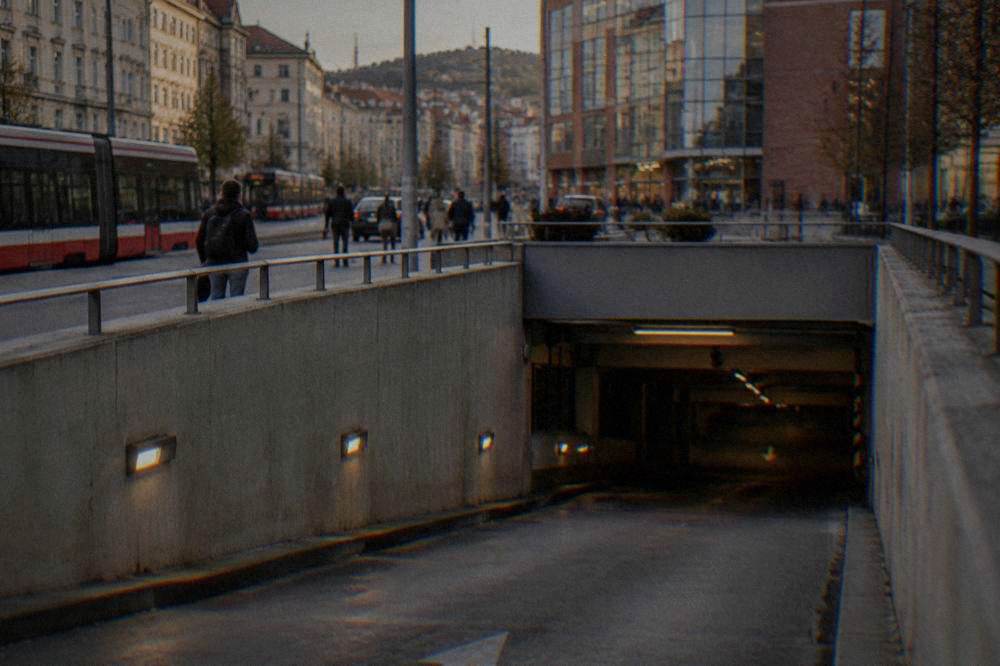
A practical division of labour works well for a two- or three-day visit. Day one, park once at the hotel or a garage and spend it on foot: the small-group historic downtown walking tour covers the core sights with a guide, or pair the Špilberk Castle guide with the riverside walk. Day two, take the car out to the region, where it pays for itself.
What Is The Czech Motorway Vignette And Do You Need One For Brno?
Driving any Czech motorway requires an electronic vignette for vehicles up to 3.5 tonnes, purchasable online through the official state edalnice.cz portal for periods from ten days upward, and the current price should be read off the official portal at the time of buying. The vignette is checked electronically against your number plate, so there is no windscreen sticker any more and no grace period: the moment a camera-equipped motorway section carries your plate without a valid vignette, a fine process starts. What matters for Brno specifically is that the D1 from Prague and the approach from Vienna and Bratislava are marked motorway, so a cross-border drive to Brno almost always touches a charged section.
Two clarifications drivers ask for. First, the vignette applies to motorways only, and ordinary roads, including every road inside Brno itself, need nothing beyond normal registration. Second, vehicles over 3.5 tonnes fall under a separate tollbox system for trucks, not the car vignette. Foreign visitors can buy the e-vignette in advance for the exact dates of a trip, which is the clean way to handle a Brno visit bracketed by motorway legs.
Which Roads Lead Into Brno From Vienna, Prague And Bratislava?
Brno is a rail-and-motorway node: the Railjet train from Prague takes 2 hours 59 minutes, Vienna Hbf to Brno is reported at about 1 hour 31 minutes by Railjet, and buses from Vienna Airport take about 1 hour 50 to 2 hours 40 with fares from about EUR 10, while by road the capital cities sit 111 km (Vienna), 186 km (Prague) and 122 km (Bratislava) from Brno in a straight line. Those straight-line figures come from computed distances to the city centre, and the road mileage is longer, particularly to Prague. The train comparison matters for the parking question at both ends: arriving by Railjet at Brno hlavní nádraží means no vignette, no zone parking and no garage bill for the entire stay.
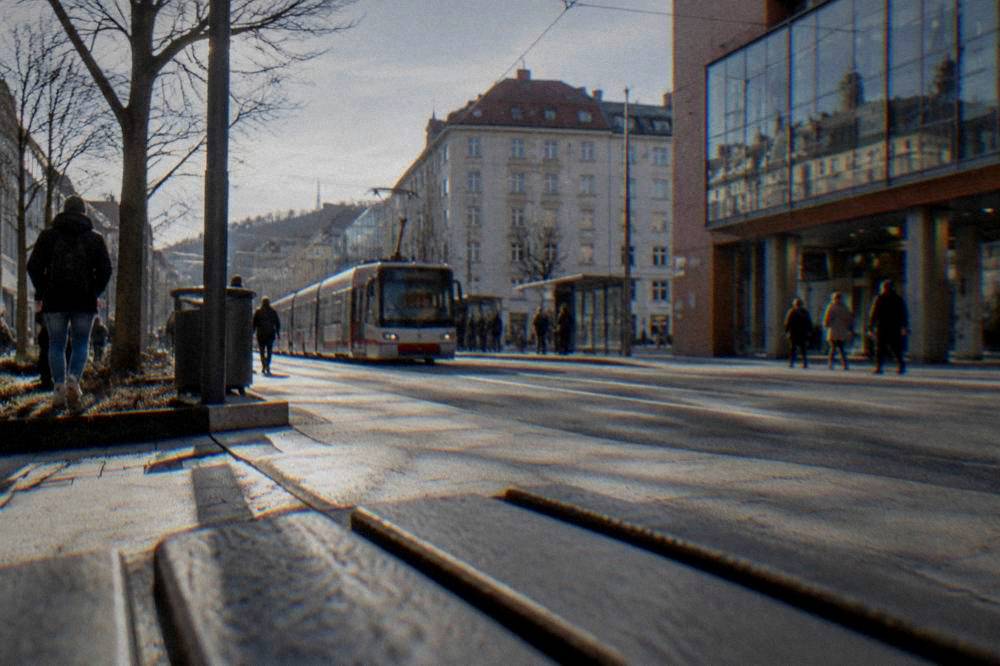
The rail options are covered in depth on the Prague to Brno and Vienna to Brno pages. RegioJet and FlixBus both serve Brno from Vienna Airport, Prague, Bratislava and Olomouc, which rounds out a car-free arrival from almost any direction. Fly-drive visitors land at Brno-Tuřany, 8 km from the centre in a straight line, with the airport transfer and car hire options laid out on the Brno airport guide.
When Does A Car Pay Off Around Brno? The Day-Trip Distances
A car earns its keep the moment the itinerary leaves the city: the Moravian Karst is 20 km from the centre in a straight line, the Punkva Caves 21 km, Macocha Abyss 22 km, Veveří Castle 13 km, Pernštejn 35 km, Mikulov 43 km, Lednice-Valtice 46 km and Telč 84 km, and several of these sit where train and bus connections thin out or require a Blansko or Hodonín transfer. The table below gives the full computed spread, straight-line kilometres from Brno's centre, with no road distance implied.
| Destination | Straight-line km from Brno centre |
|---|---|
| Brno Reservoir | 7 |
| Brno Zoo | 7 |
| Brno-Tuřany airport | 8 |
| Veveří Castle | 13 |
| Moravian Karst | 20 |
| Punkva Caves | 21 |
| Macocha Abyss | 22 |
| Slavkov (Austerlitz) | 20 |
| Pernštejn Castle | 35 |
| Pálava hills | 36 |
| Mikulov | 43 |
| Lednice-Valtice | 46 |
| Třebíč | 53 |
| Znojmo | 56 |
| Kroměříž | 58 |
| Olomouc | 64 |
| Telč | 84 |
| Vienna | 111 |
| Bratislava | 122 |
| Prague | 186 |
The Karst corridor is the classic case for driving: the train from Brno hlavní nádraží to Blansko takes 18 to 24 minutes, then the connection onward to the caves entrance involves a local bus, which is why guided day trips from the city, like the Moravian Karst tour options, bundle the whole transfer. Pernštejn is another driving destination, and a seasonal one: the castle closed from 3 November 2025 to 3 April 2026 and runs weekend-only hours in autumn, so check the official opening page before committing the drive. Its basic tour is 260 CZK adult, 210 CZK for seniors and youth, and 80 CZK for children aged 6 to 17.
Lednice-Valtice, the UNESCO-listed cultural landscape of 143 square kilometres in South Moravia, is the region's showcase drive. The chateau's own site lists Tour I of the state rooms at 280 CZK full and 200 reduced, Tour II of the private apartments at 220 and 160, a combined ticket at 420 and 300, and an English audio guide at 50 CZK, with the park free and children under 6 free. Wine country fans can also book the Lednice chateau and wine-region excursion directly: Check availability.
How Does Weather Affect Driving Around Brno?
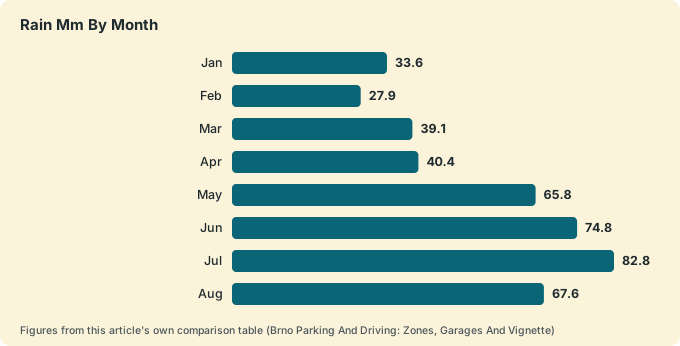
The ERA5 reanalysis for Brno, 1991-2020, shows a continental pattern with July the month with the most rain at 82.8 mm of rain, June at 74.8 mm and August at 67.6 mm, against February's 27.9 mm, and mean daily highs running from 25.0 C in July down to 1.9 C in January with January's mean low at -3.8 C, which shapes both winter tyre expectations and summer downpour planning on rural roads. Winter driving in South Moravia means settled sub-zero nights from December through February, so winter tyres, legally expected in Czech conditions, and a scraper in the car are baseline. The spring and autumn shoulder months sit between those extremes.
| Month | Mean high C | Mean low C | Rain mm |
|---|---|---|---|
| Jan | 1.9 | -3.8 | 33.6 |
| Feb | 4.3 | -3.0 | 27.9 |
| Mar | 8.9 | 0.1 | 39.1 |
| Apr | 14.9 | 4.5 | 40.4 |
| May | 19.2 | 9.6 | 65.8 |
| Jun | 22.9 | 13.3 | 74.8 |
| Jul | 25.0 | 15.3 | 82.8 |
| Aug | 24.9 | 15.2 | 67.6 |
| Sep | 19.5 | 10.8 | 64.2 |
| Oct | 13.6 | 6.3 | 43.5 |
| Nov | 7.5 | 2.1 | 41.5 |
| Dec | 2.6 | -2.4 | 36.4 |
These are modelled normals from a reanalysis grid cell, not a station record, and they describe averages rather than forecasts. For tying a visit to the calendar rather than the weather map, the best time to visit Brno guide works through the trade-offs month by month.
Parking For Events: The Brno Circuit, Christmas Markets And Ignis Brunensis
Event days change the parking calculus completely: the MotoGP Czech GP at the Automotodrom ran 19 to 21 June 2026 with the race on Sunday 21 June, the Christmas markets ran 13 November to 31 December 2026 across Zelný trh and Náměstí Svobody, and Ignis Brunensis drew its fireworks crowds to the Brno Reservoir between 30 May and 4 July 2026, and on each of these the park-and-ride-plus-tram pattern beats hunting for a central space. The reservoir end has its own pull: the Ignis shows are staged around the water at the Brněnská přehrada, and the 3-day Brnopas card includes a seasonal boat on the Bystrc to Veverská Bítýška route, which pairs a parking spot in Bystrc with the show view from the water side.
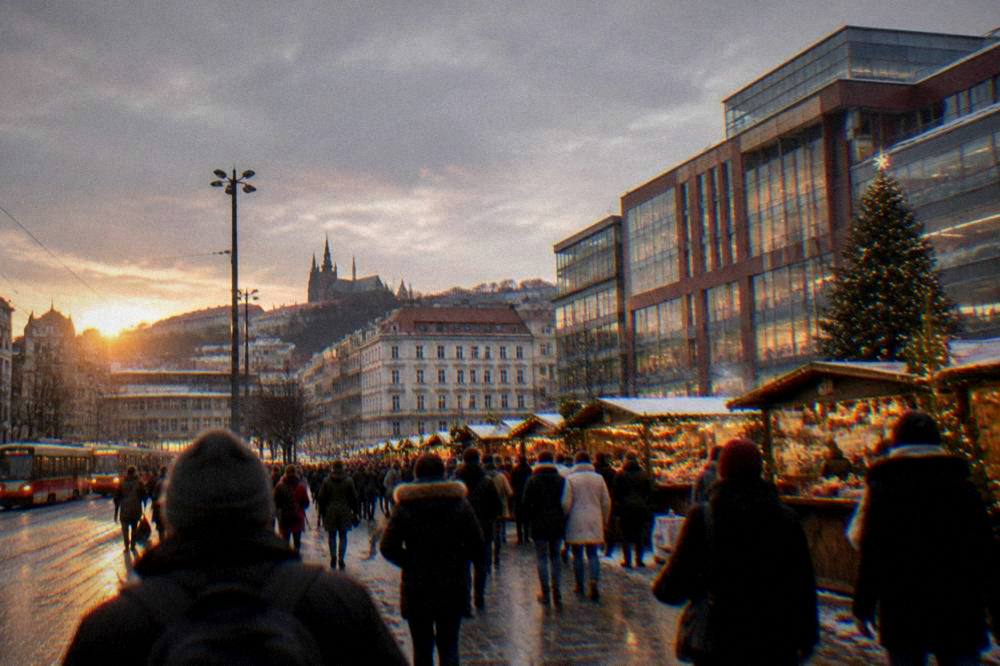
Christmas market parking follows the same rule as anywhere in central Europe in December: the paid zones and garages around Náměstí Svobody and Zelný trh fill early on market evenings, so the tram from a park-and-ride or from a hotel outside the core is the reliable plan. The Brno Christmas market guide covers the stalls and dates, and the MotoGP guide handles the circuit-side logistics.
Renting A Car In Brno: Airport, City And One-Way Options
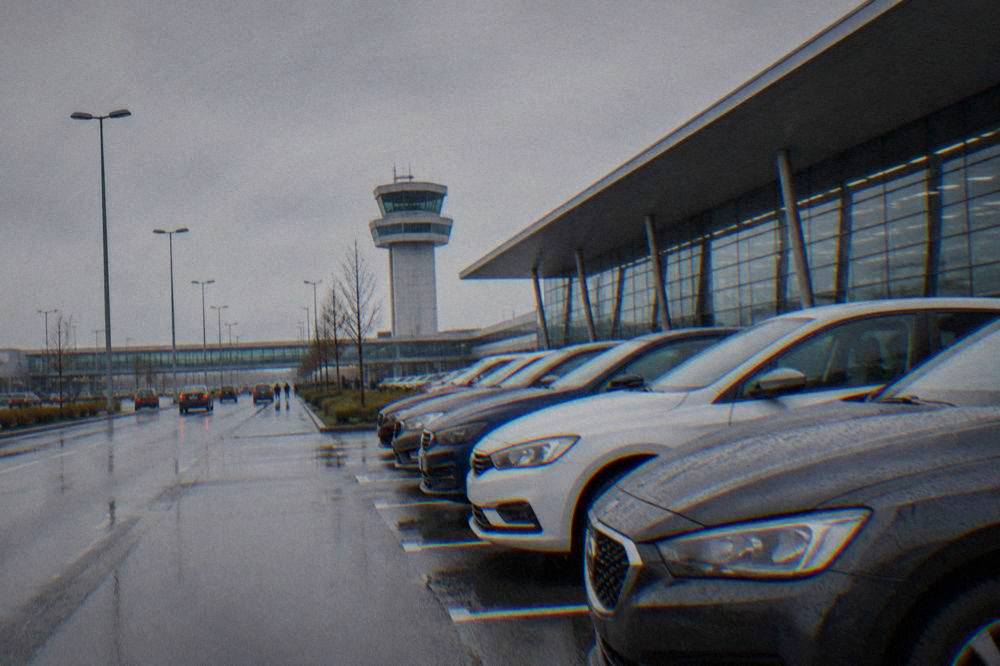
Car rental is available at Brno-Tuřany airport, 8 km from the centre in a straight line, and from city-centre branches of the international chains, with fly-drive arrivals served by Ryanair routes to London Stansted, Malaga and Milan Bergamo in the 2026 schedule, and one-way rentals between Brno, Prague, Vienna and Bratislava exist but carry drop fees quoted at booking. The decision framework mirrors everything above: rent for the day-trip belt, not for the city stay. An arrival day without a car, a rental day or two for the Karst, Pernštejn or Lednice-Valtice, and a hand-back before the departure day usually beats holding a car through a city hotel stay with nightly garage parking on top.
Visitors arriving via the bigger hubs should compare the fly-drive maths against the train, because both Vienna and Prague rail links are fast: the Vienna airport to Brno page works through the bus-and-train chain, and picking up a Czech-plated car in Brno rather than abroad can simplify the vignette question for the Czech motorway legs.
Rules Of The Road, Fuel And Practicalities For Drivers In Czechia
Czechia drives on the right, uses the Czech koruna (CZK) rather than the euro, enforces a zero-tolerance drink-driving limit, requires dipped headlights at all times, and posts urban speed limits in km/h, with the emergency number 112 for any incident and Bolt, not Uber, providing app-based ride-hailing in Brno. Fuel is sold by the litre in CZK at self-service forecourts, and card payment is accepted widely. The drink-driving point deserves emphasis for wine-country itineraries: the Lednice-Valtice and Mikulov routes run through tasting rooms, and a zero limit means the driver skips the pours or a guided wine excursion replaces the car for the day.
Two more practicalities close the loop. The Brno city tourist tax, reported at 21 CZK per person per night under the city ordinance, is collected through accommodation and not parking, so it does not affect the driving budget directly. And for the car-free days, the 3-day Brnopas visitor card at 610 CZK adult (or 1,110 CZK bundled with a Villa Tugendhat tour) folds attractions, including the Old Town Hall tower and the Ossuary, into one pass, which is covered on the Brno pass guide.
Is Driving In Brno Worth It Compared To Public Transport?
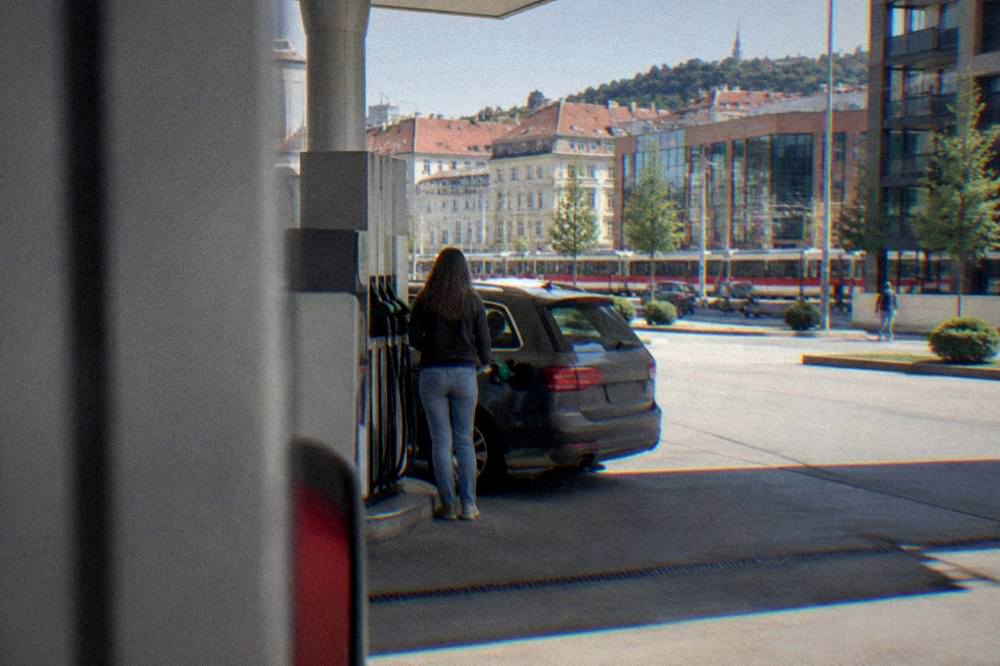
For the numbers a visitor can plan on, the comparison is decisive inside the city: a 24-hour Brno transport ticket is 90 CZK, the 5-day Brno ticket is 250 CZK, and a 3-day all-zones ticket is 420 CZK, against weekday paid zone parking in the centre plus garage or hotel rates on top, so the car belongs to the day-trip belt and the park-and-ride edge, not the historic core. A pattern of park once, ride in, drive out on trip days captures the best of both: the trams handle Špilberk, Petrov, the Cabbage Market and the underground sights, while the car handles the Karst, Pernštejn, Lednice-Valtice and the wine hills at your own pace.
Budget travellers can push the same logic further with the Brno on a budget guide, and the car-free sightseeing core is catalogued in the free things to do in Brno guide, from the Špilberk grounds open 6:00 to 23:00 daily to the cathedral's 11:00 bells, rung an hour before noon in memory of the 1645 Swedish siege ruse.
Common Questions About Parking And Driving In Brno
Is parking in Brno free?
Not in the central zone on weekdays. Brno operates paid on-street zones reported to cover a centre zone and outer zones, charged on weekdays, with payment by app or machine. Check the current rates and hours on the city parking portal before driving in.
Do I need a vignette to drive to Brno?
Yes, if any leg of the drive uses a Czech motorway, including the D1 approach from Prague and the main routes from Vienna and Bratislava. The electronic vignette is bought online through the official state portal, and the current price is shown there at purchase.
Can I park at Brno hotels?
Central hotels and shopping centres offer garage or multi-storey parking, and prices vary by operator. Confirm the nightly rate with the hotel before booking a stay on the assumption of included parking.
Is it easy to drive in Brno city centre?
The historic core is compact and partly pedestrianised, with paid weekday parking, so the common pattern is to park at a park-and-ride lot on the edge and take a tram in. A 24-hour Brno transport ticket costs 90 CZK.
Do I need a car for day trips from Brno?
It helps. The Moravian Karst is 20 km from the centre in a straight line, Lednice-Valtice 46 km and Telč 84 km, and the last legs of several routes involve local transfers. Guided day tours from the city bundle the transport if you would rather not drive.
Does Uber work in Brno?
No. Uber does not operate in Brno; Bolt is the app-based ride-hailing option reported to run in the city, alongside traditional taxi operators.