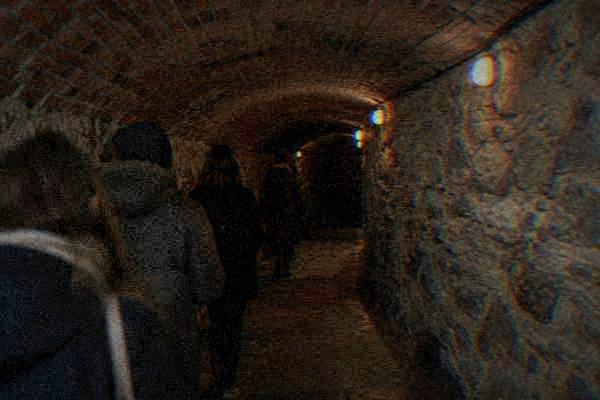
Whose Bones Are In The Capuchin Crypt?
The Capuchin Crypt in Brno holds the remains of Capuchin friars and the laypeople the order buried there. What is actually known, how it differs from the Brno Ossuary, and how to visit.
Brno, the second-largest city of Czechia and the historical capital of Moravia from 1641, keeps a large share of its history below street level. Under the Capuchin monastery in the city centre lies the Capuchin Crypt, a burial vault that appears on almost every shortlist of Brno's underground attractions alongside the Ossuary at St James, the Labyrinth under the Cabbage Market and the 10-Z Bunker. The question of whose remains are actually down there is a fair one, and the honest answer is narrower than the legends suggest. This page sets out what the record supports, how the crypt differs from the Brno Ossuary two streets away, and what a visit involves in practice. For the broader picture, start with the site's things to do in Brno overview and the dedicated Capuchin Crypt page.
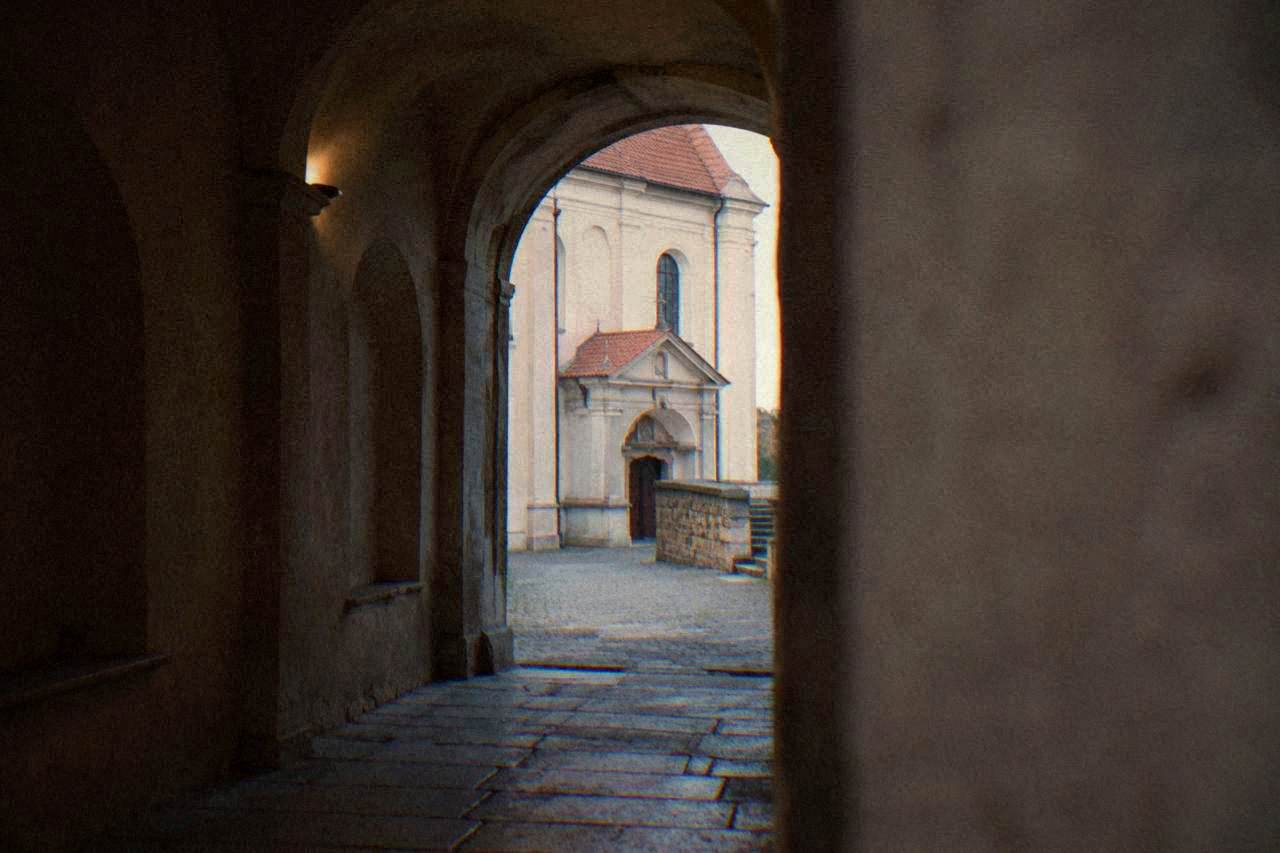
Whose Bones Are In The Capuchin Crypt?
The Capuchin Crypt in Brno holds the remains of members of the Capuchin Order, the friars who lived and died at the monastery above it, together with laypeople connected to the order who were buried in its vaults. It is a monastic burial place, not a mass grave and not the city ossuary. No inventory of named individuals is published in the sources this site uses, and none is needed: the crypt's identity as a friars' and benefactors' resting place is the whole of the answer.
That framing matters because Brno has two famous bone sites, and visitors routinely mix them up. The Capuchin Crypt is the monastery's own vault, where the order buried its dead. The Brno Ossuary at St James, a short walk away, is a different thing entirely: an ossuary is a place where bones were gathered and arranged after their original resting places were cleared, a practice tied to the city's crowded churchyards. If your question is "why are there so many bones in one place", the Ossuary is the site that answers it, and the site's Brno Ossuary guide covers that history in full.
The Capuchin Order itself is a branch of the Franciscan friars, present in Brno through the monastery attached to the church on Capuchin Square. Burial in the order's crypt was the standard practice for its members. Beyond that general picture, this site prints no names, no count of remains and no description of individual burials, because no such detail is confirmed. What a visitor sees is the vault as the operator presents it today; anything more specific belongs to the official interpretation, not to guesswork.
For planning purposes, the Capuchin Crypt is one of four underground attractions in central Brno run through the podzemibrno.cz operator, alongside the Ossuary at St James, the Labyrinth under the Cabbage Market and the 10-Z Bunker. Hours, ticket prices and tour arrangements for all four sit on the operator's official page, and this site does not reprint them; check the current price on the official page before booking.
How Does The Capuchin Crypt Differ From The Brno Ossuary?
The difference is one of function and origin: the Capuchin Crypt is a monastic burial vault where the order interred its friars and associated laypeople, while the Brno Ossuary at St James is a charnel house where bones displaced from the churchyard were collected and stacked. The crypt belongs to a religious order's own death tradition; the ossuary is the product of a parish running out of burial space. One held communities of friars, the other accumulated the city's buried dead.
Both sites sit in the historic core within a few minutes of each other, and both are administered through the same operator, podzemibrno.cz, which is convenient: one check of the operator's page covers hours and tickets for the crypt, the ossuary, the Labyrinth and the 10-Z Bunker at once. The two sites also differ in what they ask of the visitor. A crypt asks you to read it as a place of burial, with the atmosphere that implies. An ossuary asks you to confront a large, deliberately arranged accumulation of human remains, which is a different experience and one some travellers choose to skip.
One planning fact bridges the two: the Ossuary at St James is included free with the Brnopas city card. That is confirmed on the official Brnopas page, which lists the Ossuary among the card's free entries. Nothing equivalent is confirmed for the Capuchin Crypt, so treat the crypt as ticketed on its own terms and check the operator's page for the current arrangement.
A reasonable pattern for a first visit to Brno is to pair one underground site with a walk of the centre, since the crypt, the ossuary, the Cabbage Market and Freedom Square sit close together. The site's how many days do you need in Brno answer works through the trade-offs, and the Brno walking tour guide sketches a route past the main squares.
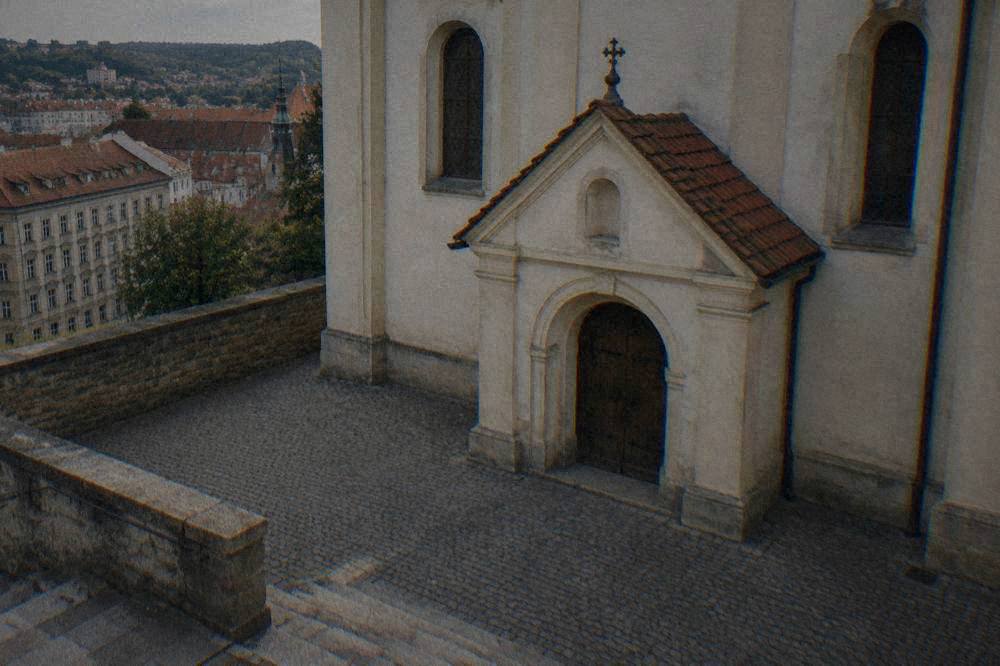
How Do You Visit The Capuchin Crypt And The Other Brno Underground Sites?
All four central Brno underground attractions, the Capuchin Crypt, the Ossuary at St James, the Labyrinth under the Cabbage Market and the 10-Z Bunker, are ticketed through the podzemibrno.cz operator, and the current hours and prices for each are published on that operator's official page. This site does not reprint those figures, because they change. Check the operator's page, then book or buy as it directs.
The practical advantage of the shared operator is that a single page answers every logistics question: opening days, tour language, ticket tiers and any seasonal closures the operator has announced. The general rule for Brno's underground sights is the same as for the city's big ticketed attractions: book ahead where online booking exists, and treat the off-season, when several heritage sites across Czechia shorten their hours, as a time to check rather than assume. Špilberk Castle, for comparison, runs its exhibitions Tuesday to Sunday 10:00 to 18:00 while its grounds stay open daily, a split between indoor and outdoor hours that recurs across the city's sites. The wider set of guides lives on Brno Travel Guide.
If an underground visit is what draws you to Brno, the 10-Z Bunker, the Cold War-era shelter under Špilberk Hill, can be booked as an entrance ticket in advance. The listing says entry is skip-the-line with a pre-booked ticket, and the site's own 10-Z Bunker overview places it in context with the other subterranean sights. If the bunker appeals, Check availability.
For travellers who want a guided layer over the city as a whole, a private walk with a local guide is the other way in; the site's private tour page explains what it covers.
Prefer to explore without a fixed schedule? Book a legends audio tour here.
What Does Brnopas Include Underground?
The Brnopas city card includes free entry to the Ossuary at St James among its underground benefits, per the official Brnopas page, which also lists the Old Town Hall tower, the Cathedral tower and the Brno Zoo among its free entries. The Capuchin Crypt, the Labyrinth and the 10-Z Bunker are not on the confirmed free list, so a visitor counting on the card should pair it with the Ossuary and budget separately for the others.
The card itself comes in adult tiers of 370 CZK for one day, 490 CZK for two days and 610 CZK for three days, with child prices at 250, 330 and 400 CZK. A Brnopas+ variant bundles the card with a Villa Tugendhat tour at 870, 990 and 1110 CZK for the three durations, or with the Špilberk water tanks tour at 550, 670 and 790 CZK. Those are the confirmed figures from the official Brnopas page.
| Card | Duration | Adult CZK | Child CZK | Confirmed underground inclusion |
|---|---|---|---|---|
| Brnopas | 1 day | 370 | 250 | Ossuary at St James free |
| Brnopas | 2 days | 490 | 330 | Ossuary at St James free |
| Brnopas | 3 days | 610 | 400 | Ossuary free, plus seasonal boat on the Brno Reservoir route |
| Brnopas+ Villa Tugendhat | 1 day | 870 | 570 | Ossuary free, plus a Tugendhat tour |
| Brnopas+ Villa Tugendhat | 2 days | 990 | 650 | Ossuary free, plus a Tugendhat tour |
| Brnopas+ Villa Tugendhat | 3 days | 1110 | 720 | Ossuary free, plus a Tugendhat tour and seasonal boat |
| Brnopas+ Water Tanks | 1 day | 550 | 380 | Ossuary free, plus the Špilberk water tanks tour |
Whether the card pays off depends on the itinerary. A traveller stacking the Ossuary, the Old Town Hall tower at 90 CZK adult, and a Špilberk tour such as the Story of the Castle at 180 CZK full price is already close to the one-day card's cost. A traveller whose underground interest is specifically the Capuchin Crypt and the 10-Z Bunker gets less from the card and should price both directly on the operator's page.
Is The Capuchin Crypt Worth Visiting Compared With Brno's Other Sights?
For a visitor interested in Brno's underground layer, the Capuchin Crypt is a compact, atmospheric site that answers a specific historical question: how a monastic order buried its dead in the city. Compared with the Ossuary's accumulated bones, the 10-Z Bunker's Cold War machinery or Špilberk's casemates at 260 CZK for a guided ticket, the crypt is the quietest and most focused of the four. Whether that focus suits you is a matter of taste, and this site makes no crowd or popularity claims either way.
The wider context is that Brno's underground offer is unusually dense for a city of about 404,000 residents. Špilberk Castle alone layers a fortress, a prison converted in 1783 under Joseph II, and self-guided casemates open daily 09:00 to 21:00, with the castle grounds themselves free to wander from 06:00 to 23:00. The full fortress history, including the sieges of 1643 and 1645 that the city held, is covered in the Špilberk Castle guide.
Beyond the underground, the standard first-day circuit takes in the Cathedral of Sts Peter and Paul on Petrov Hill, whose bells famously ring at 11:00 rather than noon, a tradition tied to the 1645 siege, and the Old Town Hall passage where the Brno dragon and the legendary wheel hang. Those two stories are unpacked in why is Brno famous and why is there a crocodile in Brno. If time allows a second day, the Moravian Karst, about 20 km from the centre in a straight line, adds the Punkva Caves and the Macocha Abyss, and a guided day trip reaches both without any self-drive logistics.
Common Questions About The Capuchin Crypt In Brno
Whose Bones Are In The Capuchin Crypt?
The remains of Capuchin friars and the laypeople connected to the order who were buried in its vaults. The crypt is a monastic burial place, distinct from the Brno Ossuary, where bones cleared from the churchyard of St James were gathered.
Is The Capuchin Crypt The Same As The Brno Ossuary?
No. The crypt is the Capuchin monastery's own burial vault. The Ossuary at St James is a charnel house where displaced bones were accumulated. They are separate sites a short walk apart, both ticketed through the podzemibrno.cz operator.
How Much Does The Capuchin Crypt Cost?
The operator's official page at podzemibrno.cz lists current hours and prices. Check the current price there before booking; this site prints no figure for the crypt.
Is The Ossuary Free With Brnopas?
Yes. The official Brnopas page lists the Ossuary at St James among the card's free entries, alongside the Old Town Hall tower, the Cathedral tower and the Brno Zoo.
Can You Visit The 10-Z Bunker On The Same Trip?
Yes. The 10-Z Bunker is the fourth central underground site under the same operator, and an entrance ticket can be pre-booked; the operator's listing describes skip-the-line entry with a ticket.
Where Is The Capuchin Crypt Located?
In central Brno, South Moravia, Czechia, beneath the Capuchin monastery by Capuchin Square, within walking distance of the Cabbage Market and Freedom Square. The site's where is Brno located answer covers the city's position and transport links.
Brno's underground sights reward a little planning: one operator page, one decision about the Brnopas card if the Ossuary and the towers are on your list, and a pre-booked ticket if the 10-Z Bunker is the priority. The Capuchin Crypt itself asks only that you arrive knowing what it is, a friars' burial vault in the heart of the city, and let the site speak for itself.