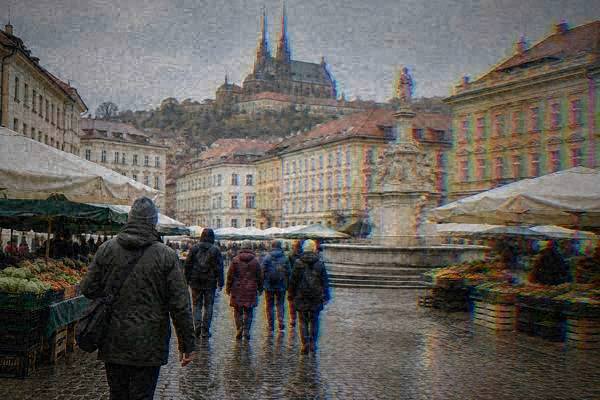
What Is The Second Largest City In The Czech Republic?
The answer is Brno, in South Moravia: 404,296 permanent residents, Czechia's second city after Prague, with a UNESCO villa, a castle and the Moravian Karst on its doorstep.
Brno, an inland city in South Moravia where the Svratka and Svitava rivers meet, is the second largest city in the Czech Republic. Its population stood at 404,296 permanent residents at the end of 2025, according to the city's own data portal, placing it behind only Prague in the Czech statistics. Prague is the capital, and Brno is not: it is the historical capital of Moravia, a distinct region that forms the eastern part of the country, and it anchors a South Moravian Region of 1,228,779 residents as of 30 June 2026. The city's name has no English exonym, so the word on every sign, ticket and timetable is simply "Brno".
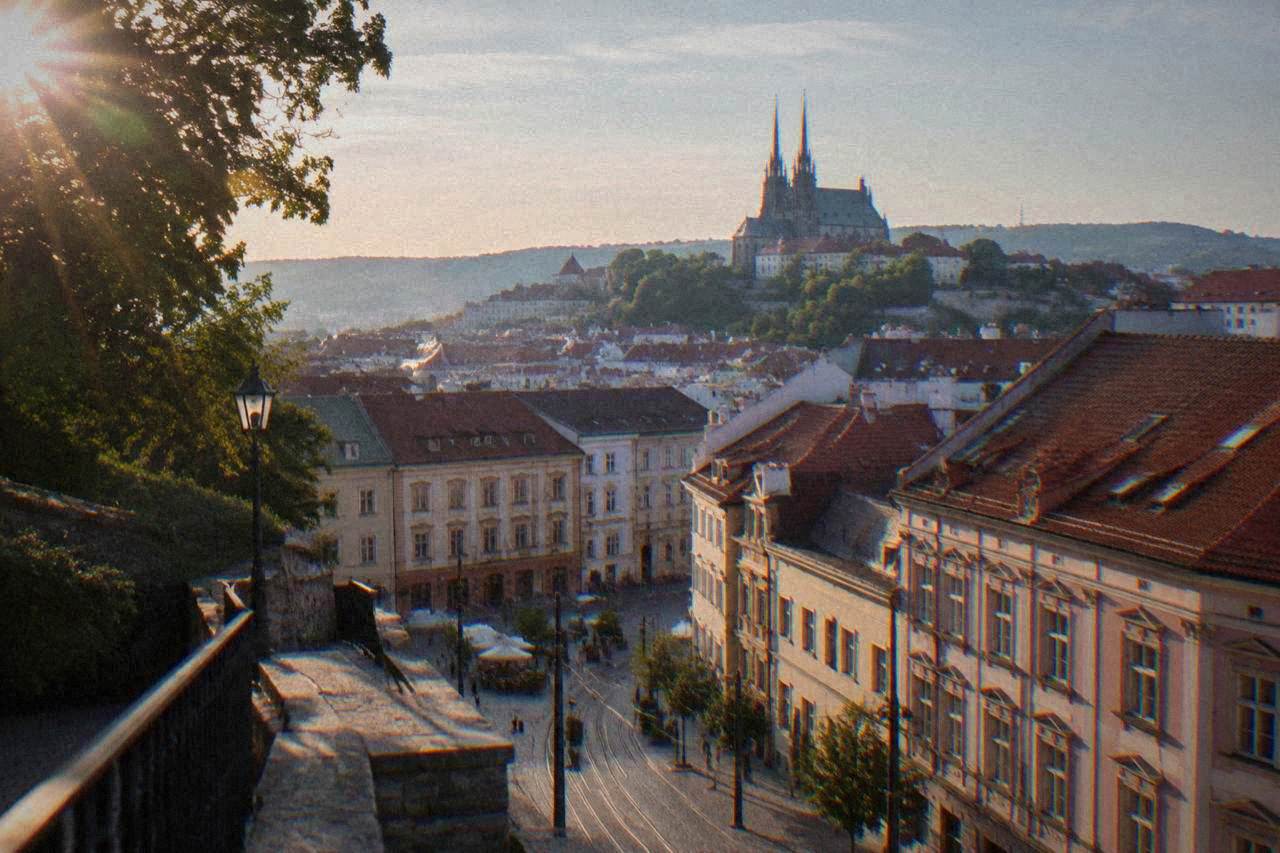
The distinction matters more than a trivia answer usually does. Second-city status shapes Brno's whole character: a university town whose Masaryk University counts 38,181 students, a legal and administrative centre for Moravia, and a base for reaching the Moravian Karst, the Lednice-Valtice Cultural Landscape and the wine hills of Pálava. Readers planning around the region can start with the overview of things to do in Brno, while this page stays on the question itself: how big Brno is, what sits inside it, and why the ranking is stable.
What Is The Second Largest City In The Czech Republic?
Brno, in South Moravia, is the second largest city in the Czech Republic by population, with 404,296 permanent residents recorded at the end of 2025 on the city's data portal. Prague, the capital, is the only Czech city larger. Brno sits inland on the Svratka and Svitava rivers, has no sea coast, and serves as the historic capital of Moravia, a region of Czechia rather than of Slovakia.
The 404,296 figure counts permanent residents, a stricter measure than a registered or daytime population, and it comes from the City of Brno's own statistics page. Zoom out one level and the South Moravian Region, with Brno at its centre, held 1,228,779 residents on 30 June 2026, per the Czech Statistical Office. That regional frame is what a visitor actually experiences: flights land at Brno-Tuřany about 8 km from the centre in a straight line, trains arrive at Brno hlavní nádraží, and the whole region runs on the Czech koruna, since Czechia is in the EU and Schengen but outside the eurozone.
| Measure | Figure | What it counts |
|---|---|---|
| Brno permanent residents, end of 2025 | 404,296 | City of Brno data portal |
| South Moravian Region, 30 June 2026 | 1,228,779 | Czech Statistical Office |
| Masaryk University students | 38,181 | University statistics page |
| Brno-Tuřany airport, straight line from centre | about 8 km | Computed straight-line distance |
Rankings among Czech cities follow population, and on that measure Brno's second place is not close to being contested. The city was the main capital of Moravia from 1641, according to the Czech UNESCO heritage portal, and it kept the regional weight that history gave it: courts, ministries' regional offices, the 1928 Exhibition Centre and Masaryk University, founded in 1919 as reported by the same portal. First written mention of Brno dates to 1091 and city privileges to 1243, so the second city is also one of the oldest documented settlements in the country.
A city of this size rewards a guide rather than guesswork, and the three options above cover the three poles of a Brno visit: the historic core on foot, the Moravian Karst, and the beer culture the city shares with the rest of Czechia. For a wider framing of whether the trip is worth it at all, the companion page is Brno worth visiting weighs the question.
How Big Is Brno Compared With Prague?
Prague is larger by every population measure, and the gap is wide: Brno's 404,296 permanent residents are roughly a quarter of the Czech capital's, though the two cities sit only about 186 km apart in a straight line, connected by a Railjet train the operator advertises at 2 hours 59 minutes. The comparison is one of scale, not quality: Brno is the capital of Moravia, Prague the capital of the whole country, and each answers a different kind of trip.
The 186 km figure is a straight-line distance computed from the city centres, and the 2 h 59 min Railjet time comes from the national rail operator's own advertising, so both ends of the comparison are anchored. No fair page ranks one city "nicer" than the other; what can be said is factual. Brno is inland, on two rivers, with the Brno Reservoir as its main body of water, and its skyline is defined by the Cathedral of Sts Peter and Paul on Petrov Hill. Prague holds the capital's institutions.
| Comparison | Brno | Prague |
|---|---|---|
| Source | Second city, historic Moravian capital | Capital of Czechia |
| Straight-line distance between centres | about 186 km | about 186 km |
| Rail link | Railjet, 2 h 59 min per operator advert | same line, opposite direction |
| Region | South Moravian Region, 1,228,779 residents | own region |
For travellers deciding between them, the deeper dives are is Brno or Prague better to visit and is Brno worth a day trip from Prague, and the rail question is covered in how long is the train from Brno to Prague.
A guided walk built around Petrov Hill fits naturally here: the cathedral is the landmark that orients the whole city, its twin spires visible across the rooftops, and a themed tour is the quickest way to place the second city's story in context. The bells themselves carry a Brno curiosity worth hearing from a guide: they ring at 11:00 rather than noon, in memory of the ruse credited with ending the Swedish siege of 1645.
Happy to wander at your own tempo instead. Book an audio walking tour here.
What Sits Inside Czechia's Second City?
Inside its 404,296 residents, Brno packs one UNESCO World Heritage Site, Villa Tugendhat, inscribed in 2001, plus Špilberk Castle, the Cathedral of Sts Peter and Paul, the Brno Ossuary at St James, and the Cabbage Market and Freedom Square at the historic core. Villa Tugendhat, built 1928 to 1930 by Ludwig Mies van der Rohe, is entered only with a pre-booked ticket through Brno iD.
The villa is the headline. Its Extended tour, 90 minutes with groups capped at 16, costs 500 CZK full and 320 CZK reduced until 31 December 2026, rising to 550 and 330 CZK on 1 January 2027, per the villa's own ticket page; the Basic tour runs 450 CZK full and 270 CZK reduced over the same period. The villa is closed Mondays, and the booking page reports that tours sell out quickly on release day, so planning ahead is part of the visit. The rest of the planning pages sit on Brno Travel Guide.
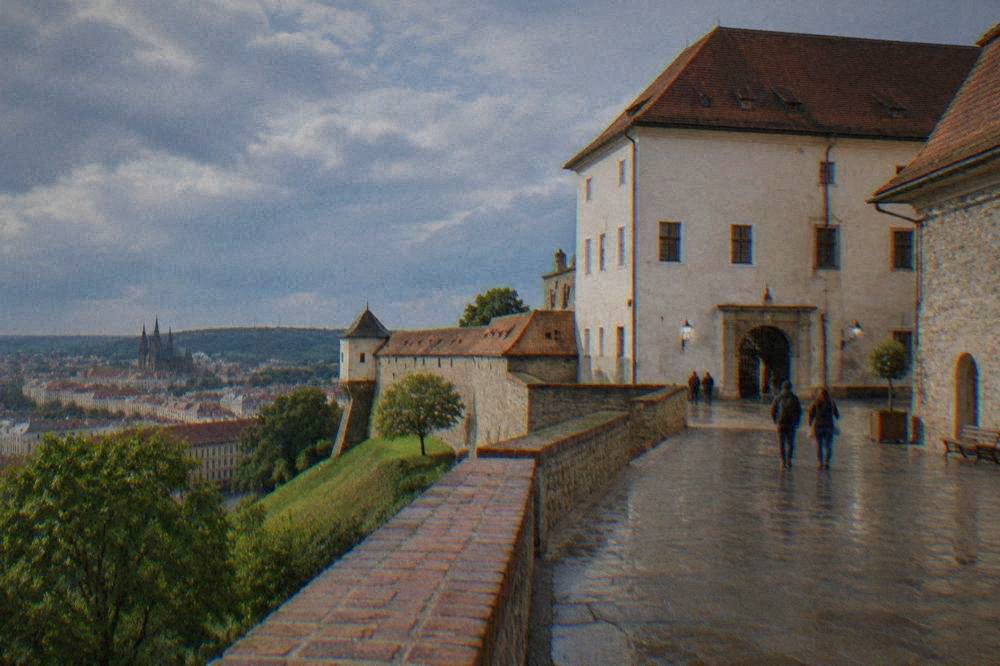
Špilberk Castle carries the military history. The castle grounds are open daily 6:00 to 23:00, exhibitions run Tuesday to Sunday 10:00 to 18:00, and the self-guided Casemates are open daily 9:00 to 21:00, all per the castle's opening-hours page. The guided Story of the Castle tour costs 180 CZK full, 110 CZK reduced and 415 CZK for a family, and the guided Casemates tour 260 CZK full and 155 CZK reduced, booked through Brno iD. The fortress became a Habsburg prison in 1783 under Joseph II, reported by the castle's history sources.
The underground layer is distinctively Brno's. The Ossuary at St James is operated by podzemibrno.cz alongside the Labyrinth under the Cabbage Market and the 10-Z Bunker, and entry to the Ossuary is free with the Brnopas visitor card. Current hours and prices for those underground sights sit on the operator's page, so check it before planning a visit. The Brnopas itself, per the official tourism page, costs 370, 490 or 610 CZK for one, two or three days, includes free entry to the Old Town Hall tower, the Ossuary, the Brno Zoo and the cathedral tower, and exists in a Brnopas+ variant bundled with Villa Tugendhat at 870, 990 or 1110 CZK.
Why Is Brno Big Enough For A Full Trip?
Brno's size supports a two- or three-day itinerary without repetition: one day for Špilberk, Petrov and the squares, a second for Villa Tugendhat and the Mendel Museum, whose own page lists Tuesday to Sunday 10:00 to 17:00 from 1 October 2026 with Monday closure, and a third for the Moravian Karst, 20 km away in a straight line, or the Lednice-Valtice Cultural Landscape at about 46 km. The Moravian capital from 1641 has both the density of a city and the reach of a regional base.
The day-trip radius is where second-city scale pays off. Straight-line distances from the centre: the Moravian Karst 20 km, Macocha Abyss 22 km, Slavkov, the Austerlitz battlefield of 2 December 1805, 20 km, Pernštejn Castle 35 km, Mikulov and the Pálava hills 43 km, Lednice-Valtice 46 km, and, further out, Telč 84 km, Vienna 111 km and Bratislava 122 km. Pernštejn is seasonal, closed over the winter of 2025 to 2026, so check its opening page; its basic tour costs 260 CZK adult, 210 CZK reduced and 80 CZK for children aged 6 to 17. At Lednice Chateau, Tour I costs 280 CZK full and 200 CZK reduced, Tour II 220 and 160, and a combined ticket 420 and 300, with a 50 CZK audio guide.
| Day trip from Brno | Straight-line distance | Source |
|---|---|---|
| Moravian Karst | about 20 km | protected landscape area, Punkva Caves |
| Slavkov (Austerlitz) | about 20 km | battlefield of 2 December 1805 |
| Pernštejn Castle | about 35 km | seasonal, check opening hours |
| Mikulov and Pálava | about 43 km | wine region |
| Lednice-Valtice | about 46 km | UNESCO Cultural Landscape |
| Vienna | about 111 km | Railjet about 1 h 31 min, reported |
Public transport inside the city runs on the koruna: paper tickets cost 20, 25 or 33 CZK for 15, 60 or 90 minutes, and a 24-hour Brno ticket is 90 CZK, per the transport authority's tariff. The city's tram and bus network covers zones 100 and 101, and the tourist card options are laid out on the answers to Brno's practical questions, including the fact that public transport in Brno is not free for visitors.
How many days to give the city is its own question, answered in how many days do you need in Brno. The short version: the second city repays at least a weekend.
How Do You Recognise Brno On A Map Of Czechia?
Brno sits in the south-east of Czechia, close to the Austrian and Slovak borders, about 111 km from Vienna and 122 km from Bratislava in straight lines, and 186 km from Prague. The city is named on maps as "Brno", with no English exonym, in the South Moravian Region. Its location, roughly equidistant from three capitals, is why so many visitors arrive by train from Vienna or Prague rather than flying.
The rail geography confirms it. Vienna Hbf to Brno by Railjet takes about 1 hour 31 minutes, reported by journey planners, and buses from Vienna Airport take about 1 hour 50 minutes to 2 hours 40 minutes with fares from about EUR 10. RegioJet and FlixBus both connect Brno with Vienna Airport, Prague, Bratislava and Olomouc. Brno's own airport, Brno-Tuřany, lies about 8 km from the centre in a straight line, with the airport's site reporting an E76 bus of about 20 minutes to the main station. Which airport to use is compared in which airport is closest to Brno.
The name itself sometimes slows readers down, and the pronunciation guide at how do you pronounce Brno settles it. What the map does not show is the city's fame, which runs from the cathedral's 11:00 bells to the crocodile hanging in the Old Town Hall passage, covered in why is Brno famous and why is there a crocodile in Brno.
For a walking orientation, a Petrov Hill tour pairs the question of where Brno is with what its skyline means; Check availability on the operator's live listing alongside the internal guide to the Cathedral of Sts Peter and Paul is a natural first booking.
Common Questions About The Second Largest City In The Czech Republic
What Is The Second Largest City In The Czech Republic?
Brno, in South Moravia, is the second largest city in the Czech Republic, with 404,296 permanent residents at the end of 2025. Prague, the capital, is the only larger Czech city.
Is Brno the capital of Czechia?
No. Prague is the capital of Czechia. Brno is the historic capital of Moravia, a region of Czechia, and served as Moravia's main capital from 1641.
Is Brno bigger than Prague?
No. Brno's 404,296 permanent residents place it second. The two city centres sit about 186 km apart in a straight line, linked by a Railjet the operator advertises at 2 hours 59 minutes.
Is Brno in Czechia or Slovakia?
Brno is in Czechia, the Czech Republic, in the South Moravian Region. Moravia is a historic region of Czechia, not of Slovakia, though Bratislava lies only about 122 km away in a straight line.
Is Brno on the sea?
No. Brno is an inland city on the Svratka and Svitava rivers. Its main body of water is the Brno Reservoir, about 7 km from the centre in a straight line.
What currency does the second largest Czech city use?
The Czech koruna, CZK. Czechia is in the EU and the Schengen area but does not use the euro, so castle tickets and transport fares in Brno are priced in koruna.