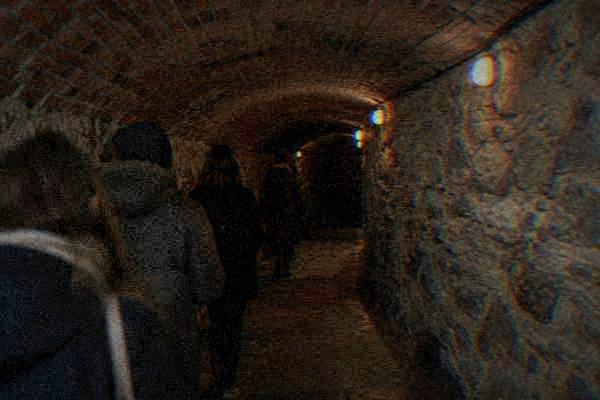
What Is The Difference Between An Ossuary And A Catacomb?
An ossuary stores the bones of many people in one place; a catacomb is a network of underground burial passages. How the two differ, and where each one appears under the streets of Brno, Czechia.
An ossuary is a place built to hold the skeletal remains of many people together, while a catacomb is an underground network of passages originally dug to receive burials. The difference is one of function and form: the ossuary is a destination for bones that have been moved from crowded graves, the catacomb is a corridor system where bodies were placed in the first place. Brno, the second-largest city of Czechia, sits on top of both concepts, and the Brno Ossuary under the Church of St James is the place where the distinction becomes visible.
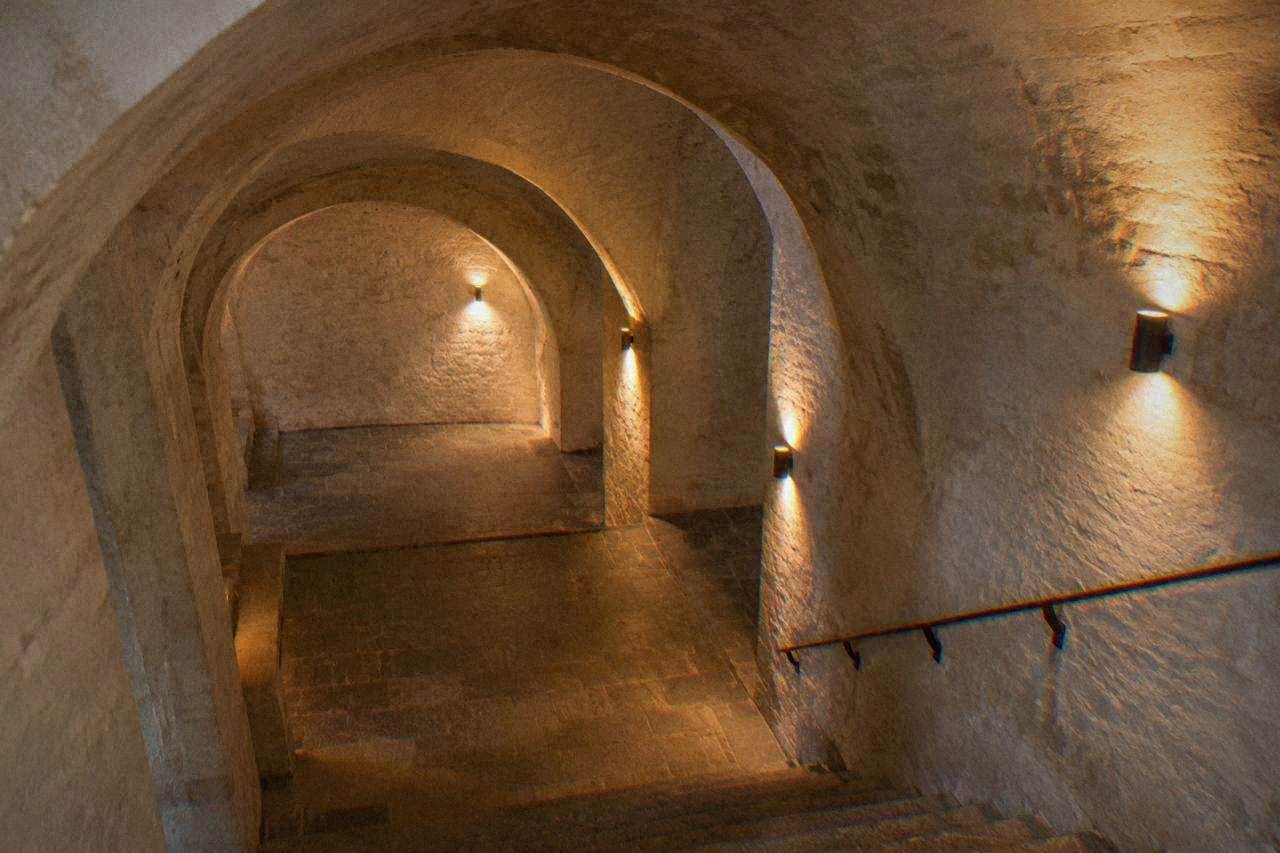
What Is The Difference Between An Ossuary And A Catacomb?
An ossuary is a depository: a chamber, chest or vault where the bones of many individuals are collected and stored together after their original graves were cleared or reused. A catacomb is a layout: a network of underground galleries, often on several levels, cut into rock or dug beneath a city to hold tombs and recesses along its corridors. One word names what the space contains, the other names how the space was built.
The two terms answer different questions, which is why they get confused. Ask what a room full of bones is and the answer is an ossuary. Ask how a city buried its dead underground at scale and the answer is a catacomb. A catacomb can contain ossuaries, because bones could later be gathered into piles or walls inside the corridors, but an ossuary does not have to be a catacomb at all: it can be a single cellar, a chapel crypt or even a decorated bone-house above ground.
The mechanics matter too. Burial space in historic churchyards was finite, and when plots were reused, the remains were moved into charnel chambers so the ground could serve the living again. Catacombs solved the same pressure differently, by extending the cemetery downwards and outwards into tunnels with recesses cut into the walls. The ossuary is the second storage step; the catacomb is the first, an engineered expansion of the burial ground itself.
The distinction shows up in the vocabulary of any guide or ticket page you will read in Central Europe. In Brno the sites under the Cabbage Market and under St James are presented as ossuary and labyrinth visits rather than as catacombs, because they began as cellars, crypts and storage spaces that later received human remains, not as purpose-dug burial galleries. That origin is the whole answer in miniature, and it is worth holding onto before descending anywhere.
Where Can You See Each One Around Brno?
Brno has no catacombs in the strict sense, no purpose-dug network of burial galleries, but it has an authentic ossuary under the Church of St James, plus the Labyrinth under the Cabbage Market, a linked system of former cellars that includes charnel material. The sites are run through the podzemibrno.cz operator, and the Brnopas city card lists free entry to the Ossuary among its included attractions.
The Brno Ossuary is the city's clearest example of the first half of this article's question. It lies beneath the Church of St James in the historic centre, and it holds human remains discovered and arranged in the underground space. The site's page on the ossuary and the underground tour overview describe what a visit covers; the operator's own page is the place to check the current hours and price before booking, since those figures change.
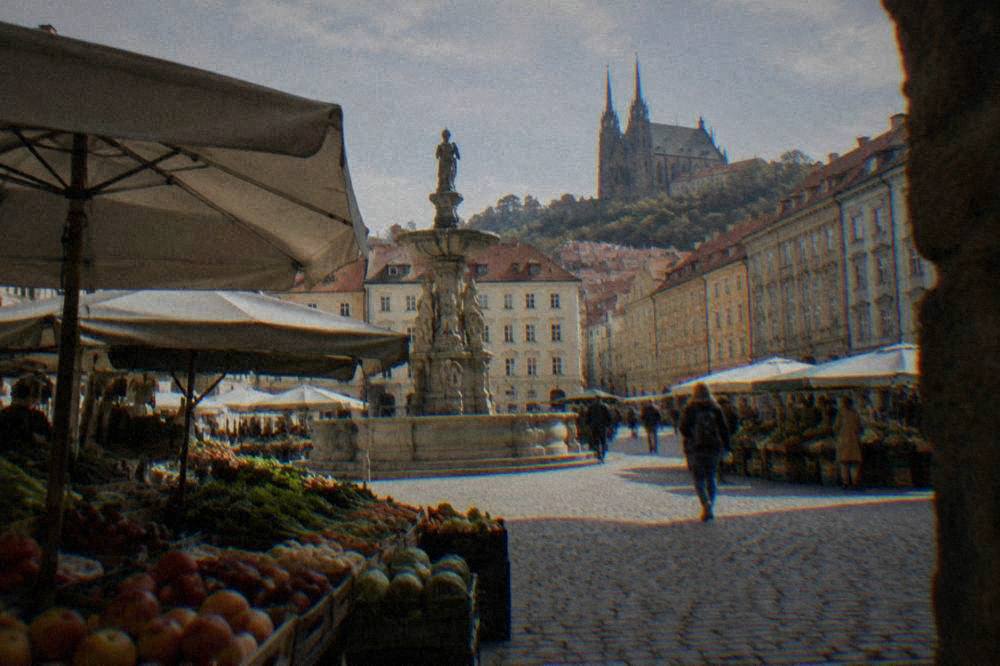
The Labyrinth under the Cabbage Market, Zelný trh, is the closest Brno gets to the catacomb idea: corridors under the square, originally cellars, that visitors walk through on a routed visit. But the label matters. These passages were storage and trade infrastructure first, and the bone material they contain arrived there rather than being interred there, which is the ossuary pattern, not the catacomb pattern.
For readers weighing the visit itself, the related question of whether the Ossuary rewards the ticket has its own answer page: is the Brno Ossuary worth visiting?. Two other underground sites complete the set, the 10-Z Bunker, a civil-defence shelter from a much later period, and the Capuchin Crypt, a monastery crypt whose conditions preserved what was placed in it. All four are managed through the same operator, and none of their hours or prices belong in a planning article, only on the operator's live pages.
Why Do Ossuaries Exist At All?
Ossuaries exist because burial ground is finite and churchyards were reused for generations. When a grave plot was opened again, the earlier remains were moved into a charnel chamber so the plot could serve a new burial, and over decades those chambers accumulated bones from hundreds of burials. The ossuary is the product of that cycle, a deliberate, orderly second storage stage rather than a sign of disorder or catastrophe.
This is also why the two words keep getting swapped. A corridor network dug for burials fills up too, and when its recesses were cleared, the bones were stacked or arranged in side chambers, turning parts of a catacomb into an ossuary by function. Travel writing then applies the more famous word to the whole site, and the categories blur. The underlying logic stays clean: catacomb describes the architecture of underground burial, ossuary describes the concentration of remains.
The Brno case follows the reuse pattern. The centre's churches and squares were rebuilt and re-dug repeatedly across the city's documented history, which runs from a first written mention in 1091 to city privileges in 1243, and each intervention underground could disturb earlier burials. What visitors see under St James is the end state of that process: remains gathered into one place, which is the definition this page started with.
Arrangement is part of the story as well. Where remains were stacked, sorted or displayed, that was a choice made at a particular time, and it is a reason the sites carry interpretive signage and guided commentary rather than functioning as raw storage. A booked visit, whether through the operator or through a guided heritage walk, spends much of its time explaining how the bones came to rest where they are.
How Do The Brno Underground Sites Compare?
The four underground sites in Brno differ in origin, in what they hold and in how they are visited: the Ossuary under St James is a charnel chamber, the Labyrinth under the Cabbage Market is a routed cellar system, the 10-Z Bunker is a nuclear-era shelter, and the Capuchin Crypt is a monastery burial crypt. Only the first two involve the ossuary function this page is about, and the Ossuary alone is listed as free with Brnopas.
The table below keeps the four straight. Hours and ticket prices sit on the operator's page and change with the season, so the comparison sticks to what each site is, which is stable. The rest of the planning pages sit on Brno Travel Guide.
| Site | What it is | Relation to the ossuary idea | Booked through |
|---|---|---|---|
| Brno Ossuary | Charnel chamber under the Church of St James | The ossuary itself, in the strict sense | podzemibrno.cz; free entry listed with Brnopas |
| Labyrinth under the Cabbage Market | Routed system of historic cellars under Zelný trh | Contains charnel material; cellars first | podzemibrno.cz |
| 10-Z Bunker | Civil-defence shelter from the communist period | None; a shelter, not a burial site | podzemibrno.cz |
| Capuchin Crypt | Monastery crypt beneath the Capuchin monastery | A crypt with preserved interments, not a bone depository | podzemibrno.cz |
One further card detail helps with planning. Brnopas, the city card priced at 370 CZK for one day, 490 for two and 610 for three, includes free entry to the Ossuary alongside the Old Town Hall tower and other sights, which can matter for anyone stringing several underground and tower visits together in a single stay.
Which Brno Tickets And Tours Fit An Underground Theme?
A prepaid entry ticket covers the museum of illusions at Absurdia, a practical indoor pairing for an underground day, while guided walking products cover the legends-and-history side of the same city centre. The Absurdia ticket is a skip-the-line product for a single attraction; the walking tours are led products that put the underground sites in their historical context without entering them. Choosing between them is a choice between a ticket and a guide.
The pairing logic is straightforward. The underground sites are compact, timed visits, and a centre-based day can absorb one more indoor stop without logistics. The Absurdia entry ticket fills that slot, and its listing can be checked live: Check availability.
On the guided side, the products that suit this theme are heritage walks: a private historic heritage walking tour of the centre, and a legends-and-hidden-stories walk whose name promises exactly the material this page has been summarising. Both are led by a guide, both stay above ground, and both do the interpretive work that turns a pile of bones back into a story about burial space, plague eras and churchyard reuse.
To hear those stories through your own headphones, book a legends audio tour here.
For readers building a whole trip rather than one day, the broader planning pages cover things to do in Brno and the question of how many days you need in Brno, which is where an underground visit slots into a fuller itinerary.
Is The Capuchin Crypt In Brno The Same As An Ossuary?
No: the Capuchin Crypt is a crypt, a burial space beneath a monastery where bodies were interred in niches and coffins, not a chamber where skeletal remains from many graves were gathered and stored. The crypt's known feature is preservation of the interred bodies rather than the collection and arrangement of bones, which is the ossuary function. The two can coexist in one underground complex, but in Brno they are separate sites under separate bookings.
A one-line table version of the whole article, applied to Brno's own sites, reads like this.
| Term | Definition | Brno example | Entry situation |
|---|---|---|---|
| Ossuary | Collected skeletal remains in one chamber | Ossuary under St James | Operator page; free with Brnopas |
| Catacomb | Dug network of burial galleries | None documented in Brno | Not applicable |
| Crypt | Burial space beneath a church or monastery | Capuchin Crypt | Operator page |
| Labyrinth | Routed historic cellar system | Labyrinth under the Cabbage Market | Operator page |
The practical takeaway for a visitor is that Brno's underground attractions use precise labels, and those labels tell you what you will be standing in. A visit organised around this page's question, ossuary versus catacomb, ends with a clear answer: in this city you will see an ossuary and a crypt, plus cellars and a bunker, and the catacomb, the burial-corridor network, is the one thing on the list the city does not have.
Common Questions About Ossuaries And Catacombs In Brno
What Is The Difference Between An Ossuary And A Catacomb?
An ossuary is a chamber where skeletal remains from many graves are collected and stored together; a catacomb is a network of underground passages dug to receive burials. Brno has an ossuary under the Church of St James but no catacomb system in the strict sense.
Where Is The Brno Ossuary Located?
The Brno Ossuary lies beneath the Church of St James in the historic centre of Brno. Visits are run through the podzemibrno.cz operator, and the current hours and price are on the operator's page.
Is The Brno Ossuary Free With The City Card?
Yes. Brnopas, the Brno city card, lists free entry to the Ossuary among its included attractions, along with the Old Town Hall tower and other sights. Card prices are 370, 490 and 610 CZK for one, two and three days.
Does Brno Have Catacombs You Can Visit?
No purpose-dug catacomb network is documented in Brno. The nearest equivalent is the Labyrinth under the Cabbage Market, a routed system of historic cellars, which is a different kind of underground space with a different origin.
Are The Brno Underground Sites Open Year-Round?
Hours for the Ossuary, the Labyrinth, the 10-Z Bunker and the Capuchin Crypt are published by the podzemibrno.cz operator and change with the season, including planned closure periods. Check the operator's page before booking a timed visit.
Can You Visit The Ossuary On A Guided Tour Of Brno?
Guided walking products in the centre cover the legends and history surrounding the underground sites, while entry to the Ossuary itself is booked separately through the operator. Combining a heritage walk with a booked underground visit is a common way to cover both.
Every definition on this page, ossuary, catacomb, crypt, cellar labyrinth, comes down to what the space was built for and what ended up inside it, and in Brno that split is unusually easy to see in a single afternoon of bookings.